Field Technical Report: Implementation of 20kW 3D Structural Steel Processing Center in Dubai Offshore Engineering
1. Project Overview and Regional Context
The following report details the technical deployment and operational evaluation of a 20kW 3D Structural Steel Processing Center within the offshore platform fabrication sector in Dubai, UAE. The offshore industry in the Middle East demands rigorous adherence to structural integrity standards, particularly concerning Jack-up rigs, FPSO (Floating Production Storage and Offloading) modules, and subsea templates. Traditionally, these structures rely on heavy-gauge H-beams, I-beams, and large-diameter tubular sections (S355G10+M or S420G2+M grades) that require complex beveling for high-penetration welds.
The integration of 20kW fiber laser technology into a 3D structural center represents a shift from conventional plasma cutting and mechanical drilling. The specific focus of this report is the synergy between high-wattage beam delivery and automated material handling systems in a high-ambient-temperature environment.
2. 20kW Fiber Laser Source: Thermal Dynamics and Kerf Precision
The transition to a 20kW power density is not merely a matter of speed; it is a fundamental shift in the Heat Affected Zone (HAZ) management. In offshore structural engineering, the HAZ must be minimized to prevent hydrogen-induced cracking and to maintain the fatigue resistance of the steel.
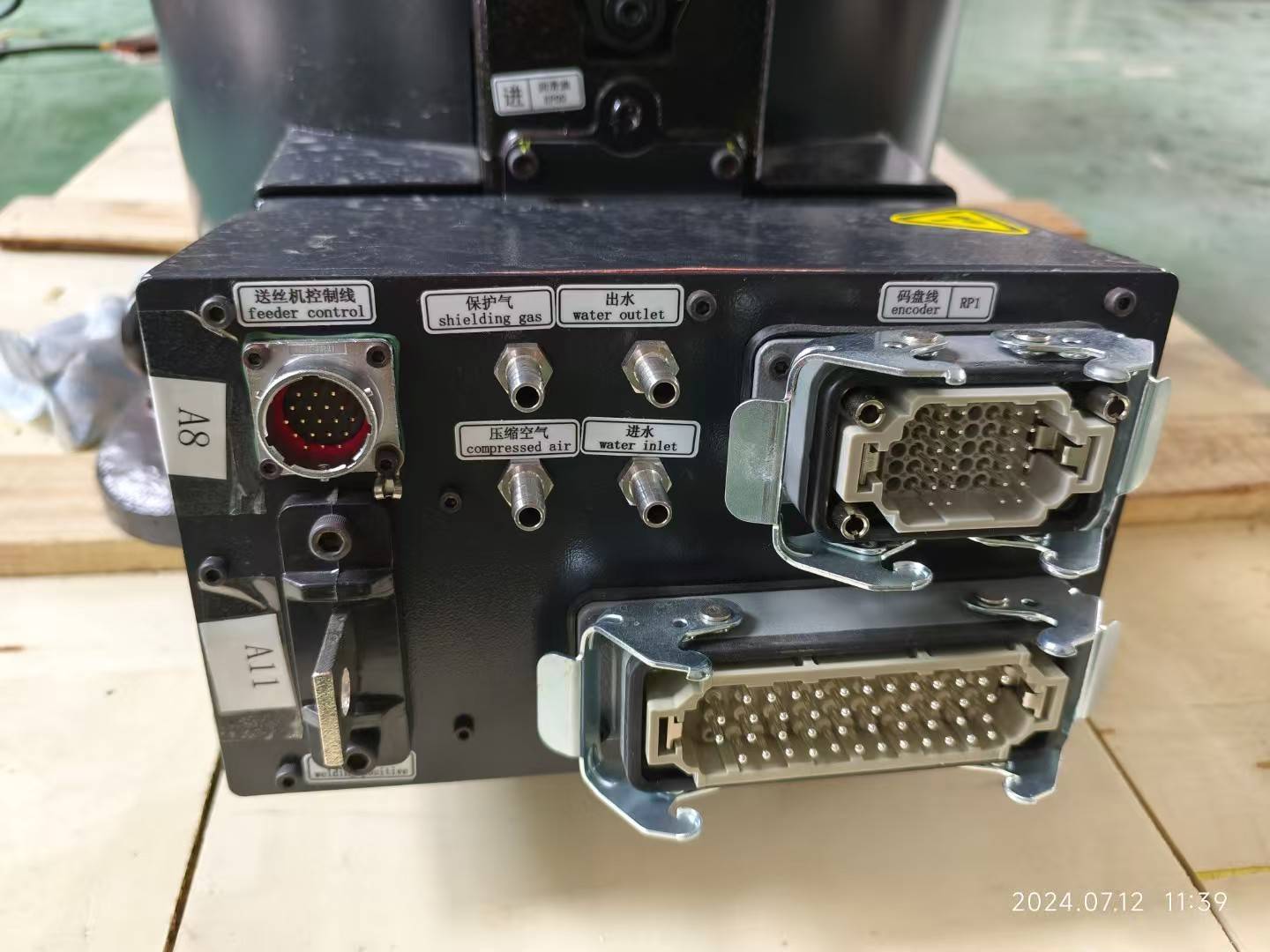
Beam Quality and Power Density: The 20kW source utilized in this center provides a high Brilliance (BPP), allowing for a concentrated energy footprint. In the context of 25mm to 40mm structural webbing, the 20kW output facilitates a “vaporization” cutting mode rather than simple melting. This results in a narrower kerf width and a perpendicularity deviation of less than 0.1mm, exceeding AWS D1.1 structural welding codes.
Chiller Redundancy in Dubai Climates: A critical technical challenge identified during the Dubai field test was the thermal load on the resonator. Operating at 20kW generates significant internal heat. The system was integrated with a dual-circuit, high-capacity industrial chiller with a +/- 0.5°C stability range. To combat Dubai’s 45°C+ ambient temperatures, the 3D processing center employs a custom heat exchange interface to prevent “thermal lensing” at the laser head, which otherwise causes focal shift and compromises the bevel accuracy on thick-walled sections.
3. 5-Axis 3D Cutting Head and Geometric Interpolation
The processing of structural steel for offshore jackets requires sophisticated beveling (K, V, X, and Y-cuts) for subsequent robotic welding. The 3D processing center utilizes a 5-axis kinematic head capable of ±45-degree tilting.
Geometric Accuracy: In structural steel, longitudinal twist and camber are inherent. The system employs a non-contact capacitive sensing array that maps the beam’s profile in real-time before the cut. This data is interpolated by the CNC to adjust the 5-axis toolpath, ensuring that the weld prep angle remains constant relative to the actual surface of the steel, not just the theoretical CAD model. This is vital for the “Lego-style” fit-up required for offshore topside modules where manual grinding is cost-prohibitive.
4. Automatic Unloading Technology: Solving the Heavy Steel Bottleneck
The primary throughput bottleneck in 3D laser processing is not the cutting speed, but the material handling cycle. A 12-meter H-beam can weigh upwards of 2.5 tons. Manual unloading via overhead cranes introduces significant downtime and safety risks.
Mechanical Integration: The Automatic Unloading system integrated into this center uses a multi-point hydraulic lift and chain-driven lateral transfer mechanism. As the 3D head completes the final cut on a structural member, the unloading bed synchronizes its movement with the X-axis feed.
Precision Preservation: One of the most significant findings in this field report is the impact of automatic unloading on part precision. Manual slinging often causes “spring-back” or minor deformation in long, slender structural members once they are severed from the raw stock. The automated system supports the workpiece across its entire length during the transition, maintaining the structural linearity required for high-precision offshore bracing.
Efficiency Metrics: In the Dubai facility, the implementation of automatic unloading reduced the “part-to-part” cycle time by 42%. By removing the requirement for an operator to enter the safety enclosure and rig the part for a crane, the 20kW laser maintains a higher duty cycle, effectively increasing the monthly tonnage throughput of the facility.
5. Synergy Between 20kW Power and Automation
The 20kW source allows for significantly higher feed rates (e.g., 2.5m/min on 20mm plate). However, without automatic unloading, these gains are neutralized by the logistical lag of moving the cut pieces. The synergy between high-wattage laser cutting and automated handling creates a continuous flow “processing line” rather than a batch-based “cutting machine.”
Nitrogen vs. Oxygen Cutting: With 20kW of power, we observed that high-pressure Nitrogen cutting becomes viable for structural thicknesses up to 25mm. This produces an oxide-free surface, which is critical for offshore applications where paint adhesion and corrosion resistance (C5-M environment) are paramount. The automatic unloading system ensures these oxide-free surfaces are not scratched or contaminated by heavy-duty chains or traditional forklifts, as the parts are moved via polymer-coated rollers and automated transfer arms.
6. Application in Dubai Offshore Platforms
The specific requirements of Dubai’s offshore sector—ranging from shallow-water gas platforms to deep-sea exploration vessels—demand high-tensile steel processing with zero-error tolerances.
Jacket Foundations: The 3D processing center was tasked with cutting complex intersections (miter joints) for jacket legs. The 20kW laser’s ability to pierce 40mm steel in under 1.5 seconds, combined with the 3D head’s ability to cut complex elliptical holes for brace pipe intersections, has revolutionized the pre-fabrication stage.
Corrosion Considerations: Given the high salinity of the Persian Gulf, the precision of the laser-cut edges ensures that protective coatings (thermal spray aluminum or epoxy) have uniform thickness across the corners of the H-beams. Sharp edges from plasma or mechanical shearing are a common failure point for coatings; the 20kW laser allows for a programmed “micro-radius” on edges, significantly extending the service life of the platform in harsh maritime conditions.
7. Conclusion and Engineering Recommendations
The deployment of the 20kW 3D Structural Steel Processing Center with Automatic Unloading in Dubai has proven that the bottleneck in heavy steel fabrication is logistical, not just metallurgical. The 20kW source provides the necessary thermal energy to process thick-walled offshore components with superior edge quality, while the 3D kinematics allow for complex weld preparations that were previously impossible without secondary machining.
Recommendations for Future Implementation:
1. Enhanced Cooling: For 20kW operations in the MEA region, oversized chilling units with proactive filtration are mandatory to prevent particulates from affecting the optical path.
2. Software Integration: Utilizing Tekla or AVEVA PDMS plugins directly with the laser’s CNC software is essential to leverage the full 3D capabilities for offshore structural BIM (Building Information Modeling).
3. Automated Sorting: The next evolution should focus on integrating the automatic unloading system with an automated sorting and marking system (inkjet or laser etching) to facilitate traceability of heat numbers, a mandatory requirement for DNV and Lloyd’s Register certification in offshore engineering.
The technical data gathered confirms that this configuration reduces labor-intensive fit-up by 60% and increases overall structural fabrication capacity by 35%, making it the benchmark for high-output steel processing in the region.













