The Dawn of High-Power Fiber Lasers in Dubai’s Structural Sector
Dubai has long been a global theater for architectural marvels. From the Burj Khalifa to the sprawling complexes of the Expo City, the demand for high-strength, precision-engineered steel is constant. As the city-state pivots toward even more ambitious sports infrastructure and multi-purpose stadiums, the traditional methods of sawing, drilling, and manual oxy-fuel cutting are no longer sufficient. The introduction of the 12kW Heavy-Duty I-Beam Laser Profiler has redefined the benchmarks for throughput and accuracy.
A 12kW fiber laser source offers a unique advantage in the structural domain. Unlike lower-power alternatives, a 12kW system provides the “brute force” necessary to pierce and cut through the thick webs and flanges of heavy I-beams (up to 25mm-40mm depending on material grade) with a speed that traditional mechanical methods cannot match. For a stadium project involving thousands of tons of steel, the cumulative time saved in the fabrication shop translates directly to months saved on the construction timeline.
Precision Engineering for Complex I-Beam Geometries
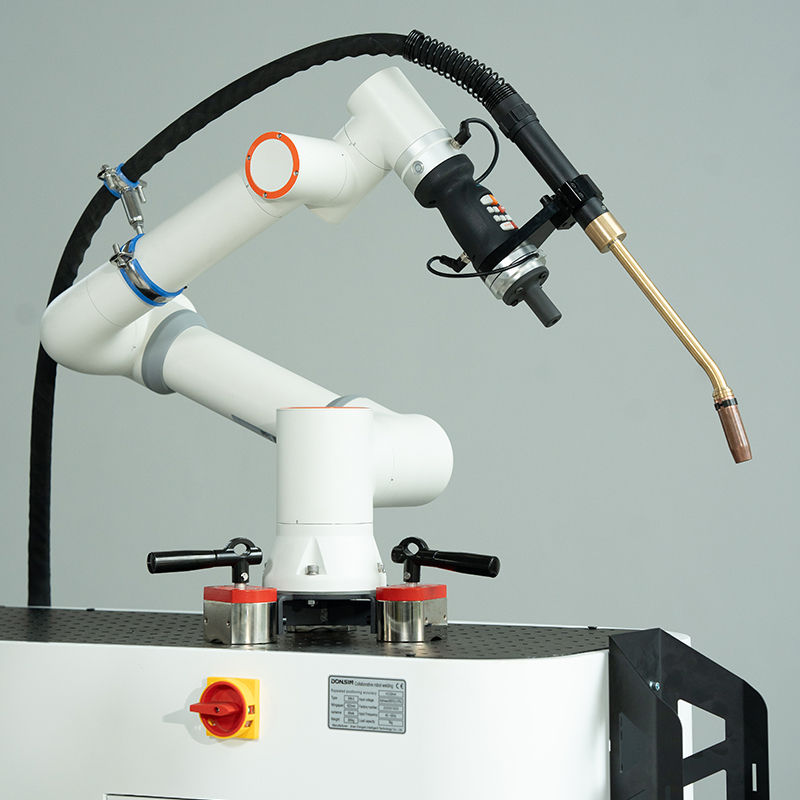
Stadium architecture often requires non-linear forms—cantilevered roofs, sweeping arches, and interlocking trusses. The heavy-duty profiler is designed to handle not just standard I-beams, but also H-beams, C-channels, and rectangular hollow sections (RHS). The heart of this machine is its 3D cutting head, often mounted on a 5-axis gimbal or a robotic arm, which allows for complex beveling.
In structural engineering, the “fit-up” is everything. If an I-beam is not cut with precise bevels for welding, the structural integrity of the joint is compromised. The 12kW laser profiler creates perfect V-grooves, Y-grooves, and K-grooves in a single pass. This eliminates the need for secondary grinding or edge preparation, which are labor-intensive and prone to human error. In the heat of Dubai, reducing the manual labor hours required for “re-work” is both an economic and a safety advantage.
Zero-Waste Nesting: The Economics of Sustainability
In the world of structural steel, material costs typically account for 60% to 70% of the total project budget. Historically, cutting I-beams resulted in significant “drops” or offcuts—sections of beams that were too short to be used but too expensive to simply discard. The 12kW Laser Profiler solves this through “Zero-Waste Nesting” software.
This software integrates directly with the project’s Building Information Modeling (BIM) data. It analyzes the entire inventory of required parts and calculates the most efficient sequence to cut them from standard stock lengths. By using “common line cutting” and “smart-bridge” techniques, the machine minimizes the gap between parts. Furthermore, the 12kW laser’s narrow kerf (the width of the cut) ensures that almost no material is vaporized unnecessarily. In a stadium project requiring 20,000 tons of steel, a mere 3% improvement in material utilization can save millions of Dirhams and hundreds of tons of CO2 emissions.
Optimizing the Heat-Affected Zone (HAZ) in High-Tensile Steel
One of the primary concerns for structural engineers in Dubai is the Heat-Affected Zone (HAZ). When steel is cut using plasma or oxy-fuel, the intense heat can alter the metallurgical properties of the beam’s edge, making it brittle and prone to cracking under the dynamic loads of a stadium (such as wind resistance or spectator movement).
The 12kW fiber laser uses a highly concentrated beam that moves at extreme velocities. This creates a “cool” cut; the heat is so localized and the process so fast that the surrounding metal remains largely unaffected. This preserves the ductility and strength of the I-beam. For the heavy-duty structural steel used in stadium supports, maintaining the original mill-certified properties of the steel is non-negotiable for safety certification.
Overcoming Environmental Challenges in the UAE
Operating high-power lasers in the Middle East presents unique challenges, primarily related to ambient temperature and airborne dust. A 12kW laser generates significant internal heat. To operate reliably in Dubai’s climate, these profilers are equipped with advanced, dual-circuit industrial chillers and climate-controlled cabinets for the laser source and electrical components.
Furthermore, the heavy-duty profilers used in these applications are fitted with sophisticated filtration and dust extraction systems. Cutting structural steel produces fine metallic dust and fumes. In Dubai’s push for “Green Building” certifications (such as LEED or Al Sa’fat), the ability of the laser profiler to capture 99.9% of these particulates ensures that the fabrication facility remains environmentally compliant and provides a healthier environment for operators.
Integration with Industry 4.0 and BIM
The modern 12kW I-Beam Profiler is not a standalone machine; it is a node in a digital ecosystem. In the construction of a major stadium, the design is constantly evolving. Through Industry 4.0 integration, design changes made in a consultant’s office in Downtown Dubai can be pushed directly to the laser profiler on the factory floor in Jebel Ali or Dubai Industrial City.
The machine’s sensors provide real-time feedback on cutting quality, gas consumption, and power usage. This “digital twin” of the fabrication process allows project managers to predict exactly when the steel for “Section A” of the stadium will be ready for transport. This level of logistical precision is vital for Dubai’s fast-track construction schedules, where site space is limited and “just-in-time” delivery of oversized structural components is required.
The Impact on Weld Quality and Assembly Speed
Because the 12kW laser produces a finish that is often “weld-ready” straight from the machine, the assembly of stadium trusses becomes a modular, high-speed process. The holes for bolting—traditionally drilled in a separate, slow process—are laser-cut with sub-millimeter accuracy. This ensures that when the massive I-beams are lifted by cranes at the stadium site, every bolt hole aligns perfectly.
In the past, “drifting” (forcing bolts through misaligned holes) was a common but undesirable practice. Laser precision eliminates this, ensuring that the tension and shear calculations performed by the engineers are perfectly reflected in the physical structure. This accuracy is particularly vital for the complex tension-ring roofs often seen in modern stadium designs, where hundreds of beams must converge at a single central point.
Conclusion: Setting a New Global Standard
The deployment of 12kW Heavy-Duty I-Beam Laser Profilers with Zero-Waste Nesting in Dubai is more than a technological upgrade; it is a strategic investment in the future of the built environment. As the UAE continues to position itself as a global hub for sports and tourism, the infrastructure supporting these sectors must be built with a focus on speed, precision, and sustainability.
By leveraging the power of 12kW fiber lasers, Dubai’s steel fabricators are cutting down the lead times of massive projects, reducing the environmental impact of construction, and ensuring that the stadiums of tomorrow are built to the highest possible standards of structural integrity. In the intersection of high-wattage photonics and heavy-duty civil engineering, a new era of “Made in Dubai” excellence is being forged, one I-beam at a time.