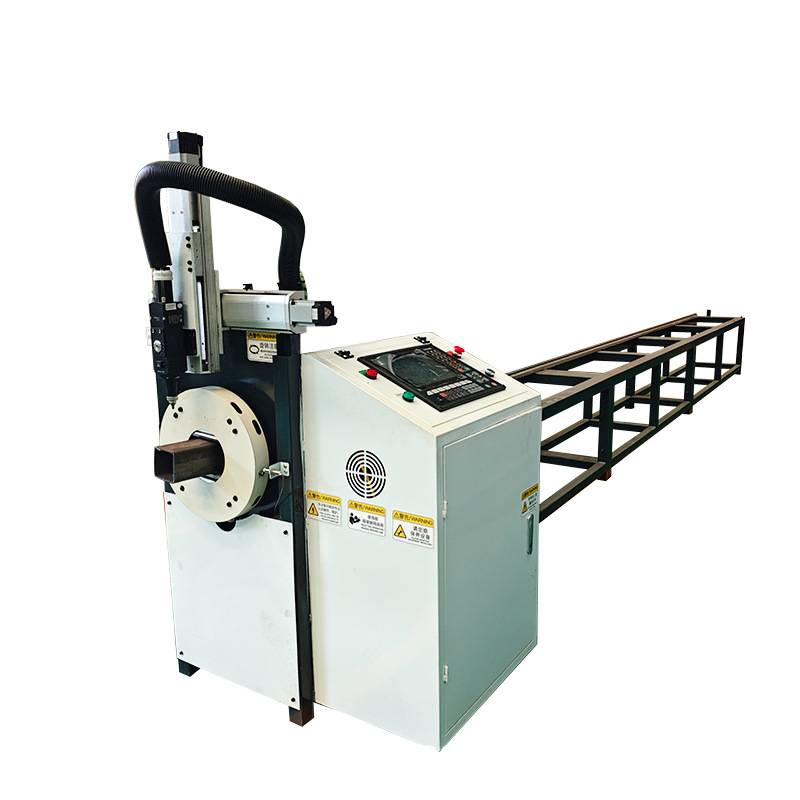
The Dawn of High-Power Structural Laser Processing in Istanbul
Istanbul has long served as the crossroads of global trade and a manufacturing powerhouse for the EMEA region. As the demand for robust power grids and renewable energy distribution surges, the city’s fabrication sectors are evolving. The introduction of the 12kW CNC Beam and Channel Laser Cutter represents the pinnacle of this evolution. Traditionally, the fabrication of power towers involved a fragmented workflow: mechanical sawing, followed by manual drilling, and finally, labor-intensive oxy-fuel or plasma beveling for weld preparation.
The 12kW fiber laser changes the calculus entirely. At this power level, the laser is no longer just a “sheet metal tool”; it is a heavy-duty industrial engine capable of slicing through thick-walled I-beams, H-beams, and C-channels with surgical precision. For Istanbul’s engineers, this means the ability to handle the massive structural components required for 380kV and 500kV transmission lines with a degree of accuracy that was previously impossible.
Technical Architecture of the 12kW CNC System
At the heart of this machine lies a 12,000-watt fiber laser source, typically powered by state-of-the-art oscillators from industry leaders. This power is delivered through a flexible fiber optic cable to a 3D cutting head equipped with high-speed servos. Unlike standard flatbed lasers, a beam and channel cutter utilizes a specialized rotary chuck system and a multi-axis head that can navigate the complex geometries of structural sections.
The 12kW threshold is significant because it allows for “high-speed nitrogen cutting” on thicker sections, which results in a clean, oxide-free edge. When fabricating power towers, the quality of the cut surface is paramount. Any micro-cracking or excessive heat-affected zones (HAZ) can become points of failure under the extreme wind loads and mechanical stresses that towers face. The fiber laser’s concentrated energy minimizes the HAZ, ensuring the base metal’s metallurgical properties remain intact.
±45° Bevel Cutting: The New Standard for Weld Prep
The standout feature of this system is the ±45° beveling capability. In power tower construction, beams rarely meet at simple 90-degree angles. To ensure structural rigidity, components must be joined via full-penetration welds. Traditionally, creating a “V,” “Y,” or “X” prep on a channel or beam required secondary grinding or the use of specialized bevellers.
The 12kW CNC laser’s 5-axis or 6-axis head can tilt during the cutting process, allowing it to carve complex bevels directly into the ends of beams or along the flanges of channels. By achieving a ±45° tilt, the machine can prepare edges for welding in the same cycle it uses to cut the part to length and add bolt holes. This “one-hit” processing reduces material handling by up to 70%. In Istanbul’s competitive fabrication market, where lead times are critical, this capability is a decisive advantage.
Engineering Power Towers: Meeting Global Standards
Power towers are the backbone of modern civilization, but they are deceptively complex. They must withstand decades of environmental exposure, including seismic activity, heavy icing, and gale-force winds. The materials used—typically high-strength structural steels like S355JR or S460—require precise handling.
The 12kW laser allows for the high-speed perforation of bolt holes with tolerances of ±0.1mm. This is vital for the “erector set” style of power tower assembly, where hundreds of components must align perfectly on-site, often in remote or mountainous terrain. If a hole is misaligned by even a millimeter, the assembly grinds to a halt. The CNC precision of the Istanbul-based laser systems ensures that every beam and channel fits perfectly the first time, eliminating the need for on-site re-drilling or modification.
The Istanbul Advantage: Logistics and Expertise
Istanbul’s strategic location provides a unique ecosystem for power tower fabrication. With proximity to major steel mills and easy access to both European and Asian markets, the city is an ideal base for large-scale infrastructure projects. The adoption of 12kW laser technology by local firms allows them to compete not just on labor costs, but on sheer technical superiority.
Furthermore, the local expertise in CNC programming and structural engineering in Istanbul has grown alongside the hardware. Local engineers are now utilizing advanced CAD/CAM nesting software that is specifically tuned for 3D profiles. This software optimizes the layout of parts on a 12-meter beam, drastically reducing scrap rates—a critical factor when dealing with expensive, high-grade structural steel.
Efficiency, ROI, and Environmental Impact
From a business perspective, the transition to 12kW laser cutting is driven by Return on Investment (ROI). While the initial capital expenditure for a 12kW 3D laser is higher than a plasma system, the operational costs are significantly lower when measured per part. The speed of a 12kW laser on 10mm to 20mm thick steel is three to four times faster than a 6kW unit and far cleaner than plasma.
Moreover, the environmental impact is a growing concern for global energy companies. Fiber lasers are significantly more energy-efficient than CO2 lasers or heavy plasma systems. The precision of the laser also means less wasted material and a reduction in the chemical consumables often required for secondary finishing. For power tower projects funded by international green energy grants, using “cleaner” fabrication technologies can be a requirement.
Challenges in High-Power Beam Processing
As an expert, it is important to acknowledge the challenges. Operating a 12kW laser on structural shapes requires sophisticated “anti-collision” software. Beams and channels are rarely perfectly straight; they often have “camber” or “sweep” from the rolling mill. The 12kW CNC system must use advanced capacitive sensors to track the material’s surface in real-time, adjusting the focus height and the tilt of the head to compensate for material irregularities.
In Istanbul, the humidity and industrial dust also require high-end filtration and climate-controlled laser resonators to ensure the longevity of the optics. Proper maintenance protocols, including the use of high-purity assist gases (Oxygen for thick carbon steel or Nitrogen for clean edges), are essential to maintaining the machine’s performance.
The Future of Infrastructure Fabrication
Looking ahead, the role of the 12kW CNC Beam and Channel Laser Cutter will only expand. As Turkey continues to modernize its own national grid and exports its fabrication expertise to the Middle East, Africa, and Europe, the demand for precision-engineered power towers will grow.
We are moving toward a future where “Digital Twin” technology will allow an engineer in an Istanbul office to send a 3D model directly to the 12kW laser, which will then automatically select the optimal cutting path, bevel angles, and nesting strategy. The 12kW laser is not just a tool; it is the physical interface of the digital revolution in structural engineering.
Conclusion
The implementation of 12kW CNC Beam and Channel Laser Cutters with ±45° beveling in Istanbul is a transformative development for the power tower fabrication industry. By unifying cutting, drilling, and beveling into a single automated process, these machines deliver the precision, speed, and structural integrity required for the next generation of energy infrastructure. For stakeholders in the power sector, this technology represents a bridge to a more efficient, reliable, and sustainable grid, built with the mechanical excellence that Istanbul’s top-tier fabricators are now equipped to provide.