The Dawn of High-Power 3D Laser Processing in Istanbul
Istanbul stands as a literal and figurative bridge between continents, a city defined by its ambitious infrastructure. The Istanbul Airport project, one of the largest in the world, demands a level of structural sophistication that traditional plasma or mechanical sawing simply cannot meet. As a fiber laser expert, I have witnessed the transition from 2D flat-sheet cutting to the sophisticated world of 3D structural processing. The arrival of the 12kW 3D Structural Steel Processing Center equipped with ±45° bevel cutting marks the pinnacle of this evolution.
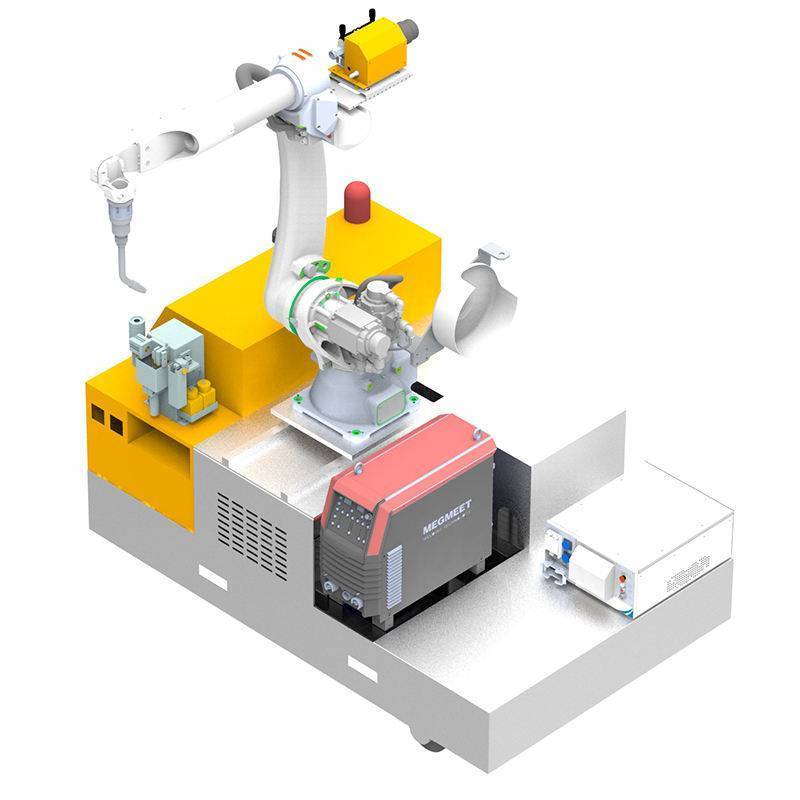
This machinery is not a standard laser cutter; it is a multi-axis robotic powerhouse designed to handle the massive I-beams, H-beams, and complex truss systems required for airport hangars, terminal canopies, and cargo hubs. In a city where construction timelines are aggressive and quality standards are governed by international aviation codes, the 12kW fiber laser has become the indispensable heart of the fabrication floor.
The 12kW Advantage: Penetration and Productivity
The choice of a 12kW power source is strategic. While 4kW or 6kW lasers are sufficient for thin-walled tubes, the heavy structural components used in airport infrastructure—often exceeding 20mm in thickness—require the high energy density that only a 10kW+ system can provide.
At 12kW, the laser achieves a “keyhole” welding-like cutting efficiency. The photon density is high enough to vaporize carbon steel instantly, resulting in a significantly reduced Heat Affected Zone (HAZ). This is critical for Istanbul’s airport construction because structural steel must maintain its metallurgical integrity to withstand the dynamic loads and seismic stresses characteristic of the Marmara region. A smaller HAZ means the steel retains its design strength, reducing the risk of embrittlement at the cut edges. Furthermore, the speed of a 12kW system on 15mm to 25mm plate is roughly three to four times faster than traditional oxy-fuel or plasma systems, allowing fabricators to meet the punishing schedules of mega-projects.
The Complexity of 3D Spatial Processing
Standard laser systems operate on an X-Y plane. However, structural steel for airports is rarely flat. It consists of tubes, channels, and wide-flange beams that require processing on multiple faces. The 3D processing center utilizes a sophisticated chuck system and a multi-axis head that can rotate around the workpiece.
For the Istanbul Airport’s curved roof structures and geometric skylights, the ability to cut complex intersections in circular hollow sections (CHS) is vital. The software calculates the “fish-mouth” cuts where two pipes meet at an angle, ensuring a perfect fit-up. When dealing with the massive spans required for airport terminals, even a two-millimeter gap in a joint can lead to significant welding issues and structural weaknesses. The 3D laser ensures that every notch, hole, and end-cut is executed with a precision of ±0.1mm, a feat impossible with manual layout and mechanical cutting.
Mastering the ±45° Bevel: The End of Secondary Operations
Perhaps the most transformative feature of this 12kW center is the ±45° bevel cutting capability. In traditional structural fabrication, after a beam is cut to length, it must be moved to a separate station where a technician uses a hand-held plasma torch or a milling machine to create a bevel for welding. This is known as weld preparation (V, Y, K, or X-type joints).
The 5-axis laser head eliminates this entire secondary process. As the 12kW beam slices through the steel, the head tilts up to 45 degrees, creating the precise bevel required for full-penetration welds in a single pass. This is a game-changer for the Istanbul Airport construction. When you are processing thousands of tons of steel, the labor savings associated with eliminating manual grinding and beveling are astronomical. Furthermore, the accuracy of the laser-cut bevel ensures that the robotic welding systems used in subsequent stages of assembly function perfectly, as the joint geometry is consistent every single time.
Meeting Istanbul’s Seismic and Safety Standards
Istanbul is located near the North Anatolian Fault, making seismic resilience the primary concern for any structural engineer. The steel used in the airport’s expansion must be capable of absorbing energy and flexing without fracturing.
Traditional thermal cutting methods like plasma can sometimes leave micro-cracks or heavy dross on the edge of the steel, which can act as stress risers during an earthquake. The 12kW fiber laser, using high-pressure nitrogen or oxygen assist gases, produces a clean, glass-smooth edge. This superior surface finish reduces the likelihood of fatigue crack initiation. By utilizing the 12kW 3D processing center, engineers can be confident that the “as-built” structure matches the “as-designed” finite element analysis (FEA) models, ensuring the airport remains a safe haven even under extreme tectonic stress.
Software Integration and the Digital Twin
A 12kW laser is only as smart as the software driving it. In the context of Istanbul’s construction boom, Building Information Modeling (BIM) is standard. The 3D structural processing center integrates directly with Tekla Structures or Autodesk Revit files.
The workflow is seamless: the architect’s 3D model is exported to the laser’s nesting software, which optimizes the cutting path to minimize material waste—a critical factor given the high cost of raw steel. This “digital-to-physical” pipeline ensures that every component for the airport project is tracked. If a specific truss member is needed for “Terminal Sector 4,” the machine can pull the exact geometry, execute the 3D cuts and bevels, and etch part numbers directly onto the steel for easy on-site assembly. This level of traceability is mandatory for modern aviation infrastructure.
Economic Impact and Sustainability in Turkey
The investment in a 12kW 3D laser center is significant, but the ROI (Return on Investment) for Turkish fabricators is clear. Beyond speed, the energy efficiency of fiber lasers compared to CO2 lasers is remarkable, boasting wall-plug efficiencies of over 40%. In a market like Istanbul, where energy costs and environmental regulations are increasingly stringent, reducing the carbon footprint of the fabrication process is a competitive advantage.
Moreover, the precision of the laser reduces the volume of welding consumables needed. Because the fit-up is so tight (thanks to the 3D beveling), less filler metal is required to close the joints. This not only saves money but also speeds up the entire construction cycle, allowing the airport to open new gates and runways ahead of schedule.
Conclusion: The Future of the Istanbul Skyline
The 12kW 3D Structural Steel Processing Center is more than just a tool; it is a catalyst for architectural possibility. As Istanbul continues to expand its role as a global aviation crossroads, the demands on its infrastructure will only grow. The ability to process heavy structural steel with ±45° beveling at unprecedented speeds allows architects to dream of more complex, organic shapes and engineers to build them with greater safety and efficiency.
In the hands of Istanbul’s skilled fabricators, the 12kW fiber laser is carving out a new era for Turkish construction. It represents a move away from the “measure twice, cut once” manual labor of the past toward a “design once, pulse a million times” digital future. For the Istanbul Airport and the myriad of structures that will follow in its wake, the precision of the 12kW 3D laser is the foundation upon which the future is built.