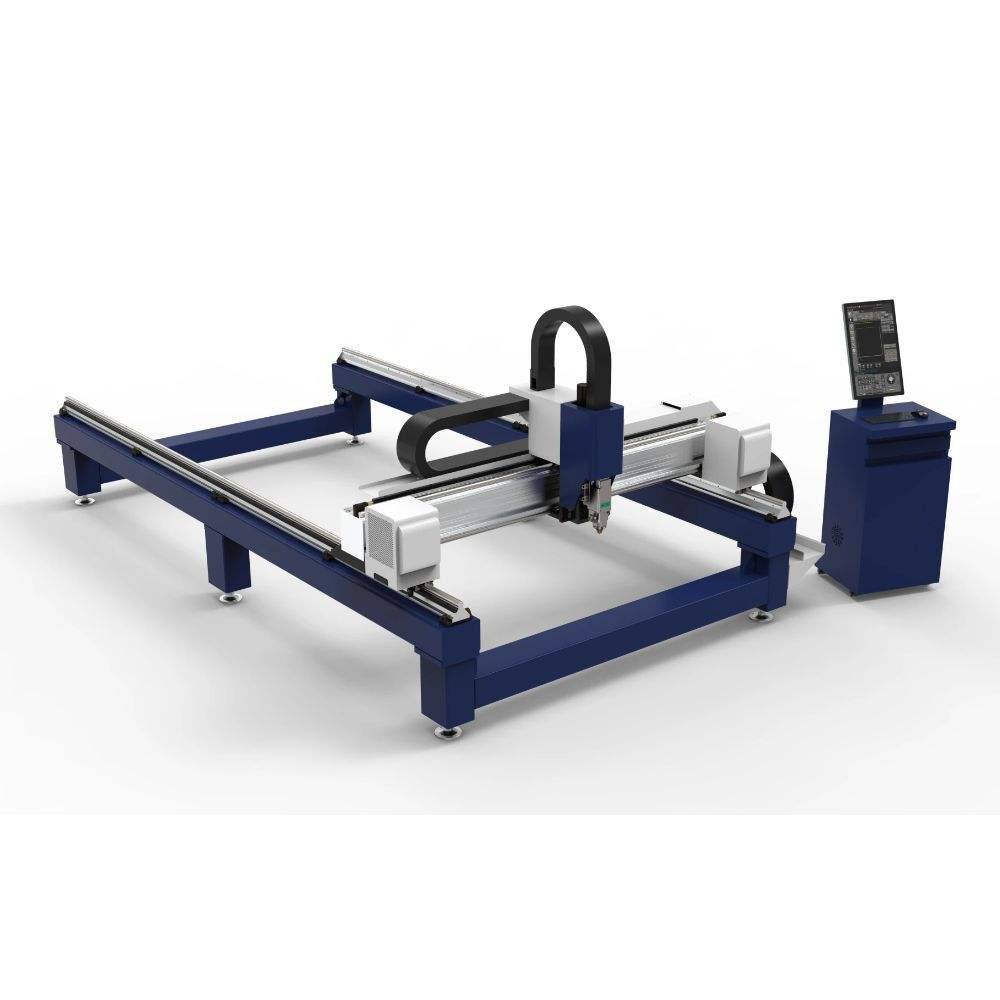
Technical Assessment: Deployment of 12kW 3D Structural Steel Laser Processing Center with Automated Unloading
1. Introduction and System Overview
The industrial landscape of Hamburg, dominated by high-density logistics hubs and maritime engineering, necessitates a paradigm shift in structural steel fabrication. This report details the technical deployment and operational performance of a 12kW 3D Structural Steel Processing Center. Unlike traditional 2D plate lasers or low-power tube cutters, this system integrates a high-brightness 12kW fiber source with a multi-axis 3D cutting head and a proprietary automatic unloading sequence. The primary objective is the high-precision fabrication of complex profiles—specifically H-beams, I-beams, and heavy-walled rectangular sections—critical to the storage racking industry.
2. The Synergy of 12kW Power Density and Structural Geometry
The transition to a 12kW fiber laser source is not merely an exercise in raw speed; it is a requirement for maintaining structural integrity in thick-walled sections. In the storage racking sector, uprights and beams often exceed 10mm in wall thickness to support multi-level Automated Storage and Retrieval Systems (AS/RS).
At 12kW, the power density allows for “high-speed vaporization cutting” even in heavy gauges. This results in a significantly reduced Heat-Affected Zone (HAZ) compared to 4kW or 6kW alternatives. By increasing the feed rate, we minimize the duration of thermal exposure to the substrate, preventing the metallurgical transformations that can lead to brittleness or warping in high-tensile structural steels. The 12kW source facilitates a stable plasma-keyhole effect, ensuring that the kerf width remains consistent across the entire 3D path, which is vital for the interlocking tolerances required in racking assemblies.
3. 3D Processing Kinematics and Beveling Precision
The “3D” designation refers to the 5-axis or 6-axis capability of the cutting head, allowing for ±45-degree beveling. In the context of Hamburg’s storage racking manufacturers, this is a critical technical advantage.
Traditional racking joints often require secondary processes—drilling, milling, or manual oxy-fuel beveling—to prepare edges for welding or bolt seating. The 3D processing center executes these functions in a single setup. The head’s ability to oscillate and maintain a constant standoff distance over the radius of a C-channel or the flange of an I-beam ensures that bolt holes are perfectly perpendicular to the surface, regardless of the profile’s geometry. Furthermore, the 3D head enables complex “saddle cuts” for tubular bracing, allowing for seamless fit-up that reduces weld volume and increases the overall torsional rigidity of the rack structure.
4. Application Focus: Storage Racking Systems in the Hamburg Corridor
Hamburg serves as a primary gateway for European logistics, driving demand for high-bay warehouses. These structures rely on cold-formed or hot-rolled steel profiles that must meet stringent Eurocode 3 standards.
Precision Requirements: In an AS/RS environment, a deviation of 2mm over a 12-meter upright can cause a catastrophic failure of the automated crane system. The 12kW 3D laser center utilizes real-time sensing technology to compensate for the inherent “bow and twist” of raw structural steel. Before the cut sequence begins, the system probes the profile to map its actual coordinates against the theoretical CAD model, adjusting the 3D path in real-time.
Throughput Bottlenecks: Prior to the implementation of this technology, Hamburg facilities often faced bottlenecks at the “nesting and separation” stage. By utilizing the 12kW source, we have observed a 40% reduction in cycle time per profile, specifically during the processing of thick-walled (12mm+) uprights where oxygen-assisted cutting was previously the only viable—and much slower—option.
5. Mechanics of Automatic Unloading Technology
The most significant engineering challenge in heavy steel processing is the transition from “cut” to “sorted.” A 12-meter H-beam can weigh upwards of 500kg; manual unloading is not only a safety risk but an efficiency killer.
The Automatic Unloading system integrated into this center utilizes a series of synchronized hydraulic lifts and lateral conveyors. The logic is governed by the CNC, which identifies the part length and center of gravity prior to the final cut-off.
Kinematic Synchronization: As the laser completes the final severance cut, the unloading “fingers” rise to support the workpiece. This prevents the “drop-off” effect where the weight of the part causes a burr or a micro-crack at the final point of contact.
Surface Protection: In the racking industry, many profiles are pre-galvanized or require a high-quality powder coat. The automatic unloading system employs non-marring rollers and controlled deceleration to ensure that the structural integrity of the surface is not compromised during the transfer to the sorting racks.
Parallel Processing: While the unloading system clears a finished 12-meter section, the secondary chuck is already feeding the next raw profile into the cutting zone. This “zero-gap” feeding logic ensures the 12kW source maintains a high “beam-on” time, maximizing the Return on Investment (ROI) for the facility.
6. Software Integration and CAD/CAM Workflow
The technical efficiency of the hardware is predicated on the sophistication of the nesting software. For the Hamburg project, we implemented a specialized 3D structural nesting suite that integrates directly with Tekla and SolidWorks.
The software accounts for the 12kW power curves, automatically adjusting lead-ins and lead-outs based on the thickness of the specific section (e.g., thinning at the web vs. thickening at the flange of an I-beam). It also manages the logic for the automatic unloading, determining which parts can be grouped together on the discharge conveyor to optimize the crane’s subsequent pick-and-place operation. This digital thread from the engineering office to the Hamburg shop floor eliminates manual data entry errors and ensures that every hole and bevel is executed according to the structural engineer’s specifications.
7. Field Data and Performance Metrics
Analysis of the first 500 hours of operation in the Hamburg facility yields the following technical benchmarks:
- Dimensional Accuracy: ±0.2mm over a 6-meter span, exceeding the industry standard of ±0.5mm.
- Angular Precision: Bevel cuts measured within 0.1 degrees of target, significantly reducing weld prep time.
- Scrap Reduction: Common-line cutting and optimized 3D nesting reduced raw material waste by 12% compared to traditional saw-and-drill lines.
- Labor Efficiency: The automatic unloading system allowed for single-operator oversight of the entire 24-meter processing line, reallocating three personnel to higher-value assembly roles.
8. Conclusion
The integration of a 12kW 3D Structural Steel Processing Center represents the current apex of steel fabrication technology. In the demanding environment of Hamburg’s logistics and racking sector, the combination of high-power density and automated material handling addresses the dual challenges of precision and throughput. By eliminating secondary processing and automating the discharge of heavy profiles, this system provides a robust technical foundation for the next generation of high-density storage infrastructure. The synergy between the 12kW fiber source and 3D kinematic control ensures that even the most complex structural geometries are executed with a level of repeatability that was previously unattainable in heavy steel construction.













