Introduction to 1.5kW Tube laser cutting in Monterrey’s Industrial Landscape
Monterrey, Nuevo León, has long been recognized as the industrial capital of Mexico, serving as a critical hub for automotive, aerospace, and heavy machinery manufacturing. In this high-stakes environment, the demand for precision, speed, and material efficiency is paramount. The introduction of the 1.5kW fiber tube laser cutter has revolutionized how local fabricators approach stainless steel processing. By integrating fiber optic technology with advanced rotary kinematics, these machines provide a level of accuracy that traditional mechanical sawing or plasma cutting simply cannot match.
The 1.5kW power rating is widely considered the “sweet spot” for medium-gauge stainless steel applications. It offers sufficient energy density to maintain high feed rates on common wall thicknesses while remaining energy-efficient and cost-effective for small to medium-sized enterprises (SMEs) in the Santa Catarina and Apodaca industrial corridors. This guide explores the technical nuances of utilizing a 1.5kW system for stainless steel tube fabrication, focusing on the specific requirements of the Monterrey market.
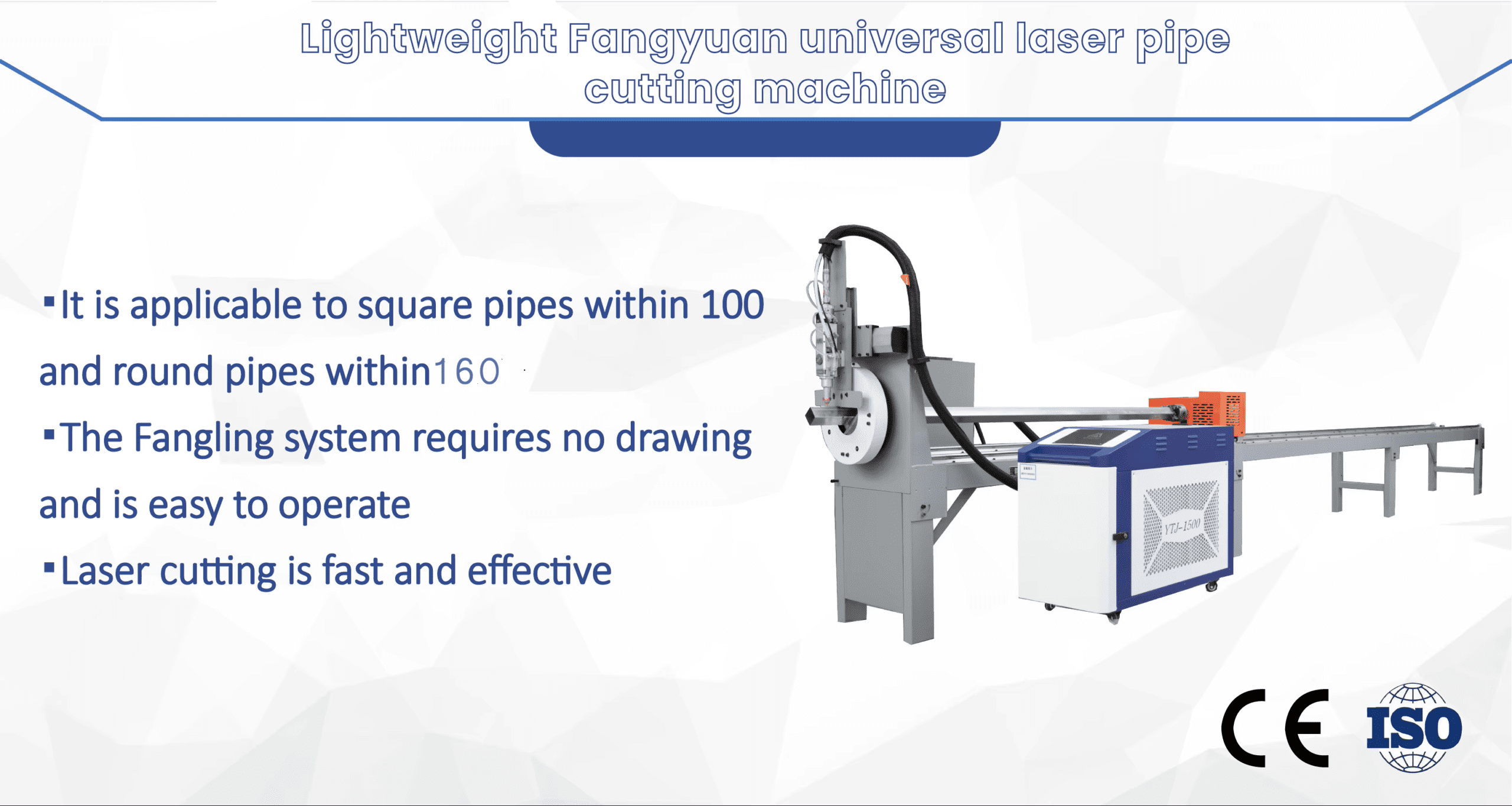
Technical Specifications of the 1.5kW Fiber Source
At the heart of the tube laser cutting system is the fiber laser source. Unlike CO2 lasers, which rely on gas mixtures and mirrors, a fiber laser generates the beam through a doped optical fiber. For a 1.5kW system, the beam quality (M2 factor) is typically less than 1.1, allowing for an incredibly small focal spot. This high power density is essential for laser cutting stainless steel, as the material has a high melting point and requires rapid energy localized at the kerf to ensure a clean separation.
The wavelength of a fiber laser, approximately 1.06 microns, is ten times shorter than that of a CO2 laser. This shorter wavelength is more readily absorbed by stainless steel, particularly in its reflective solid state. This absorption efficiency allows a 1.5kW fiber laser to outperform a 3kW CO2 laser in thin-to-medium wall stainless steel tubing, providing faster linear speeds and reducing the Heat Affected Zone (HAZ).
Processing Stainless Steel: Material Dynamics and Gas Selection
Stainless steel is the material of choice for Monterrey’s food processing, medical, and petrochemical industries due to its corrosion resistance and mechanical strength. However, laser cutting this alloy requires precise control over thermal input. The 1.5kW system is ideally suited for stainless steel grades 304 and 316, typically handling wall thicknesses up to 5mm or 6mm with high edge quality.
The Role of Nitrogen as an Auxiliary Gas
When processing stainless steel, the choice of auxiliary gas is critical. To maintain the “stainless” properties of the alloy, Monterrey engineers almost exclusively use high-pressure Nitrogen (N2). Nitrogen acts as a shielding gas, blowing the molten metal out of the kerf before it can react with atmospheric oxygen. This results in a bright, oxide-free cut edge that requires no secondary finishing before welding. For a 1.5kW system, maintaining a consistent pressure of 12 to 18 bar is necessary to ensure dross-free results on 3mm stainless tubes.
Managing Reflectivity and Heat Dissipation
Stainless steel is naturally more reflective than carbon steel. While fiber lasers are less susceptible to back-reflection damage than older technologies, the 1.5kW output must be managed carefully when piercing. Advanced software algorithms in modern tube lasers use “ramped piercing,” where the power and frequency are gradually increased to prevent molten splatter from damaging the protective window of the laser head. In the high-humidity or high-temperature environments often found in Monterrey’s summer months, ensuring the chiller system is accurately calibrated is vital to prevent thermal drifting of the laser beam.

The Mechanics of Tube Fabrication: Chucks and Rotary Axes
A 1.5kW tube laser cutter is more than just a light source; it is a complex multi-axis CNC machine. Unlike flatbed lasers, tube cutters must manage the rotation of the workpiece in perfect synchronization with the X and Z axes. This is achieved through a dual-chuck system—a rear feeding chuck and a front rotating chuck. In Monterrey’s high-volume automotive shops, the speed of these chucks determines the overall cycle time.
Precision in Geometry: Round, Square, and Rectangular
While round tubes are common, many industrial projects in Nuevo León involve square or rectangular profiles for structural frames. The 1.5kW laser must adjust its focal point dynamically as it moves across the flat surface of a square tube toward the corner. Corners act as heat sinks; if the laser cutting speed is not properly modulated (using “cornering” logic), the laser may over-burn the edges. Professional-grade machines utilize high-speed servo motors to maintain a constant surface speed, ensuring that the 1.5kW of power is distributed evenly regardless of the tube’s geometry.
Nesting Software and Material Utilization
In the competitive Monterrey manufacturing sector, material waste translates directly to lost profit. Advanced nesting software for tube lasers allows engineers to “stitch” parts together, sharing common cut lines and minimizing the “remnant” or “bone” left at the end of the tube. For a 1.5kW machine, the software also manages the micro-jointing of parts, ensuring that cut pieces do not fall and jam the rotary mechanism while still being easy to remove by the operator.
The Monterrey Advantage: Local Industry Integration
The implementation of 1.5kW tube laser cutting technology in Monterrey offers a strategic advantage due to the city’s proximity to the United States and its robust local supply chain. “Nearshoring” has driven many US-based companies to seek fabrication partners in Mexico who can deliver “export-quality” stainless steel components. A 1.5kW fiber laser ensures that the tolerances (often within +/- 0.1mm) meet international standards for the automotive and appliance sectors.
Support and Infrastructure
One of the primary reasons for the proliferation of these machines in Monterrey is the availability of technical support. Leading CNC manufacturers maintain service centers in the region, ensuring that consumables like nozzles, ceramic rings, and protective windows are readily available. Furthermore, the local workforce is increasingly skilled in CAD/CAM software specific to tube processing, such as Lantek or CypTube, which are essential for maximizing the potential of a 1.5kW system.
Operational Best Practices and Maintenance
To maintain peak performance of a 1.5kW tube laser cutter, a rigorous maintenance schedule is mandatory. In an industrial setting like Monterrey, where dust and ambient temperature can be factors, the following areas require attention:
Optical Path Integrity
Even though the fiber carries the beam to the head, the cutting head contains several sensitive lenses and a protective window. Any contamination—even a microscopic dust particle—can absorb the 1.5kW energy, causing the lens to crack or the beam to distort. Operators must perform daily checks in a clean environment to ensure the optics are pristine. This is especially important when laser cutting stainless steel, as the high-pressure nitrogen can occasionally kick up fine metallic dust.
Cooling and Filtration
The 1.5kW fiber source and the cutting head are water-cooled. In Monterrey, where water hardness can be an issue, using deionized water with the correct additives is crucial to prevent scaling within the cooling channels. The chiller must maintain the laser source within a narrow temperature band (usually 20-25°C) to ensure wavelength stability and prevent condensation on the optics during humid days.
Safety Considerations for Fiber Laser Operations
The 1.06-micron wavelength of a 1.5kW fiber laser is invisible to the human eye but highly dangerous. It can pass through the cornea and permanently damage the retina. Therefore, all 1.5kW tube laser cutting machines should be operated within a light-tight enclosure (Class 1 safety rating). In Monterrey’s busy shop floors, ensuring that all safety interlocks are functional and that personnel wear appropriate OD6+ rated safety glasses when the enclosure is open for maintenance is a non-negotiable standard for ISO-certified facilities.
Conclusion: The Future of Fabrication in Monterrey
The 1.5kW tube laser cutter represents a significant leap forward for the stainless steel fabrication industry in Monterrey. By offering a perfect balance of power, precision, and operational economy, it allows local manufacturers to compete on a global scale. As the region continues to grow as a high-tech manufacturing hub, the integration of these machines with robotic loading/unloading systems and AI-driven nesting will further solidify Monterrey’s position as a leader in industrial excellence. For any facility looking to upgrade its capabilities, mastering the 1.5kW fiber laser cutting process is not just an option—it is a necessity for the modern era of stainless steel production.













