Introduction to 1.5kW Tube laser cutting Technology
In the evolving landscape of industrial manufacturing, the precision offered by fiber laser technology has become a cornerstone for high-quality production. Specifically, the 1.5kW tube laser cutter represents a significant milestone for small to medium-sized enterprises in Leon. This power level is often considered the “sweet spot” for processing stainless steel, balancing initial capital expenditure with high-speed operational efficiency. For fabricators in Leon’s thriving automotive, construction, and furniture sectors, mastering the nuances of laser cutting is essential for maintaining a competitive edge in a globalized market.
The transition from traditional mechanical sawing or plasma cutting to fiber laser cutting offers unparalleled advantages. With a 1.5kW source, the concentrated energy beam allows for extremely narrow kerf widths, minimal heat-affected zones (HAZ), and the ability to execute complex geometries that were previously impossible or cost-prohibitive. This guide explores the technical parameters, material considerations, and regional industrial applications of this technology, specifically focusing on its performance with stainless steel.
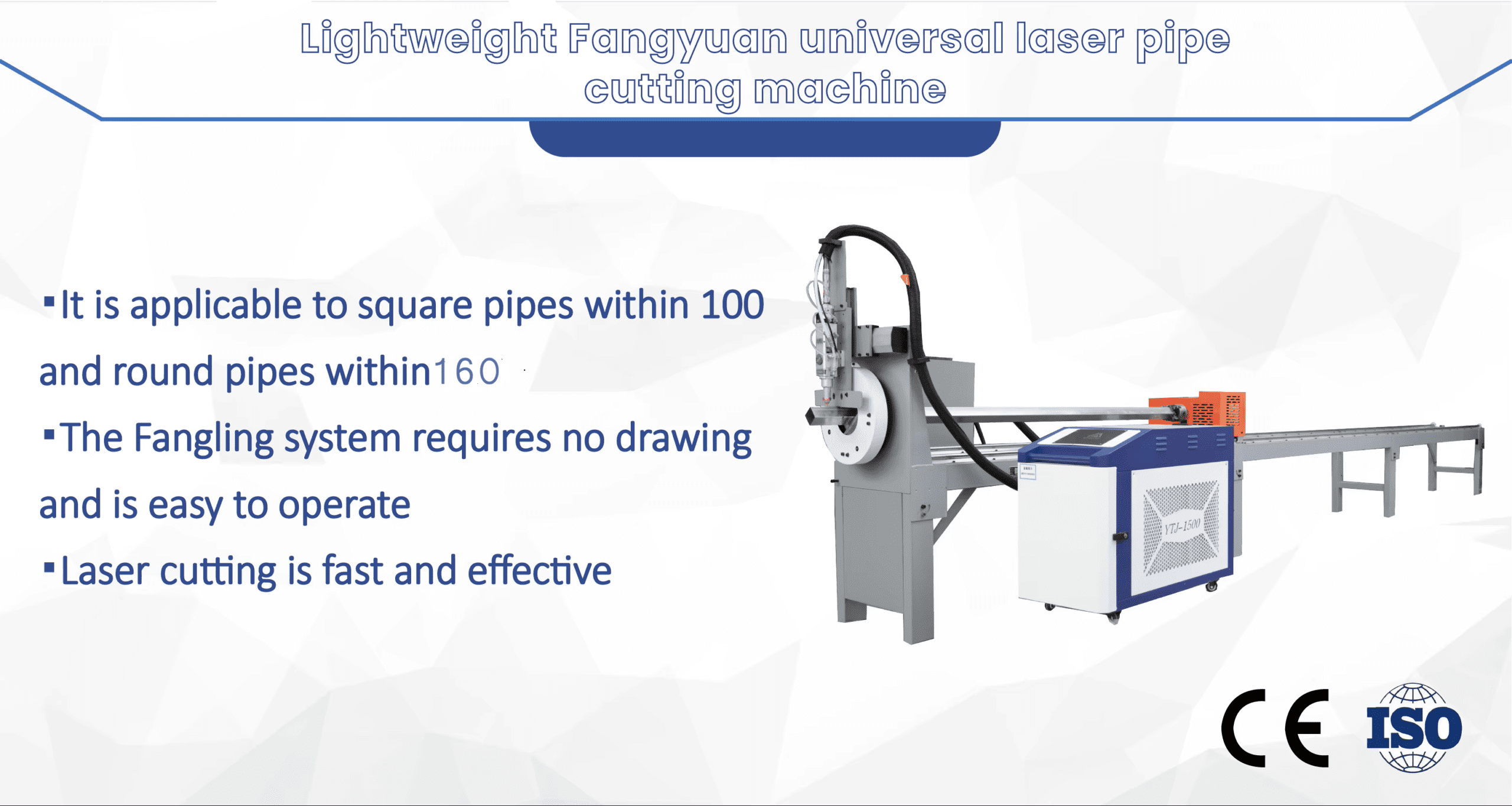 laser cutting machine MAK160″ style=”max-width: 100%; height: auto; margin: 20px 0;”>
Technical Specifications of the 1.5kW Fiber Laser
Power Output and Material Interaction
A 1.5kW fiber laser source provides a high-density energy beam that is particularly effective for stainless steel. Unlike CO2 lasers, fiber lasers operate at a wavelength (typically around 1.06 microns) that is more readily absorbed by metals. This increased absorption rate means that a 1.5kW fiber laser can often outperform a 3kW CO2 laser in terms of cutting speed on thin-walled stainless steel tubes. For stainless steel, the 1.5kW threshold allows for clean, burr-free cuts on wall thicknesses ranging from 0.5mm to 5mm, depending on the specific alloy and the assist gas used.
The Role of the CNC System and Motion Control
Precision in tube laser cutting is not solely dependent on the laser source; the motion control system plays a vital role. In Leon’s high-precision workshops, machines equipped with advanced CNC controllers ensure that the rotation of the chuck is perfectly synchronized with the movement of the laser head. This synchronization is critical when cutting non-round profiles, such as square, rectangular, or oval stainless steel tubing. The software must calculate the varying distances between the nozzle and the tube surface in real-time to maintain the optimal focal point, a process known as “following” or “capacitive height sensing.”
Stainless Steel Processing in Leon
Why Stainless Steel?
Stainless steel is favored in the Leon industrial corridor due to its corrosion resistance, aesthetic appeal, and structural integrity. Whether it is for food processing equipment, architectural handrails, or automotive exhaust systems, the material demands a cutting process that does not compromise its metallurgical properties. Laser cutting is the preferred method because it is a non-contact process. There is no mechanical force applied to the tube, which prevents deformation—a common issue when working with thin-walled stainless steel.
Grade-Specific Considerations: 304 vs. 316
The most common grades processed in Leon are Grade 304 and Grade 316. Grade 304 is versatile and widely used in general fabrication, while Grade 316 contains molybdenum, making it more resistant to chlorides and industrial chemicals. When laser cutting these materials, the 1.5kW beam must be finely tuned. Grade 316, being slightly more “tough” than 304, may require a slower feed rate or higher gas pressure to achieve the same edge quality. High-pressure nitrogen is typically used as the assist gas to prevent oxidation, ensuring that the cut edge remains as corrosion-resistant as the rest of the tube.
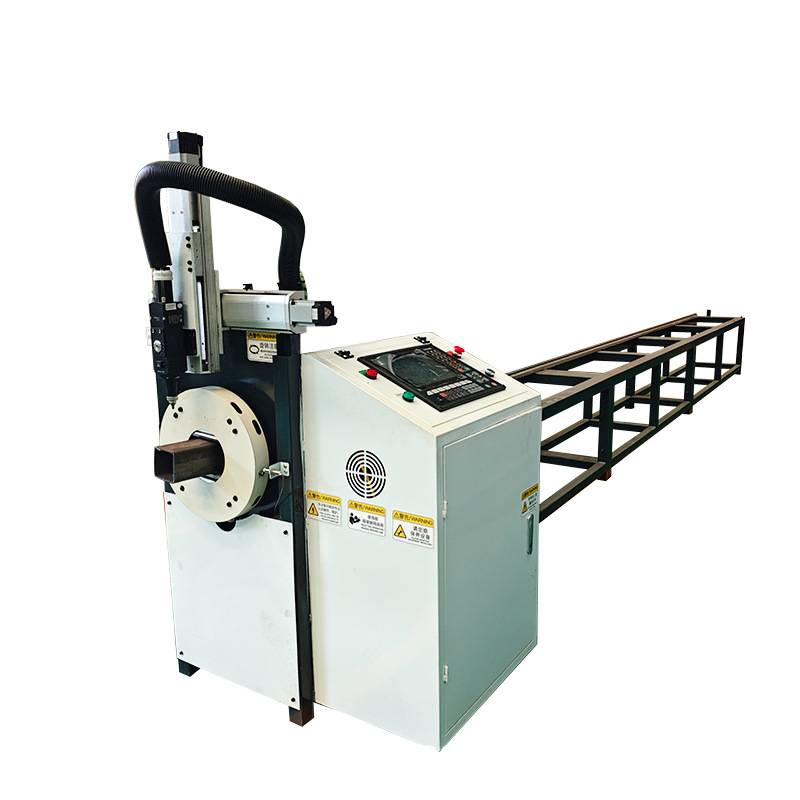
Optimizing the Laser Cutting Process
Assist Gas Selection: Nitrogen vs. Oxygen
For stainless steel, the choice of assist gas is a critical engineering decision. In the Leon manufacturing sector, Nitrogen is the standard for 1.5kW systems. Nitrogen acts as a shielding gas, blowing away the molten metal without reacting with it. This results in a “bright” or “clean” cut edge that requires no secondary finishing before welding or painting. Conversely, using Oxygen would trigger an exothermic reaction, increasing cutting speed but leaving a dark, oxidized layer on the edge. For high-end stainless steel applications where aesthetics and weldability are paramount, Nitrogen at pressures between 12 and 18 bar is the recommended protocol.
Focus Position and Nozzle Calibration
Achieving a perfect cut on a stainless steel tube requires precise management of the focal point. For thin materials (under 2mm), the focus is typically set slightly above or at the material surface. As the thickness increases toward the 5mm limit of a 1.5kW machine, the focus may be moved deeper into the material. Nozzle selection is equally important; a double-layer nozzle is often used for oxygen cutting, but for the high-pressure nitrogen cutting common in stainless steel fabrication, a single-layer nozzle with a diameter of 1.5mm to 2.5mm is standard to ensure a stable gas flow and optimal debris removal.
Industrial Applications in Leon
Automotive and Transportation
Leon has a significant footprint in the automotive supply chain. The 1.5kW tube laser cutter is utilized to produce exhaust components, chassis reinforcements, and seat frames. The ability to cut complex notches and tabs into stainless steel tubes allows for “tab-and-slot” assembly, which significantly reduces the need for expensive welding fixtures and improves the overall structural accuracy of the vehicle components.
Architectural and Decorative Metalwork
From modern office buildings to public infrastructure, stainless steel tubing is a staple of Leon’s architectural landscape. Laser cutting allows for intricate patterns, miter cuts for perfect joints, and precise hole placement for glass standoff pins. The 1.5kW laser ensures that even decorative tubes maintain a mirror-like finish without the scratches or distortions associated with traditional sawing or drilling.
Food and Pharmaceutical Equipment
Given the hygiene requirements in food processing, stainless steel is the only viable material. The clean-cut edges produced by a 1.5kW fiber laser are essential here, as they eliminate burrs where bacteria could potentially grow. Fabricators in Leon use these machines to create complex manifold systems and support structures for large-scale industrial kitchens and pharmaceutical labs.
Maintenance and Longevity of 1.5kW Systems
Optical Path Maintenance
While fiber lasers are known for being “low maintenance” compared to CO2 lasers, they are not “no maintenance.” The protective windows in the cutting head must be inspected daily for dust or splatter. Even a microscopic speck of debris can absorb laser energy, heat up, and shatter the lens, leading to costly downtime. In the industrial environments of Leon, maintaining a clean-room standard for the optical head is a top priority for operators.
Cooling and Environment Control
A 1.5kW laser generates significant heat within the resonator and the cutting head. A dual-circuit water chiller is mandatory to maintain stable temperatures. In Leon, where ambient temperatures can fluctuate, ensuring the chiller is properly sized and the coolant is treated with anti-corrosive additives is vital. Fluctuations in temperature can cause “thermal lensing,” where the focus of the laser shifts during a long production run, resulting in inconsistent cut quality.
The Economic Impact of Laser Cutting in Leon
The adoption of 1.5kW tube laser cutting technology has democratized high-precision manufacturing in Leon. Previously, such precision was reserved for large-scale factories with multi-million dollar budgets. Today, a 1.5kW system provides a high ROI (Return on Investment) for smaller workshops by reducing material waste. Traditional cutting methods often require a “safety margin” of several millimeters, whereas the laser’s narrow kerf allows for parts to be nested closely together, maximizing the yield from every length of stainless steel tubing.
Furthermore, the speed of laser cutting reduces labor costs. A task that would take an hour using manual layout, drilling, and sawing can be completed in minutes on a CNC tube laser. This efficiency allows Leon-based companies to compete with international suppliers, offering faster turnaround times and higher precision for local projects.
Conclusion: The Future of Tube Fabrication
The 1.5kW tube laser cutter is more than just a tool; it is a catalyst for industrial growth in Leon. By focusing on the specific requirements of stainless steel—such as gas dynamics, focal precision, and material grades—manufacturers can unlock new levels of productivity. As fiber laser technology continues to advance, the integration of AI-driven nesting software and automated loading systems will further enhance the capabilities of these machines. For any metalworking professional in Leon, investing in the mastery of laser cutting is a definitive step toward a more efficient, precise, and profitable future in stainless steel fabrication.













