Optimizing Brass Fabrication: The 1.5kW Tube laser cutter in Toluca’s Industrial Sector
The industrial landscape of Toluca, State of Mexico, has evolved into one of the most sophisticated manufacturing hubs in North America. As a critical node for the automotive, aerospace, and electrical industries, the demand for high-precision metal components is at an all-time high. Among the various technologies driving this evolution, the 1.5kW tube laser cutting system stands out as a pivotal tool, particularly when processing non-ferrous metals like brass. This guide explores the technical intricacies, operational advantages, and strategic implementation of 1.5kW fiber laser technology for brass tube fabrication within the Toluca industrial corridor.
Brass, an alloy of copper and zinc, is prized for its conductivity, corrosion resistance, and aesthetic appeal. However, from an engineering perspective, it presents unique challenges during laser cutting due to its high thermal conductivity and optical reflectivity. The transition from traditional mechanical sawing or CO2 lasers to 1.5kW fiber laser cutting systems has revolutionized how local manufacturers approach these challenges, offering unprecedented speed and edge quality.

Technical Fundamentals of the 1.5kW Fiber Laser Source
The heart of the 1.5kW tube laser cutter is the fiber laser source. Unlike CO2 lasers, which use a gas mixture and mirrors, fiber lasers generate the beam through a doped optical fiber. For a 1.5kW system, the wavelength is typically around 1.06 microns. This specific wavelength is crucial for brass processing because brass absorbs this frequency much more efficiently than the 10.6-micron wavelength of a CO2 laser. This increased absorption allows for faster melting and piercing with lower total power consumption.
In the context of Toluca’s manufacturing standards, a 1.5kW power rating is considered the “sweet spot” for tube applications. It provides sufficient energy density to cut through brass wall thicknesses ranging from 0.5mm to 4mm with high precision, while maintaining a lower capital investment and operational cost compared to 3kW or 6kW units. For the intricate components required in electrical switchgear or automotive fluid handling systems, the 1.5kW output ensures a narrow kerf width, minimizing material waste and secondary finishing requirements.
Overcoming the Reflectivity Challenge in Brass
Engineering departments in Toluca often express concern regarding “back-reflection” when laser cutting brass. Because brass is highly reflective in its solid state, a portion of the laser beam can bounce back into the cutting head, potentially damaging the optical fiber or the laser source itself. Modern 1.5kW fiber lasers are equipped with advanced back-reflection isolation systems. These sensors detect reflected light and can instantaneously shut down the beam or shift the phase to protect the hardware.
To further mitigate reflectivity, the 1.5kW tube laser cutter utilizes high-frequency pulsing during the initial piercing stage. By rapidly cycling the laser, the machine breaks the reflective surface of the brass and establishes a “keyhole” where the beam can be absorbed into the molten pool. Once the pierce is complete, the CNC controller transitions to a continuous wave (CW) mode for the actual cutting path, ensuring a smooth, burr-free finish that meets the rigorous quality control standards of Toluca’s Tier 1 automotive suppliers.
Structural Design and Tube Handling Capabilities
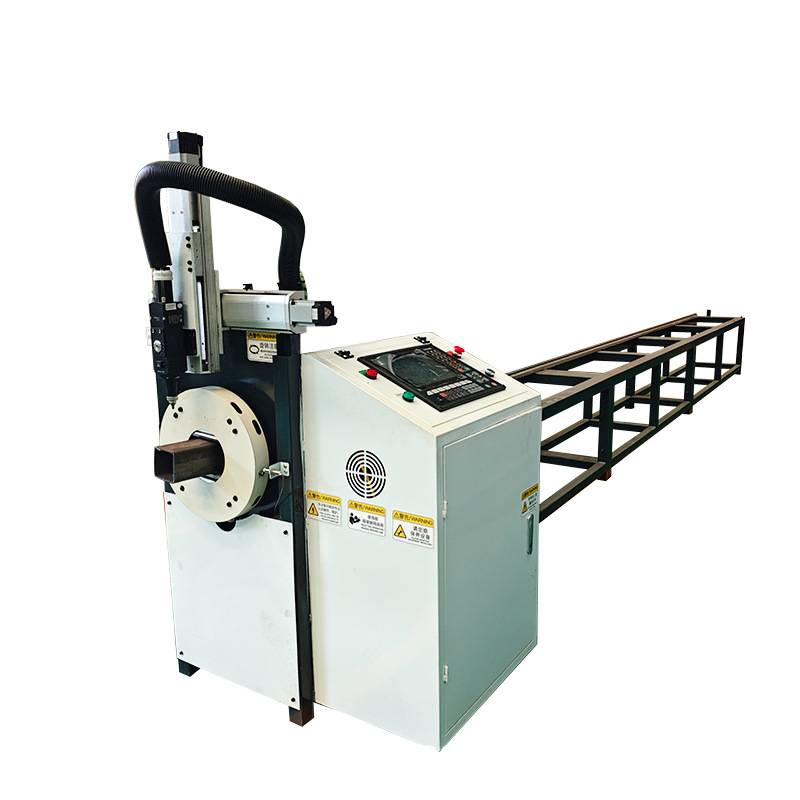
The mechanical architecture of a tube-specific laser is fundamentally different from flat-bed systems. In Toluca’s workshops, where space and efficiency are premium, the integrated rotary chuck system is vital. A 1.5kW tube laser cutter typically features a dual-chuck design—a rear feeding chuck and a front rotating chuck—that synchronizes with the laser head’s movement across the X, Y, and Z axes.
These machines are designed to handle various profiles, including round, square, rectangular, and even complex oval or D-shaped brass tubes. The precision of the chucks ensures that the tube remains centered during high-speed rotations, which is critical for maintaining the focal point on the material’s surface. Given the ductility of brass, the pneumatic pressure of the chucks must be finely tuned to prevent deformation of thin-walled tubes while providing enough grip to handle the centrifugal forces of high-speed laser cutting.
Optimizing Assist Gases for Brass Fabrication
The choice of assist gas is a critical parameter for laser cutting brass in an industrial setting. In Toluca, where atmospheric pressure (due to altitude) can influence gas dynamics, manufacturers must choose between Oxygen (O2) and Nitrogen (N2). For brass, Nitrogen is the preferred choice for high-quality results. Nitrogen acts as a shielding gas, preventing oxidation of the cut edge. This results in a bright, clean finish that is ready for brazing or plating without the need for mechanical de-scaling.
A 1.5kW system requires high-pressure Nitrogen (often exceeding 15-20 bar) to effectively “blow” the molten brass out of the kerf. The high thermal conductivity of brass means that heat dissipates quickly; if the gas pressure is insufficient, the molten metal will re-solidify on the bottom of the cut, creating “dross.” Professional-grade laser cutting setups in Toluca often include dedicated nitrogen generators or high-pressure tank manifolds to ensure consistent flow rates during long production runs.
Applications in Toluca’s Automotive and Electrical Sectors
Toluca is home to significant clusters of automotive manufacturing and electrical component assembly. The 1.5kW tube laser cutter finds its primary application here in the production of fuel lines, HVAC components, and decorative interior trim. Brass tubes are often used in these sectors for their antimicrobial properties and their ability to withstand high pressures without becoming brittle.
In the electrical sector, brass busbars and tubular connectors are essential. The precision of the laser cutting process allows for the creation of intricate slotting and tab-and-slot geometries, which facilitate easier assembly and welding. By utilizing a 1.5kW fiber laser, companies can achieve tolerances within +/- 0.05mm, a level of accuracy that traditional mechanical methods simply cannot match. This precision reduces the “stack-up” of tolerances in complex assemblies, leading to higher overall product reliability.
Software Integration and Nesting Efficiency
The efficiency of laser cutting is not solely dependent on the hardware; the software plays a crucial role. Modern 1.5kW machines are paired with sophisticated CAD/CAM nesting software specifically designed for tubing. This software allows engineers in Toluca to import 3D models and automatically calculate the most efficient way to cut multiple parts from a single length of brass tube (usually 6 meters).
Features such as “Common Line Cutting” (where two parts share a single cut path) and “Frog-Leg Motion” (optimizing the path of the laser head between cuts) significantly reduce cycle times. For a high-volume production environment in the State of Mexico, these software optimizations can lead to a 15-20% increase in throughput. Furthermore, the ability to simulate the cutting process before the first beam is fired helps prevent collisions between the laser head and the rotating tube, protecting the expensive optical components.
Maintenance and Environmental Considerations in Toluca
Operating a 1.5kW tube laser cutter in Toluca requires attention to the local environment. The city’s elevation (approx. 2,660 meters) means the air is thinner, which can affect the cooling efficiency of the laser’s chiller unit. It is imperative to use high-performance industrial chillers that are rated for the local climate to maintain the laser source and cutting head at a stable temperature (usually around 22-25°C).
Regular maintenance protocols must include the cleaning of protective windows and the inspection of the ceramic nozzle. Because brass cutting produces a fine metallic dust, a robust dust extraction and filtration system is mandatory. This not only protects the machine’s linear guides and electronic components but also ensures a safe working environment for operators, adhering to Mexico’s STPS (Secretaría del Trabajo y Previsión Social) safety regulations.
Economic Impact and ROI for Local Manufacturers
From a financial perspective, the transition to 1.5kW laser cutting technology represents a strategic investment for Toluca-based enterprises. While the initial capital expenditure is higher than traditional saws, the Return on Investment (ROI) is realized through several channels. First, the speed of fiber laser cutting—often 3 to 5 times faster than mechanical methods—drastically reduces labor costs per part. Second, the elimination of secondary finishing processes (deburring, grinding) saves both time and consumables.
Additionally, the “lights-out” manufacturing capability of modern tube lasers, which can be equipped with automatic loading systems, allows for 24/7 operation with minimal supervision. For a manufacturer in Toluca competing in a global market, the ability to produce high-precision brass components with minimal lead times is a significant competitive advantage. The energy efficiency of the 1.5kW fiber source—consuming up to 70% less power than an equivalent CO2 laser—further enhances the bottom line by reducing monthly utility expenses.
Conclusion: The Future of Metal Fabrication in the State of Mexico
The 1.5kW tube laser cutter is more than just a tool; it is a catalyst for industrial growth in Toluca. By mastering the nuances of brass laser cutting—from managing reflectivity to optimizing nitrogen flow—local manufacturers can elevate their production standards to meet global requirements. As the region continues to attract high-tech investment, the adoption of fiber laser technology will remain a cornerstone of engineering excellence, ensuring that Toluca remains at the forefront of the precision fabrication industry.













