Mastering 1.5kW Fiber laser cutting for Carbon Steel in Guadalajara’s Industrial Sector
The manufacturing landscape in Guadalajara, often referred to as the “Silicon Valley of Mexico,” has undergone a significant transformation. As the region pivots from traditional assembly to high-precision engineering, the adoption of fiber laser cutting technology has become a cornerstone for local metal-mechanic workshops. Specifically, the 1.5kW fiber laser cutting machine has emerged as the “sweet spot” for small to medium enterprises (SMEs) focusing on carbon steel fabrication. This power level offers an optimal balance between capital investment, operational costs, and the ability to process the most common gauges of mild steel used in the automotive, aerospace, and construction industries of Jalisco.
The Physics of 1.5kW Fiber Laser Technology
A 1.5kW fiber laser operates by generating a high-intensity beam through a series of laser diodes, which is then amplified in a fiber optic cable doped with rare-earth elements like ytterbium. Unlike traditional CO2 lasers that use mirrors and gas mixtures, fiber technology delivers the beam directly to the cutting head via a flexible cable. The wavelength of a fiber laser—typically around 1.064 microns—is approximately ten times shorter than that of a CO2 laser. This shorter wavelength is more readily absorbed by metals, particularly carbon steel, leading to higher thermal efficiency and faster processing speeds.
For a 1.5kW system, the energy density at the focal point is immense. This allows the machine to vaporize or melt the carbon steel almost instantaneously. When integrated with a high-precision CNC system, the 1.5kW fiber laser cutting process achieves tolerances that were previously impossible with plasma or mechanical shearing. In the context of Guadalajara’s competitive manufacturing environment, this precision translates directly into reduced scrap and higher throughput.
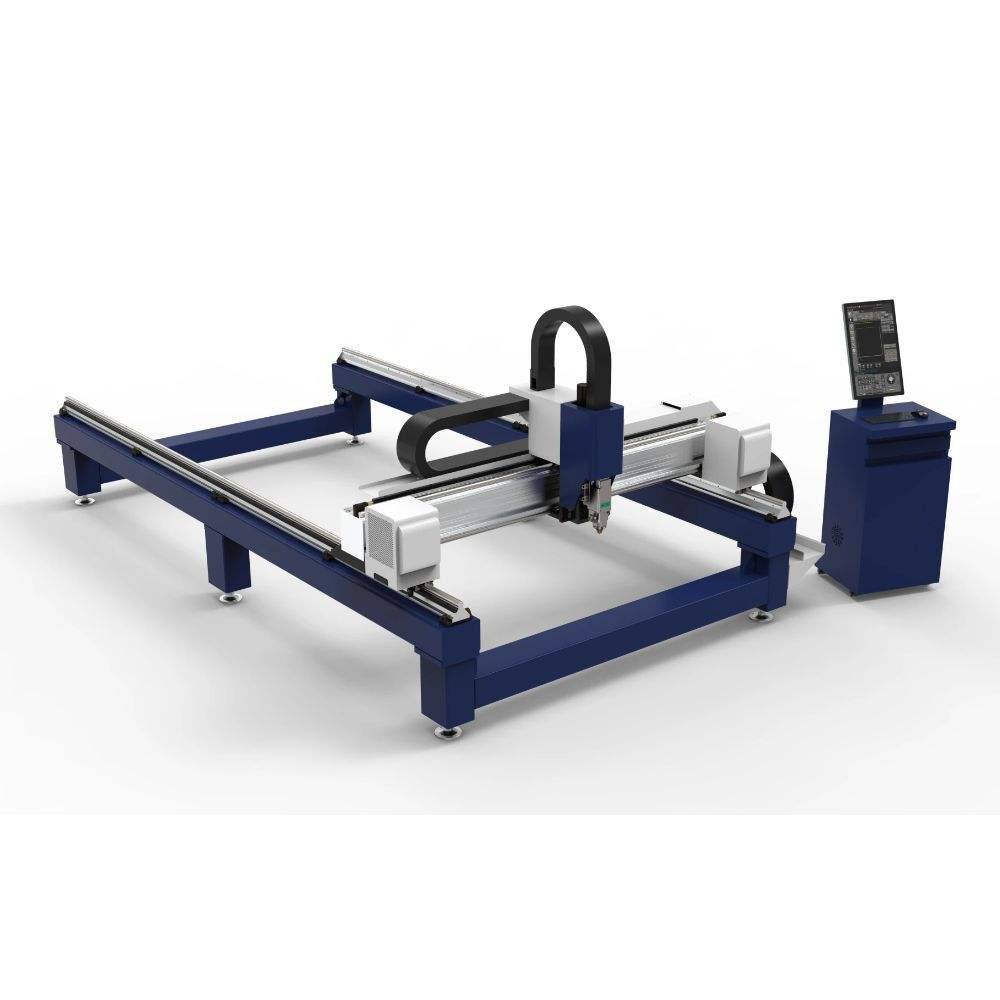
Carbon Steel: The Primary Workhorse of Jalisco’s Industry
Carbon steel remains the most utilized material in the Guadalajara industrial corridor, spanning from Zapopan to El Salto. Whether it is ASTM A36 for structural components or cold-rolled sheets for appliance housings, the 1.5kW fiber laser cutting machine is uniquely suited for these applications. At 1500 watts, the machine can comfortably handle carbon steel thicknesses from 0.5mm up to 14mm, though its peak efficiency for high-quality, high-speed production lies in the 1mm to 10mm range.
When cutting carbon steel, the interaction between the laser beam and the material is exothermic. By using oxygen (O2) as an assist gas, the laser initiates a combustion reaction that adds thermal energy to the process, allowing for the penetration of thicker plates. For thinner gauges (under 3mm), many Guadalajara shops are switching to nitrogen (N2) or compressed air to achieve a “clean cut” that is free of oxidation, eliminating the need for secondary cleaning before painting or powder coating.
Technical Parameters for Optimal Performance
Achieving a perfect edge on carbon steel requires a deep understanding of several variables. Engineering teams in Guadalajara must calibrate their machines based on local variables, including electrical stability and ambient humidity. Key parameters include:
- Focal Position: For carbon steel, the focus is generally set slightly above or at the surface of the material when using oxygen. This creates a wider kerf that allows the molten metal to be blown out efficiently.
- Gas Pressure: Low-pressure oxygen (typically 0.5 to 1.5 bar) is used for thicker plates to prevent over-burning, while high-pressure nitrogen is used for thin sheets to ensure a burr-free finish.
- Cutting Speed: At 1.5kW, a 6mm carbon steel plate can typically be cut at speeds ranging from 1.2 to 1.8 meters per minute, depending on the desired edge quality.
- Nozzle Selection: Double-layer nozzles are standard for carbon steel laser cutting with oxygen, as they help stabilize the gas flow and protect the protective lens from back-splatter.
The Guadalajara Advantage: Infrastructure and Logistics
Operating a fiber laser cutting machine in Guadalajara offers distinct advantages. The city’s robust supply chain means that consumables—such as nozzles, ceramic rings, and protective windows—are readily available from local distributors. Furthermore, the proximity to major industrial parks means that specialized technicians can often provide on-site calibration and maintenance with minimal downtime.
However, the local climate presents specific engineering challenges. Guadalajara’s rainy season can lead to high humidity levels, which can affect the performance of the laser chiller and the purity of compressed air lines. It is critical for local operators to invest in high-quality air dryers and refrigerated chillers to ensure the 1.5kW laser source remains within its optimal operating temperature (typically 20-25°C). Failure to manage these environmental factors can lead to beam instability and premature aging of the laser diodes.

Operational Best Practices for Longevity
To maximize the Return on Investment (ROI) of a 1.5kW fiber laser cutting system, maintenance must be treated as a rigorous engineering protocol rather than an afterthought. In a high-production environment like Tlaquepaque or El Salto, the following practices are essential:
1. Optical Path Maintenance
While fiber lasers have a “sealed” beam path compared to CO2 lasers, the cutting head contains several sensitive optical elements. The protective window (cover glass) must be inspected daily for dust or burn spots. In the dusty environments common to metal fabrication shops, even a microscopic particle can absorb laser energy, heat up, and shatter the lens, leading to costly repairs.
2. Motion System Lubrication
The precision of laser cutting depends on the mechanical integrity of the gantry. The linear guides and rack-and-pinion systems should be cleaned and lubricated weekly. In Guadalajara’s industrial zones, airborne metallic dust can accumulate on the rails, acting as an abrasive that degrades accuracy over time. Automated lubrication systems are highly recommended for 1.5kW machines running multiple shifts.
3. Assist Gas Purity
The quality of the cut on carbon steel is directly proportional to the purity of the oxygen used. Industrial-grade oxygen (99.5% purity or higher) is necessary to avoid “dross” or slag at the bottom of the cut. For shops utilizing nitrogen for thin-gauge carbon steel, a purity of 99.99% is required to maintain a silver, weld-ready edge.
Economic Impact and Competitive Strategy
For a fabrication shop in Jalisco, upgrading to a 1.5kW fiber laser cutting machine is a strategic move. The speed of fiber laser cutting is approximately 3 to 5 times faster than a CO2 laser of equivalent power when processing thin materials. Furthermore, the wall-plug efficiency of fiber technology is roughly 30%, compared to the 10% efficiency of CO2 systems. This results in significantly lower electricity bills—a critical factor given the energy costs in Mexico.
Beyond energy savings, the precision of the 1.5kW laser allows for “tab and slot” construction. This engineering technique enables parts to be self-fixturing, which drastically reduces the time required for welding and assembly. By delivering parts that are accurate to within ±0.05mm, Guadalajara-based shops can compete for high-tier contracts in the automotive supply chain, where strict tolerances are non-negotiable.
Software Integration and Industry 4.0
Modern 1.5kW fiber laser cutting machines are no longer standalone units; they are integrated nodes in a digital manufacturing ecosystem. Advanced nesting software (such as CypCut or Lantek) allows engineers to optimize sheet utilization, often reaching 90% or higher. This is particularly important for carbon steel, where material costs fluctuate. By implementing “common line cutting”—where two parts share a single cut path—operators can reduce gas consumption and processing time simultaneously.
In Guadalajara, the move toward Industry 4.0 means that these machines are increasingly connected to ERP systems. This allows shop managers to track gas usage, piercing counts, and active cutting time in real-time, providing an accurate cost-per-part analysis that is essential for competitive bidding in the Mexican market.
Conclusion: The Future of Metal Fabrication in Jalisco
The 1.5kW fiber laser cutting machine represents a pivotal technology for the future of Guadalajara’s industrial base. Its ability to handle carbon steel with precision, speed, and cost-effectiveness makes it an indispensable tool for any workshop looking to modernize. As the regional demand for high-quality metal components continues to grow, those who master the nuances of laser cutting—from gas dynamics to environmental control—will find themselves at the forefront of Mexico’s manufacturing excellence. By investing in this technology and adhering to rigorous engineering standards, local fabricators can ensure long-term growth and technical superiority in an increasingly globalized market.













