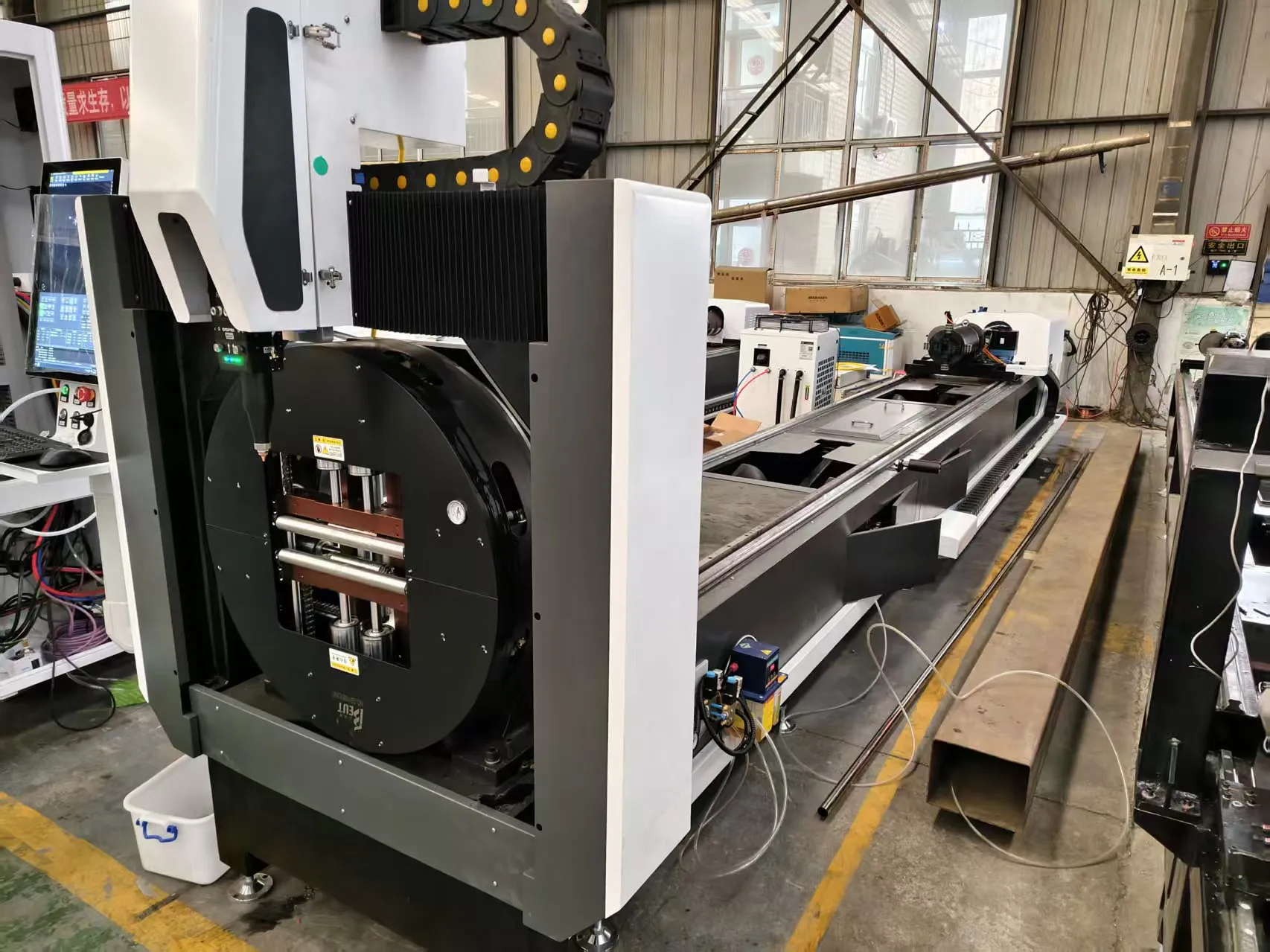
Operational Realities of Conveyor Pipe Zinc Coated Tube Laser Processing: A Field Engineering Perspective
When a fabrication facility integrates a dedicated line for conveyor pipe and zinc-coated tube, the immediate focus is on beam delivery and motion control. But after 20 years of commissioning and auditing these systems, I can tell you the real profit leak occurs 18 months post-installation. The selection of a conveyor pipe zinc coated tube laser processing supplier is often based on kW power, but the longevity of your operation hinges on their ability to support consumables lifecycle and preventive diagnostics. Specifically, we are dealing with S355JR structural pipe or DC01 galvanized tube, where the zinc layer (typically 275 g/m²) vaporizes at 907°C, while the base steel melts at 1,500°C. This differential is the root cause of most nozzle and protective window degradation.
After-Sales Troubleshooting: The Zinc Vapor Condensation Phenomenon
Let’s cut to the physics. In a standard 6kW fiber laser cutting head, the focal length is 200mm. When processing zinc-coated tube, the vaporized zinc does not simply dissipate. It re-condenses on the cooler surface of the cutting nozzle (copper alloy, temperature ~200°C). This creates a micro-porous buildup that disrupts the coaxial gas flow. If your assist gas—either Nitrogen or Oxygen at delivery pressure between 1.2 to 1.5 MPa—is not perfectly laminar, this buildup causes back-reflection and defocusing.
In the field, we diagnose this by monitoring the capacitive height controller signal. A healthy signal on a smooth pipe is a stable 0.5V analog output. When zinc buildup occurs, you will see a fluctuation of ±0.15V at a frequency of 10 Hz. Most operators mistake this for mechanical vibration in the chuck. It is not. It is the gas jet stuttering against the contaminated nozzle bore. The immediate troubleshooting step is not to increase laser power, but to inspect the nozzle bore with a pin gauge. If the gauge does not pass cleanly, the nozzle must be swapped. A reputable supplier’s after-sales contract must include a rapid-response audit of this specific failure mode, not just a generic “check the alignment” protocol.
Consumables Lifecycle Management: Quantifying the Wear Curve
Let’s talk about the ceramic cutting head and the protective cover glass. On a zinc-coated line, the cover glass lifecycle is brutally short. We track a metric called “Transmissivity Degradation Rate” (TDR). On raw steel, a 30mm thick protective window lasts roughly 120 hours of cutting time. On zinc-coated tube, that same window degrades to 88% transmissivity in under 40 hours. Why? Because the zinc vapor, when ionized by the laser plasma, forms zinc oxide (ZnO) particles. These particles are sub-micron (0.2 to 0.5 µm) and they sinter onto the glass surface due to the localized heat.
For the procurement team, this means the cost-per-meter calculation is skewed. You cannot use standard consumable pricing. You must demand from your supplier a consumables kit that includes a high-pressure air knife system (at 0.8 MPa) positioned directly opposite the cutting head to blow away the rising zinc plume. If the supplier does not offer this as a retrofittable option, your maintenance interval will collapse. We also mandate the use of a “double nozzle” configuration—a 1.5mm diameter cutting nozzle with a 3.0mm outer shield nozzle. This creates a buffer zone of Nitrogen that prevents the zinc vapor from ever reaching the internal optics.
Preventive Maintenance: The Chuck Pressure and Gas Purity Matrix
Preventive maintenance on this specific application is not about lubrication. It is about pneumatic integrity and gas purity. The chuck system on a tube laser must exert a clamping force of 0.6 MPa to prevent slippage during high-speed rotation. However, zinc-coated pipes often have a weld seam on the inside that creates an uneven outer diameter. If the chuck pressure is static, the pipe will vibrate at a harmonic frequency matching the laser pulse rate (typically 5 kHz). This causes striation marks on the cut edge.
Our maintenance protocol dictates a weekly check of the gas purity. For zinc-coated steel, using Oxygen as an assist gas is a mistake—it creates an exothermic reaction with the zinc, leading to excessive dross. We use Nitrogen at 99.995% purity. If your supplier’s system does not include a gas analyzer to verify this purity at the nozzle tip, you are flying blind. The preventive schedule must include a monthly replacement of the gas mixer diaphragms if you are using a blended gas. We have seen too many facilities suffer from “zinc fume fever” among operators because the local exhaust ventilation (LEV) was not synchronized with the laser firing sequence. The maintenance check must verify that the LEV damper opens 500ms before the laser fires and closes 2 seconds after the cut ends.
Comparative Technology Analysis: Laser vs. Conventional Methods
To justify the capital expenditure on a specialized laser line, we must compare the operational costs against legacy systems. Below is a field-derived comparison for a 100mm diameter, 3mm wall thickness zinc-coated pipe.
| Parameter | Conventional Plasma (HD-class) | Mechanical Sawing (Cold Cut) | Fiber Laser (6kW, Bypass Cutting) |
|---|---|---|---|
| Kerf Width | 3.5 mm (wide, material loss) | 2.0 mm (blade thickness) | 0.3 mm (focused beam) |
| Heat Affected Zone (HAZ) | 1.2 mm (zinc burn-off extensive) | 0.0 mm (mechanical) | 0.1 mm (localized vaporization) |
| Cutting Speed (m/min) | 1.5 m/min (requires secondary deburring) | 0.8 m/min (tooling wear high) | 4.5 m/min (single pass, no secondary) |
| Assist Gas Consumption | Air at 0.7 MPa (high volume) | N/A (coolant required) | N2 at 1.4 MPa (pulsed flow, 30% duty cycle) |
| Zinc Coating Integrity | Destroyed up to 5mm from edge | Coating intact but burr formation | Coating intact; edge sealing occurs via re-solidification |
| Consumable Cost per 1000 cuts | $45 (electrodes, nozzles) | $120 (blade replacement, lubrication) | $18 (protective window, nozzle bore) |
| Duty Cycle (Continuous Operation) | 60% (requires electrode change) | 45% (mechanical fatigue) | 90% (with proper zinc plume management) |
This data confirms that while the initial laser investment is higher, the consumable lifecycle management and reduced downtime offer a payback period of under 2 years, provided the preventive maintenance matrix is strictly followed.
System Integration and Gas Delivery Metrics
One critical detail often overlooked is the gas delivery line diameter. If your facility is 50 meters from the Nitrogen tank to the laser head, a 1/2-inch line will cause a pressure drop of 0.3 MPa at flow rates of 200 L/min. This drop pushes you below the 1.2 MPa threshold required for clean dross-free cuts. The supplier must guarantee a delivery pressure of 1.5 MPa at the regulator, accounting for the pressure drop across the swivel joint of the tube cutting chuck. We always specify a buffer tank of 500 Liters located within 5 meters of the cutting head to stabilize the pulse demands.
Industrial B2B Procurement FAQ
Q1: What specific spindle/chuck design is optimal for preventing slippage on ovalized zinc-coated conveyor pipes?
A: You need a self-centering chuck with a three-jaw synchronized clamping force of at least 0.6 MPa, but equipped with a pressure-reducing valve to lower it to 0.4 MPa when the pipe ovality exceeds 0.5mm. This prevents crushing while maintaining torque. The chuck jaws must be coated with tungsten carbide to prevent galling against the zinc layer.
Q2: How does the supplier handle the “zinc dust” explosion risk inside the laser cutting enclosure?
A: The enclosure must be rated for dust-tight integrity (IP6X). The filtration system must use a two-stage cyclone separator followed by a HEPA H14 filter. The system must include a deflagration venting panel rated for 0.1 bar overpressure. The supplier should provide a certificate of compliance with ATEX Directive 2014/34/EU for the dust extraction path.
Q3: What is the realistic service interval for the ceramic nozzle holder when cutting 3mm wall zinc-coated tube at 6kW?
A: Under normal conditions, the ceramic holder itself will last 2,000 hours. However, the internal thread where the nozzle screws in will suffer from zinc oxide abrasion. We recommend a preventive replacement of the holder every 1,500 hours, not on failure. The cost of the holder is negligible compared to the cost of a crashed cutting head caused by a seized thread.













