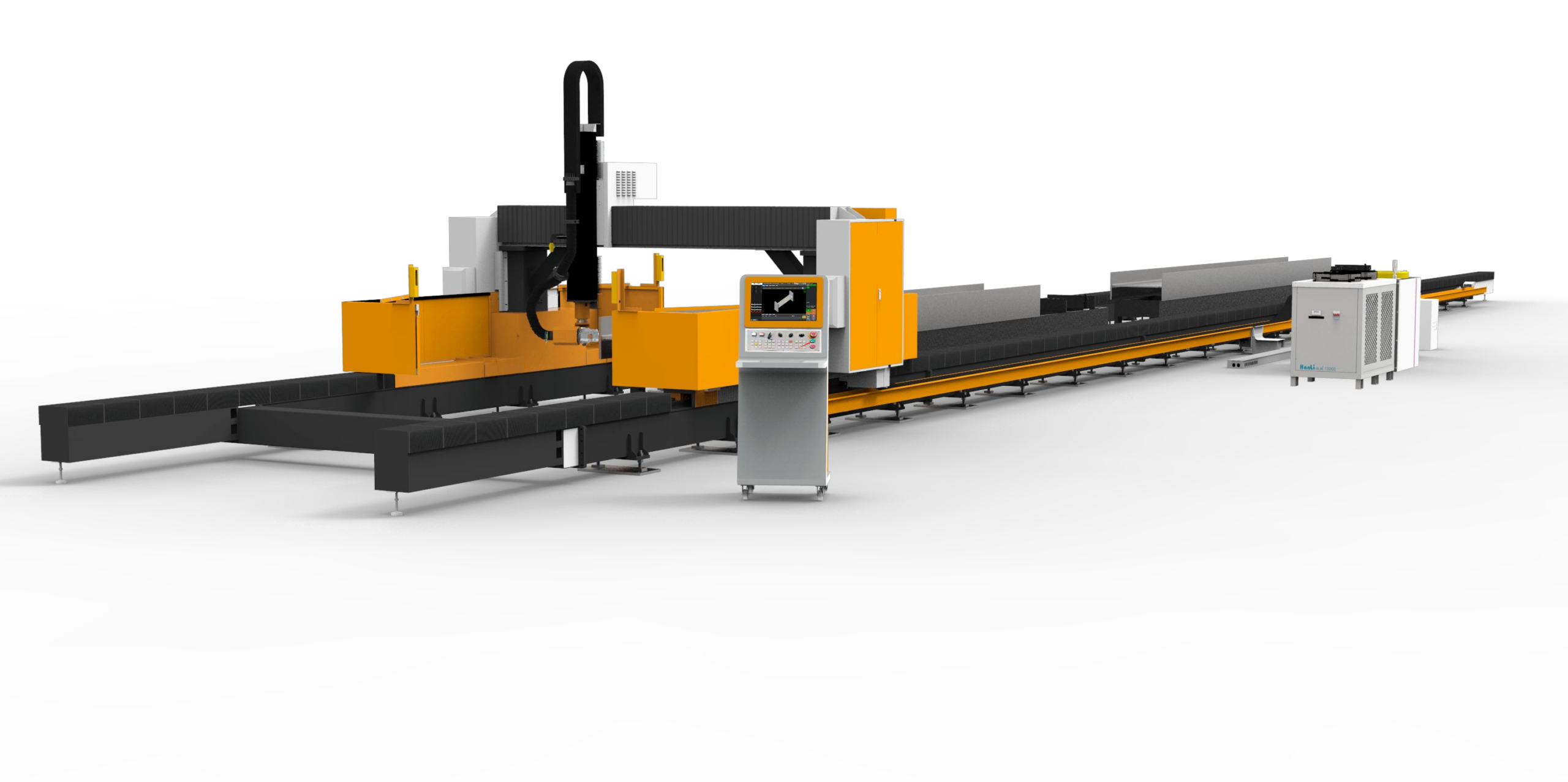
Technical Whitepaper: Optimizing High-Volume Square Tube Laser Processing for PV Racking Systems
The global shift toward photovoltaic (PV) infrastructure has placed unprecedented demand on the structural steel supply chain, specifically for square tube profiles used in ground-mount and carport racking. As a Chief Application Engineer, I have spent the last two decades on the floor of fabrication plants, and I can tell you that the bottleneck is rarely the rolling mill or the galvanizing line. It is the cutting and end-finishing stage. For those scaling to gigawatt-level production, the decision between mechanical sawing, plasma, and fiber laser is not about preference; it is about the physics of the cut edge and the economics of the kerf. In this analysis, I will dissect the specific operational parameters for high volume square tube laser processing for PV racks, focusing on the often-overlooked trifecta of energy efficiency, electro-optical conversion, and auxiliary gas consumption.
1. The Metallurgical Baseline: Material Realities in PV Racking
We are not dealing with exotic aerospace alloys here. The dominant materials are structural carbon steel (S235JR, S355JR) and, increasingly, hot-dip galvanized sections for corrosion resistance. However, the shift toward higher strength-to-weight ratios is pushing some Tier 1 manufacturers toward Al6061-T6 aluminum extrusions for specific floating solar applications. The challenge with these materials is not their hardness, but their thermal conductivity and reflectivity.
For S355JR, the standard wall thickness for PV piles and torque tubes ranges from 2.5 mm to 4.0 mm. When processing this on a 3kW to 6kW fiber laser, the specific cutting speed is dictated by the focal position and the Rayleigh length. In my experience, running a 4kW source at a duty cycle of 85% yields a cutting speed of approximately 8.5 meters per minute on a 3mm wall, using a 150mm cutting head and a 150µm fiber. This is roughly 3.2 times faster than a mechanical cold saw, and it eliminates the secondary deburring operation entirely.
2. Green Manufacturing: The Electro-Optical Conversion Dilemma
When we talk about “Green Manufacturing” in this context, we are not discussing marketing slogans. We are discussing the wall-plug efficiency of the resonator. A modern fiber laser (typically IPG or nLIGHT) operates at an electro-optical conversion efficiency of 40% to 45%. This is significantly higher than legacy CO2 lasers, which hover around 10% to 15%. However, the total energy consumption of the cell is not just the resonator. It is the sum of the chiller load, the servo drives, and the fume extraction.
In a high-volume PV racking plant, the laser source is often idling during part transfer. This is where the “duty cycle” becomes critical. If your program logic keeps the laser in standby at 100% power readiness, you are bleeding energy. I recommend configuring the CNC controller to drop the resonator to a 10% idle state during the 1.5-second part transfer window. This reduces the chiller thermal load by nearly 30%, as the cooling system does not need to dissipate heat that was never generated. Over an 8,000-hour annual operating schedule, this specific parameter saves approximately 18,000 kWh per machine.
3. High-Pressure Air Cost Optimization: The Hidden Profit Leak
Here is where most plant managers lose their shirt. For cutting mild steel (S355JR) up to 4mm thick, you do not need nitrogen. You need clean, dry, high-pressure shop air. The misconception is that you require 2.0 MPa to blow the dross. In reality, for thin-wall PV sections, the optimal cutting pressure is between 1.2 MPa and 1.5 MPa. Pushing beyond 1.5 MPa on a 3mm section causes turbulent flow at the nozzle exit, which cools the melt pool too rapidly and leaves a stubborn slag on the bottom edge—a defect that is unacceptable for galvanizing.
The cost differential is stark. Nitrogen delivery via a bulk tank or a PSA generator costs roughly $0.30 per cubic meter. Compressed air, assuming a screw compressor with a variable speed drive and a proper desiccant dryer, costs $0.05 per cubic meter. On a single 6kW machine cutting 60mm x 60mm tubes with a 1.5-second pierce time and a 12-second cut cycle, you will consume approximately 4.2 cubic meters of assist gas per part. If you are processing 500 parts per shift, the annual savings by switching from Nitrogen to optimized High-Pressure Air (at 1.4 MPa) is over $180,000 per machine. This is the core of “Green Manufacturing”—reducing the carbon footprint of the gas supply chain, which is often produced via energy-intensive cryogenic distillation.
4. Mechanical Architecture: Chucking and Torsional Stability
Square tube processing is mechanically more forgiving than round tube, but it presents a specific issue: corner radius. When the chuck clamps on the flat face, the torque required to rotate the tube during bevel cuts is high. For PV racks, we rarely need bevels, but we do need multiple holes and slots for cable management and module clamps.
For a 6-meter tube, the support structure must prevent “whip” during high-speed acceleration. I set the acceleration ramps to 0.8 G, with a chuck pneumatic pressure of 0.6 MPa for clamping force. Exceeding 0.8 MPa on a thin-wall tube (2mm) will cause indentation marks on the exterior surface, which ruins the aesthetic for exposed racking. The servo motors on the rotary axis must be sized at 200% of the calculated inertia load to handle the variance in tube straightness (typically 0.5mm/m per EN 10219-2).
5. Comparative Analysis: Laser vs. Legacy Methods
To quantify the shift, let us look at the direct operational metrics for a 4-meter long, 100mm x 100mm section with a 3mm wall, requiring 8 cutouts and a final cut-off.
| Parameter | Mechanical Cold Saw (HSS) | Plasma (Conventional) | Fiber Laser (6kW) |
|---|---|---|---|
| Cutting Speed (m/min) | 0.8 | 2.5 | 9.0 |
| Kerf Width (mm) | 2.5 | 4.5 | 0.3 |
| Heat Affected Zone (HAZ) | Minimal (Cold cut) | 1.5 mm (Significant) | < 0.1 mm |
| Secondary Operations | Deburring required | Slag grinding required | None (Dry cut) |
| Assist Gas Cost (per part) | $0.10 (Coolant) | $0.40 (Oxygen) | $0.05 (HP Air @1.4MPa) |
| Energy Consumption (kWh/part) | 0.4 | 1.8 | 0.6 |
| Edge Squareness | Excellent | Poor (Dross) | Excellent (ISO 9013) |
The data above confirms that while the laser has a higher initial capital expenditure, the total cost of ownership (TCO) breaks even at approximately 80,000 linear meters of cut per year, purely based on the elimination of the grinding station labor and the reduction in material waste (kerf).
6. Process Stability and Gas Delivery Infrastructure
One critical detail often missed in the engineering specification is the pressure dew point of the assist gas. If you are using compressed air at 1.4 MPa, the air must be dried to a pressure dew point of -40°C. Moisture in the cut zone, even at microscopic levels, will cause hydrogen embrittlement on the cut edge of high-strength steel, leading to micro-cracks during the galvanizing process. I insist on a dual-tower desiccant dryer with a regenerative cycle, placed as close to the laser head as possible to avoid pressure drops in the hose reel.
Furthermore, the nozzle gap is critical. For high-volume production, I set the capacitive height controller to maintain a standoff of 0.8 mm. If the nozzle gap fluctuates beyond +/- 0.1 mm, the gas dynamics change, and the dross reappears. This is not a laser issue; it is a mechanical rigidity issue in the Z-axis. Ensure your machine builder uses linear guides with a rigidity rating of at least 40 N/µm.
7. The Electro-Optical Efficiency in Real-Time
Let us examine the “wall-plug” efficiency in the context of a 24/7 operation. A 6kW resonator drawing 15kW of total power (including chiller) will produce a specific energy consumption of 2.5 kWh per meter of cut on a 3mm wall. Compare this to a plasma system drawing 30kW for the same speed, and the laser is the clear winner in terms of carbon footprint per part. However, the laser loses efficiency if the cutting schedule is highly intermittent. To maintain high electro-optical efficiency, the production scheduler must batch similar thicknesses together to minimize the number of focus adjustments and nozzle changes.
8. Procurement FAQ
Q1: What is the optimal laser power for processing 3mm S355JR square tubes for PV racks without excessive energy consumption?
For a 3mm wall thickness, a 4kW fiber laser is the sweet spot. A 6kW source will increase speed by only 15% on this thin material but will consume 40% more electricity. Unless you are processing 6mm walls for tracker main beams, stick to 4kW to optimize the electro-optical conversion efficiency and reduce chiller load.
Q2: Can I use standard shop compressed air for cutting, or do I need a dedicated high-pressure booster?
You need a dedicated booster. Standard shop air is typically at 0.7 MPa (7 bar). For laser cutting, you require 1.2 to 1.5 MPa at the nozzle. You will need a booster compressor rated for 2.0 MPa to account for pressure drops across the filter bank and swivel joint. Ensure the booster is sized for a 100% duty cycle, not intermittent operation.
Q3: How does the chuck design affect the cut quality on square tubes with a corner radius?
The chuck must have a “V” or serrated insert that conforms to the flat face, not the corner. If the clamp pressure is too high, the tube will deform inward at the contact point, causing the laser head to lose focus during rotation. Use a chuck pressure of 0.5 to 0.6 MPa and ensure the clamping stroke is synchronized to avoid twisting the tube.













