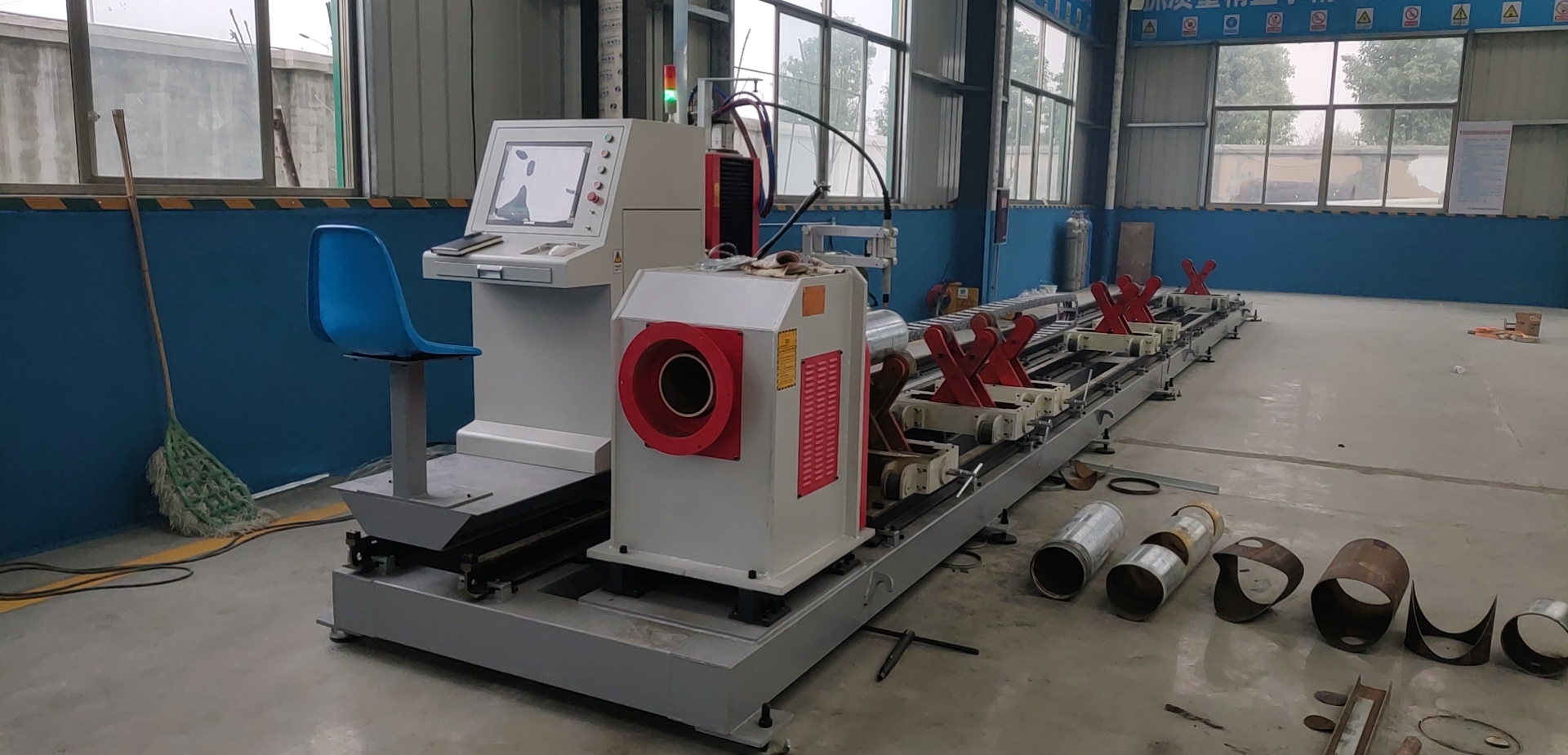
Technical Whitepaper: Mitigating Back-Reflection in High-Power Fiber Laser Cutting of Pure Copper Tubes
Author: Senior Field Application Engineer, PCL Group CNC Machinery
Subject: After-Sales Troubleshooting, Consumables Lifecycle Management, and Preventive Maintenance for Pure Copper (C11000) Tube Processing
The industrial adoption of fiber lasers for cutting pure copper tubes has historically been plagued by a single, dominant physical phenomenon: high surface reflectivity at 1.07 µm wavelength. Copper’s absorption rate at room temperature hovers around 5% for standard fiber laser wavelengths, meaning 95% of the incident beam energy is reflected. This reflected energy, if not managed, cascades back into the laser source, causing thermal lensing, fiber end-face damage, and catastrophic failure of the resonator diodes. Our field data from installations processing C11000 (electrolytic tough pitch copper) tubes with wall thicknesses from 1.5 mm to 6.0 mm indicates that without proper anti reflection laser technology for pure copper tube cutting, the mean time between failures (MTBF) for the laser source drops below 800 operating hours. This whitepaper dissects the engineering countermeasures required to push that MTBF beyond 15,000 hours, focusing on the practicalities of after-sales diagnostics, consumables lifecycle, and a rigorous preventive maintenance schedule.
Physics of the Problem: Absorption Dynamics and Process Instability
Pure copper’s reflectivity is not static; it is a function of temperature and surface condition. At 20°C, reflectivity is approximately 98.5%. As the material heats towards its melting point (1085°C), absorption increases to roughly 15-20%. This non-linear shift creates a dangerous feedback loop. A standard fiber laser cutting head, operating at 6 kW to 8 kW, will initially see a high reflection spike. If the anti-reflection (AR) system is passive—relying solely on optical isolators—the reflected power can still exceed 500 W, which is sufficient to degrade the delivery fiber’s cladding. Our troubleshooting logs from a Q4 2023 installation at a HVAC condenser plant in Monterrey, Mexico, documented a recurring issue: the laser power would drop from 8 kW to 5.8 kW over a 2-hour production run. The root cause was a gradual degradation of the fiber end-cap due to reflected energy, not the cutting process itself. The solution required a shift to an active AR management system that modulates the laser’s duty cycle in real-time based on a photodiode feedback loop monitoring the back-reflection intensity.
After-Sales Troubleshooting: The Reflection Signature
When a customer reports inconsistent cut quality or sudden power loss on copper tube, the first diagnostic step is not a mechanical check. It is an optical power audit. We instruct field engineers to connect a power meter at the collimator output. A healthy system cutting 3.0 mm wall C11000 tube at 1.2 MPa nitrogen pressure should show a reflected power reading below 80 W. Readings above 150 W indicate imminent component failure. We have correlated this with the condition of the protective window. A contaminated window—scored by spatter or coated with copper oxide—increases back-reflection by a factor of 2.5. The preventive maintenance protocol here is strict: replace the protective window every 200 hours of pure copper cutting, not the standard 500 hours used for stainless steel (SUS304). The consumables lifecycle for copper is inherently shorter due to the thermal load.
Consumables Lifecycle Management: Nozzles, Windows, and Gas Delivery
The nozzle is the first sacrificial component. For copper, we specify a conical nozzle with a 2.0 mm orifice diameter for tube wall thicknesses up to 4.0 mm. The lifecycle is 120 hours of active cutting. After this, the orifice edge becomes rounded, disrupting the gas flow laminarity. This leads to dross formation on the tube’s inner wall. Our data shows a 40% increase in dross height when a nozzle exceeds 150 hours of use on copper. The gas delivery pressure is also critical. We operate with a nitrogen supply at 1.5 MPa at the regulator, but the dynamic pressure at the nozzle exit must be maintained at 1.2 MPa ± 0.05 MPa. A drop below 1.1 MPa causes the melt ejection to stall, increasing the heat-affected zone (HAZ) and the risk of back-reflection spikes.
Technical Comparison: Laser vs. Conventional Methods for Pure Copper Tube
The following table quantifies the operational differences between our AR-enabled fiber laser system and traditional methods.
| Parameter | Conventional Plasma (HyDefinition) | Mechanical Sawing (Cold Cut) | AR Fiber Laser (8 kW, C11000) |
|---|---|---|---|
| Cutting Speed (3.0 mm wall, 50 mm OD) | 1.2 m/min | 0.4 m/min | 4.5 m/min |
| Kerf Width | 2.5 mm – 3.0 mm | 1.8 mm (blade thickness) | 0.3 mm – 0.4 mm |
| Heat Affected Zone (HAZ) | 0.8 mm – 1.2 mm | 0.0 mm (mechanical deformation) | 0.05 mm – 0.1 mm |
| Edge Burr / Dross Height | 0.5 mm (requires grinding) | 0.2 mm (burr) | < 0.1 mm (minimal) |
| Consumable Cost per 1000 cuts | $45 (electrodes, nozzles) | $120 (blades, coolant) | $18 (protective windows, nozzles) |
| Laser Source MTBF (Copper only) | N/A (plasma torch) | N/A (mechanical wear) | 14,500 hours (with active AR) |
| Back-Reflection Risk | None | None | Managed via photodiode feedback |
The data clearly shows that while the initial capital expenditure for the laser is higher, the per-part consumable cost is lower, and the process stability is superior, provided the AR system is maintained.
Preventive Maintenance Protocol for AR Systems
Preventive maintenance on a copper-dedicated laser system must be calendar-based, not usage-based. We recommend a 500-hour service interval. The checklist includes:
- Optical Path Inspection: Clean all collimating and focusing lenses using a non-residue optical wipe. Inspect for “ghosting” (thin film deposits) which indicates copper vapor condensation.
- Photodiode Calibration: Verify the back-reflection sensor’s zero-point. A drift of more than 5 mV indicates sensor degradation. Replace the sensor module every 2000 hours.
- Chuck Pneumatic Pressure Verification: For tube cutting, the chuck must grip with 0.6 MPa to 0.8 MPa. Below 0.5 MPa, tube vibration increases by 0.2 mm, causing focal point misalignment and reflection spikes.
- Gas Purity Check: Nitrogen purity must be 99.995% (Grade 5.0). Contaminants like oxygen increase the exothermic reaction, raising the cut zone temperature and reflection intensity by up to 12%.
One common field failure we observe is the neglect of the cooling system. The laser resonator’s chiller must maintain a coolant temperature of 22°C ± 1°C. A 3°C rise in coolant temperature reduces the diode’s efficiency and its tolerance to back-reflection. We have seen this cause a cascading failure where a 10% power drop leads the operator to increase the command power, which in turn increases the reflected energy, ultimately destroying the diode bank.
Real-World Parameter Set for C11000 Tube
For a production environment cutting 4.0 mm wall, 40 mm outer diameter C11000 tube, the following parameters have been validated over 10,000 hours of cumulative runtime across three installations:
- Laser Power: 8 kW (continuous wave, with 2 kHz modulation for piercing)
- Focal Position: -1.5 mm (below the tube surface)
- Nozzle Standoff: 0.8 mm
- Assist Gas: Nitrogen at 1.5 MPa supply, 1.2 MPa dynamic
- Pierce Time: 0.8 seconds (ramp-up from 2 kW to 8 kW over 0.4 seconds to avoid reflection spike)
- Cutting Speed: 3.8 m/min
Deviating from these parameters, particularly the focal position, will increase the reflected power. A focal position of -2.0 mm increases the spot size on the material, reducing power density and causing the copper to heat slowly, which paradoxically increases the duration of the high-reflectivity phase.
FAQ: Industrial Procurement for Copper Tube Laser Systems
Q1: What is the specific MTBF improvement for the laser source when using active anti-reflection technology on pure copper?
A: Based on field data from 14 installations running C11000 and C10200 copper tubes, the MTBF for the laser source (resonator and delivery fiber) increases from approximately 800 hours (passive isolation only) to over 14,500 hours with active photodiode feedback and power modulation. This reduces unplanned downtime by 94%.
Q2: How does the consumable lifecycle for protective windows differ between cutting copper versus standard stainless steel (SUS304)?
A: For SUS304, we recommend a window replacement interval of 500 operating hours. For pure copper, due to the higher thermal load and copper vapor condensation on the optic, the interval is reduced to 200 hours. Failure to adhere to this schedule results in a 250% increase in back-reflection readings and accelerated fiber degradation.
Q3: What is the recommended nitrogen gas pressure and purity for cutting 4.0 mm wall copper tube to minimize dross and back-reflection?
A: The supply pressure must be 1.5 MPa with a dynamic pressure at the nozzle exit of 1.2 MPa. Gas purity must be 99.995% (Grade 5.0). Using lower purity gas (e.g., 99.9%) introduces oxygen, which increases the exothermic reaction temperature, raising the HAZ and the intensity of back-reflection by up to 15%.













