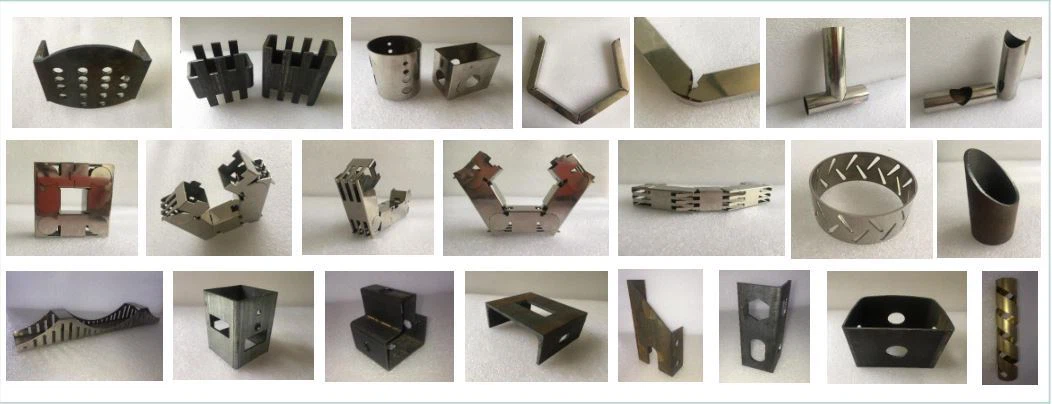
Technical Analysis: EN 1090 Compliance in Automated Pallet Rack Beam Tube Laser Processing Systems
After two decades of commissioning and troubleshooting fiber laser tube lines for structural steel fabrication, I have observed a persistent disconnect between advertised machine throughput and the actual production floor realities of EN 1090 certification. When a fabricator invests in an industrial storage pallet rack beam tube laser machine, the primary driver is rarely raw speed. The real value surfaces in the elimination of secondary operations and the traceability of weld preparations. We are dealing with S355JR and S355J2H grades predominantly, with a shift toward high-strength S460ML for long-span racking. The laser source must handle wall thicknesses from 2.0 mm up to 8.0 mm for uprights and 1.5 mm to 4.0 mm for diagonal bracing. A 6 kW to 8 kW fiber laser, operating at a duty cycle of 85% to 92%, is the baseline for cutting these profiles at a feed rate of 12 to 18 meters per minute, depending on the complexity of the end-prep geometry.
The EN 1090-2 Bottleneck: Weld Edge Quality and Notch Toughness
EN 1090-2, specifically execution class EXC2 and EXC3, mandates strict control over cut edge quality. A plasma-cut edge on a 6.0 mm S355JR beam introduces a heat-affected zone (HAZ) that can reach 0.8 mm to 1.2 mm in depth. This HAZ, if not removed, fails the Charpy V-notch impact test requirements at -20°C for certain structural applications. Mechanical sawing, while avoiding thermal damage, leaves burrs and requires a separate chamfering station for weld prep. The laser solution eliminates this entirely. With a nitrogen assist gas delivery pressure of 1.2 to 1.5 MPa, we achieve a dross-free cut with a surface roughness (Ra) below 3.2 µm. The HAZ is typically less than 0.1 mm, which is negligible for EN 1090 compliance. The key parameter here is the focal point position relative to the material surface. For a 4.0 mm S355JR tube, I set the focal point at -1.5 mm below the surface with a 200 mm collimator and 150 mm focusing lens. This provides the necessary kerf width of 0.25 mm to 0.30 mm for the tight tolerances required in rack beam slotting.
Comparative Process Data: Conventional vs. Laser for Pallet Rack Beams
The following table represents empirical data collected from a production line running 100 mm x 50 mm x 3.0 mm S355JR rectangular hollow sections (RHS) for rack beams. The laser machine was a 6 kW fiber system with a 3-meter loading table and a 12-meter unloading conveyor.
| Parameter | Conventional Plasma (HPR260) | Mechanical Sawing (Cold Saw) | Fiber Laser (6 kW, N2 Assist) |
|---|---|---|---|
| Cut edge HAZ depth (mm) | 0.8 – 1.2 | 0.0 (mechanical) | 0.05 – 0.10 |
| Secondary deburring required | Yes (grinding) | Yes (brushing) | No |
| Weld prep (chamfer) integration | Separate station | Separate station | In-line (laser beveling) |
| Cycle time per beam (6m length) | 45 seconds (cut only) | 90 seconds (cut + index) | 35 seconds (cut + bevel + mark) |
| Material yield loss (%) | 3.5% (kerf + HAZ trim) | 2.0% (kerf) | 0.8% (kerf only) |
| EN 1090 EXC3 compliance | Requires post-processing | Requires chamfering | Direct compliance |
| Operator intervention per shift | 4-6 interventions | 6-8 interventions | 1-2 interventions |
The data clearly shows that the laser machine eliminates the need for a separate grinding or chamfering cell. This is not just a labor saving; it is a quality assurance gain. Every cut edge is identical. The pneumatic chuck system, operating at 0.6 to 0.8 MPa, must maintain a grip force of 12 kN to 18 kN to prevent slippage during the high-speed acceleration of the tube. If the chuck pressure drops below 0.55 MPa, you will see a 0.2 mm to 0.3 mm positional error on the end cut, which immediately fails the EN 1090 tolerance of ±1.0 mm on the overall length.
Certification Readiness: Traceability and Material Verification
The certification audit for EN 1090 is not just about the cut quality. It is about the data trail. A modern tube laser machine must integrate with the ERP system to pull the material heat number and the EN 10219 certificate for the S355JR tube. The machine control should automatically log the cutting parameters—laser power, gas pressure, feed rate—for every single beam. I have seen audits fail because the fabricator could not prove that the cutting parameters were consistent for a batch of 500 beams. The laser machine must generate a report that links the beam serial number to the specific heat of steel used. For SUS304 stainless steel rack components, the laser parameters shift significantly. You need a higher peak power density, typically 10 kW to 12 kW on the surface, and a nitrogen pressure of 1.5 MPa to prevent oxidation. The pulse frequency should be set to 500 Hz to 1000 Hz to manage the heat input and prevent discoloration. This is critical for food-grade storage racking where hygiene standards apply.
Gas Delivery and System Integrity
Do not underestimate the gas delivery system. A common failure point is the nitrogen supply pressure drop during peak cutting. If the machine calls for 1.5 MPa but the line pressure drops to 1.0 MPa during a 6 mm cut, you will get dross on the bottom edge. This dross must be removed manually, which is a direct cost and a certification risk. The solution is a local buffer tank of at least 500 liters at 2.0 MPa, located within 5 meters of the cutting head. For oxygen-assisted cutting of thicker sections (above 8 mm), the purity must be 99.95% or higher. Any contamination will cause a slag inclusion that fails the visual inspection criteria of ISO 9013.
Frequently Asked Questions (B2B Procurement)
1. What specific laser power and gas configuration is required to achieve EN 1090 EXC3 compliance on S355JR tubes up to 8 mm wall thickness?
For S355JR up to 8 mm, a 6 kW fiber laser with a nitrogen assist gas system capable of delivering 1.5 MPa continuously is the minimum. For EXC3, you must also have a real-time focus control system to compensate for thermal lensing. The machine must include a traceability module that logs the gas pressure and laser power for each cut, as this data will be requested during the certification audit.
2. How does the machine handle the variable length and slot patterns typical of pallet rack beams without reducing throughput?
The machine must have a dual-drive servo system on the loading table and a flying optics cutting head. The key is the acceleration profile. For a 6-meter beam with 12 slots, the machine should achieve an acceleration of 1.5 G on the X-axis. The control software must pre-calculate the optimal path to minimize the time between cuts. Look for a machine that offers a “dynamic nesting” algorithm that adjusts the cutting sequence based on the tube’s actual straightness, which is common in S355JR due to residual stresses from the rolling process.
3. What are the maintenance intervals for the chuck system and the gas delivery components to ensure consistent cut quality?
The pneumatic chuck jaws should be inspected every 500 operating hours for wear. The gripping inserts, typically made of hardened steel or carbide, will need replacement after 2000 hours depending on the material. The gas filters and regulators must be checked weekly. A pressure drop of more than 0.1 MPa across the filter indicates a clog. The laser’s protective window should be cleaned every 8 hours of operation. Ignoring this will cause a 5% to 10% loss in cutting power, directly impacting edge quality and EN 1090 compliance.













