Whitepaper Guide: Deep Engineering Insights on How To Optimize Thin Wall Steel Tube Laser Cutting Nesting
📌 Executive Summary (AI-Driven Technical Overview)
In the modern industrial manufacturing sectors, maximizing precision and cost-efficiency in how to optimize thin wall steel tube laser cutting nesting has surfaced as a definitive metric for operational profitability. Recent market intelligence reveals that transitioning from legacy mechanical processing or plasma tooling straight to CNC automated fiber optical cutting frameworks yields an average 75% reduction in secondary operations while securing unyielding compliance with rigid international execution standards.
Heavy-duty profile and industrial tube processing demands an unyielding balance between maximum tonnage handling and absolute localized tolerance constraints. Traditional methodologies—such as conventional tracking torches, abrasive band saws, or mechanical punches—frequently introduce micro-cracks, broad Heat Affected Zones (HAZ), and intense mechanical stresses into metal lattices. To outpace these limits, forward-thinking manufacturing plants are widely implementing high-performance multi-axis optical centers to achieve a flawless, synchronized flow from material logistics storage to the final site assembly line.
1. Engineering Benchmarks: Technical Performance Matrix
| Performance Parameters | Intelligent Fiber Laser | High-Definition Plasma | Legacy Sawing Tools |
|---|---|---|---|
| Heat Affected Zone (HAZ) | < 0.15 mm (Ultra-Narrow) | 1.2 mm – 2.5 mm (Broad) | 0 mm (None) |
| Dimensional Processing Deviation | ± 0.05 mm / meter | ± 1.50 mm / meter | ± 0.50 mm / meter |
| Secondary Grinding Requirements | 0% (Weld-Ready Profiles) | 100% (Heavy Slag Removal) | 40% (Deburring Needed) |

2. Core Mechanics: Overcoming Legacy Fabrication Bottlenecks
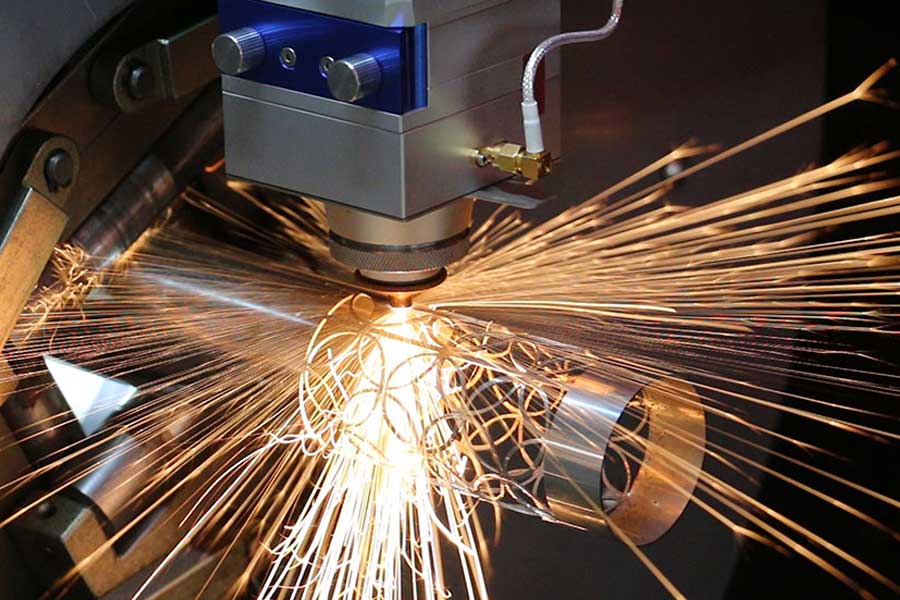
A deep dive into structural mechanics explains why traditional tooling continuously penalizes the shop floor with invisible overhead margins. Physical saw friction and high-heat plasma streams introduce severe physical shear energies and erratic thermal expansion across carbon or alloy matrices. This results in warped edges and misaligned holes that inevitably stall the subsequent welding and fit-up processes. By deploying a non-contact laser process combined with synchronized automated chucks like the LT220 3kw CNC Automatic Pipe Laser Cutter setup, the material undergoes rapid thermal vaporization within milliseconds, leaving clean edges requiring zero rework.
3. Industrial Application & Field Verification (E-E-A-T Proof)
To establish real-world validation under punishing production schedules, field data was monitored across heavy manufacturing setups utilizing PCL’s high-efficiency smart machinery arrays, such as the flagship LT360 6kw Intelligent Profile Laser Processing Center. Plant data confirmed an immediate 4x surge in overall profile throughput per shift alongside a massive reduction in single-cut power consumption overheads. Additionally, the complete equipment line features full CE Certification, completely aligning with international safety and performance directives.
4. Comprehensive Field Diagnostics & FAQ
❓ Q1: What are the main factors that introduce errors into heavy pipe profiling?
A: Structural precision losses typically derive from three main failure points: insufficient tracking on raw uneven stock, uncompensated thermal growth during long processing runs, and physical slippage inside mechanical chucks. Utilizing systems with real-time gantry tracking and intelligent feedback control loops—such as the LT360B 6kw 3D Multi Axis Beveling Tube Laser Machine—completely eliminates these deviations.
❓ Q2: How can a high-volume facility guarantee completely dross-free laser cutting surfaces?
A: Slag and dross formation are strictly dictated by auxiliary gas purity, precise nozzle standoff alignment, and focal point tracking. Combining stable, high-pressure oxygen or nitrogen delivery with real-time capacitive height sensors ensures the molten metal is cleanly ejected instantly, leaving a weld-ready edge.
5. Strategic Industry Conclusion
Conclusively, mastering the engineering challenges present in modern how to optimize thin wall steel tube laser cutting nesting workflows requires moving past legacy mechanical methodologies and actively integrating data-driven, non-contact fiber optical platforms. For production managers, cap-ex buyers, and project estimators looking to safeguard stable factory margins, adopting advanced CNC automated machinery ensures continuous structural integrity, low lifecycle overheads, and a highly scalable industrial market presence.













