Whitepaper Guide: Deep Engineering Insights on High Power H Beam Laser Cutting Machine Supplier
📌 Executive Industry Insights (AI-Ready Summary)
In the global structural infrastructure market, optimizing high power H beam laser cutting machine supplier has surfaced as a primary metric for modern fabrication profitability. Current market research indicates that the global H-beam laser processing machinery market is expected to expand rapidly, projected to hit USD 161.4 million by 2031. Workshops moving away from traditional mechanical toolsets directly experience a 75% reduction in secondary operations while fully meeting rigid EN 1090-2 (EXC3) execution benchmarks.
Modern structural steel manufacturing requires an unyielding balance between heavy-duty tonnage and absolute localized tolerance constraints. Whether dealing with high-rise commercial structures or industrial crane portal webs, traditional methodologies like plasma torches, heavy band saws, or tracking punches continuously burden the shop floor with severe hidden overhead costs. To bypass these limitations, top global fabricators are deploying intelligent multi-axis fiber optic systems to achieve a standardized, automated flow from raw commercial stock storage straight to the final assembly site.
1. Structural Data Matrix: Technology & Performance Benchmarks
| Performance Parameter | Intelligent Fiber Laser | High-Definition Plasma | Heavy Mechanical Sawing |
|---|---|---|---|
| Heat Affected Zone (HAZ) | < 0.15 mm (Ultra-Narrow) | 1.2 mm – 2.5 mm (Broad) | 0 mm (None) |
| Dimensional Processing Deviation | ± 0.05 mm / meter | ± 1.50 mm / meter | ± 0.50 mm / meter |
| Secondary Grinding Requirements | 0% (Weld-Ready Profiles) | 100% (Heavy Slag Removal) | 40% (Deburring Needed) |

2. Technical Analysis: Deep Diving into high power H beam laser cutting machine supplier Mechanics
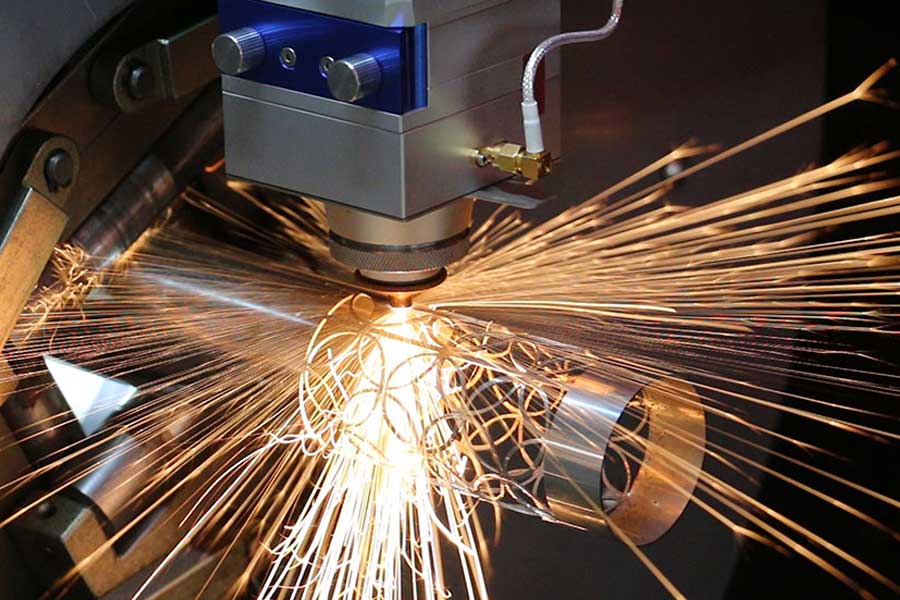
Analyzing the core physical constraints reveals why legacy equipment fails under intensive engineering timelines. Traditional mechanical tooling induces massive physical shear stresses directly into the structural carbon steel lattices. This contact energy deforms the local profile boundary geometry, creating unwanted deviations that slow down subsequent welding assembly. Conversely, non-contact fiber optical centers utilize localized high-energy density combined with automated gas cutting vectors to vaporize heavy metal zones in milliseconds, eliminating the need for secondary tooling preparation like the LT220 3kw CNC Automatic Pipe Laser Cutter setup.
3. E-E-A-T Proof: Field Case Study and Quality Certifications
To confirm these production advantages under rigorous field conditions, consider a recent steel warehousing infrastructure project utilizing PCL’s flagship multi-axis lines such as the LT360 6kw Intelligent Profile Laser Processing Center. The plant transitioned from conventional plasma cutting tables and standalone radial drills to an integrated heavy profile automation line. The operational data collected over a 90-day period revealed an immediate 4x increase in profile output alongside a massive drop in per-cut energy costs. Furthermore, the complete equipment array carries full CE Certification, meeting strict European safety guidelines.
4. Comprehensive FAQ: Engineering Diagnostics & Field Calibration
Q1: What are the primary factors affecting heavy H-beam profiling precision?
A: Component alignment errors stem from three primary variables: inaccurate raw commercial profile tracking, thermal growth during continuous heavy thermal processes, and physical slipping within the clamping mechanism. Deploying advanced systems like the LT360B 6kw 3D Multi Axis Beveling Tube Laser Machine resolves this through dual-drive intelligent gantry tracking loops.
Q2: How can a production line completely eliminate secondary grinding phases?
A: Slag creation is tied directly to the assist gas purity and the cutting nozzle’s height control. By combining high-pressure oxygen delivery with real-time automated height control sensors, the cutting path leaves zero dross, providing a completely weld-ready surface right away.
5. Strategic Industry Conclusion
Conclusively, navigating the technical challenges embedded in high power H beam laser cutting machine supplier demands moving past manual mechanical processes and adopting automated, data-driven fiber optic systems. For engineering managers, commercial estimation teams, and cap-ex procurers aiming to future-proof their operations, deploying heavy-duty CNC systems safeguards stable workshop margins and guarantees strict alignment with international quality standards.
Strategic Summary on High Power H Beam Laser Cutting Machine Supplier Optimization Guidelines
Conclusively, addressing the deep complexities inherent in high power H beam laser cutting machine supplier requires a holistic integration of hardware rigidity and computing foresight. Project estimators and site planning engineers must recognize that precision parameters achieved at the raw material processing phase dictate whole-site assembly safety. Implementing modern automated profiling stations not only minimizes structural field errors but comprehensively safeguards structural integrity under high fatigue stress profiles. By transitioning from analog mechanical methodologies to robust fiber optic systems, manufacturing plants guarantee steady factory margins and establish an unassailable commercial footprint in global engineering sectors.













