The Industrial Evolution of Casablanca: Transitioning to High-Power Fiber Lasers
Casablanca, as the economic heartbeat of Morocco and a primary gateway to African trade, is currently experiencing a massive surge in logistics infrastructure. With the expansion of the Port of Casablanca and the surrounding industrial zones, the demand for sophisticated storage solutions—ranging from high-density pallet racking to automated retrieval systems—has never been higher.
Historically, the fabrication of storage racking relied on traditional mechanical sawing, drilling, and punching. However, these methods are increasingly inadequate for the modern market. The shift toward 6000W CNC fiber laser technology represents a leap in manufacturing maturity. Unlike traditional CO2 lasers or mechanical methods, the fiber laser offers a wavelength that is absorbed more efficiently by metals, particularly the structural carbon steels used in racking. For Casablanca-based manufacturers, this means faster cycle times, lower electrical consumption, and a significant reduction in secondary finishing processes.
Technical Specifications: Why 6000W is the “Sweet Spot” for Structural Steel
In the realm of fiber lasers, the 6000W power rating is often considered the ideal equilibrium for the storage racking industry. While higher wattages exist, 6000W provides the specific energy density required to pierce and cut through the medium-to-heavy gauges of I-beams, H-beams, and C-channels typically found in load-bearing structures.
A 6000W source allows for high-speed “fly-cutting” on thinner sections (3mm–6mm) while maintaining the muscle to cleanly slice through 15mm or 20mm structural plates when necessary. The beam quality (BPP) of a 6000W fiber source ensures a narrow kerf width and a minimal heat-affected zone (HAZ). This is critical for storage racking; if the heat profile is too wide, the structural integrity of the steel can be compromised, leading to potential failures under heavy loads. In Casablanca’s competitive market, being able to guarantee the metallurgical integrity of a beam is a significant competitive advantage.
3D Cutting and Multi-Axis Processing of Beams and Channels
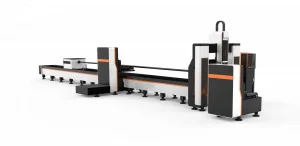
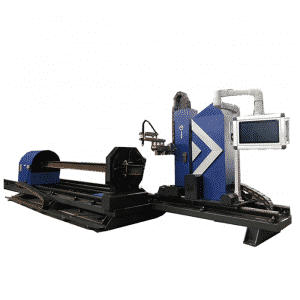
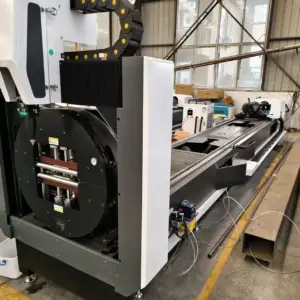
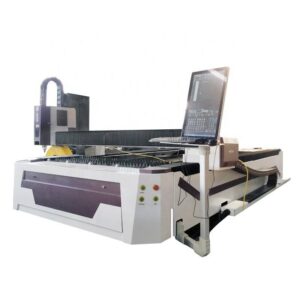
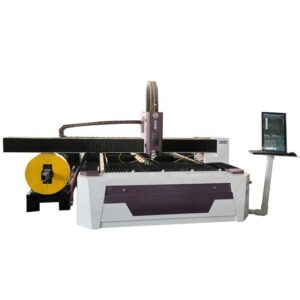
Standard flat-bed lasers are insufficient for the racking industry, which relies on three-dimensional profiles. The 6000W CNC systems deployed today feature specialized chucks and 3D cutting heads. These machines can rotate a heavy channel or beam 360 degrees, allowing the laser to cut on all four sides of a tube or the web and flanges of a channel in a single setup.
For storage racking, this enables the precise cutting of interlocking notches, bolt holes, and teardrop patterns. The CNC software automatically compensates for the “bow and twist” often found in raw structural steel, ensuring that every hole aligns perfectly during on-site assembly. In Casablanca, where installation labor costs and site efficiency are key project variables, the “Lego-like” precision of laser-cut beams significantly reduces the time required for warehouse assembly.
The Critical Importance of Automatic Unloading Systems
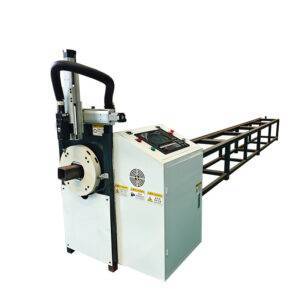
A 6000W laser cuts so rapidly that the bottleneck in production often shifts from the “cutting time” to the “handling time.” This is where automatic unloading systems become indispensable. In a high-volume racking factory, the raw materials are heavy and cumbersome. Manually removing a 6-meter-long cut beam is not only slow but poses significant safety risks to operators.
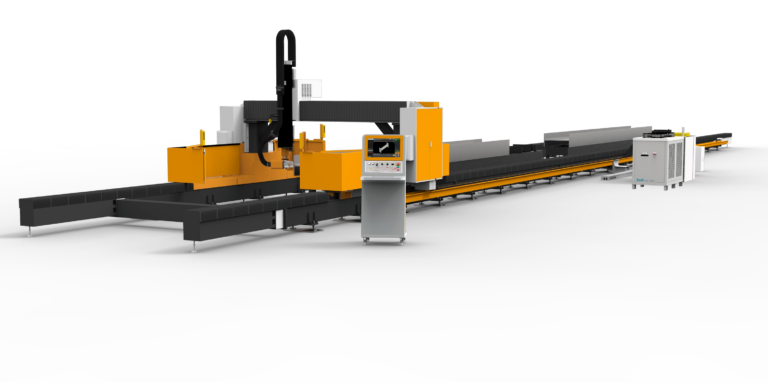
The automatic unloading units integrated into these systems use a combination of synchronized conveyors and hydraulic lifters. As the laser completes a part, the system identifies the piece and moves it to a designated collection zone while the next beam is already being fed into the cutting area. This “continuous flow” model is essential for Casablanca manufacturers aiming to meet tight deadlines for large-scale logistics hubs. It allows the machine to run with minimal human intervention, maximizing the “beam-on” time and ensuring that the expensive 6000W source is always generating value.
Optimizing for the Storage Racking Industry: Precision Meets Strength
Storage racking is an engineering challenge of balancing weight-to-load ratios. The beams must be light enough to be cost-effective but strong enough to hold tons of inventory. The 6000W laser allows designers to use high-strength, low-alloy (HSLA) steels that might be difficult to punch or drill mechanically.
The laser’s ability to cut complex geometries also allows for “tab-and-slot” designs. This means that the horizontal beams and vertical uprights of a rack can be designed to self-fixture during welding or even snap together for boltless configurations. This level of precision ensures that the load is distributed exactly as the engineers intended, reducing the risk of racking collapse—a vital safety consideration in Casablanca’s bustling industrial sectors.
Economic Impact and ROI in the Moroccan Context
Investing in a 6000W CNC fiber laser with automatic unloading is a significant capital expenditure. However, the ROI in the Casablanca region is driven by three main factors: labor efficiency, material savings, and energy costs.
1. **Labor Efficiency:** Automation reduces the need for a large team of manual saw operators and drillers. A single technician can oversee a system that does the work of five traditional stations.
2. **Material Savings:** CNC nesting software optimizes the layout of cuts on a beam, minimizing “remnant” waste. Given the fluctuating price of steel in the global market, saving even 5% of material per year can equate to tens of thousands of dollars.
3. **Energy Consumption:** Fiber lasers are roughly 300% more energy-efficient than older CO2 technology. In an era of rising energy costs, the lower “per-part” electricity cost is a major factor in maintaining healthy margins for Moroccan fabricators.
Integration with Industry 4.0 and Local Technical Support
The modern 6000W systems in Casablanca are rarely standalone units. They are increasingly integrated into the factory’s ERP system. This allows warehouse managers to track exactly how many uprights or beams have been produced in real-time.
Furthermore, as a fiber laser expert, I must emphasize the importance of local technical support. High-power lasers require precise calibration of the cooling systems (chillers) and the gas delivery systems (nitrogen or oxygen). The presence of localized service teams in Casablanca ensures that any downtime is minimized. The use of remote diagnostics, where a technician can log into the CNC system via the cloud to troubleshoot parameters, has revolutionized how these machines are maintained in North Africa.
Addressing Challenges: Assist Gases and Material Quality
Operating a 6000W laser in Casablanca also requires a stable supply of assist gases. High-pressure nitrogen is typically used for “clean cutting” of stainless or thin-gauge steel to prevent oxidation. For the thicker carbon steels used in racking, high-pressure oxygen is often used to facilitate the exothermic reaction required to slice through heavy flanges.
The quality of the raw material is also a variable. Moroccan manufacturers must ensure that the beams and channels being fed into the laser are relatively free of heavy rust or scale, which can cause “splash back” and damage the laser optics. Modern 6000W heads are equipped with protective “cover slides” and sensors that detect back-reflection, but consistent material quality remains a pillar of successful laser operations.
Conclusion: The Future of Moroccan Manufacturing
The 6000W CNC Beam and Channel Laser Cutter with Automatic Unloading is more than just a tool; it is a catalyst for Casablanca’s industrial maturity. As the city continues to position itself as a global logistics hub, the ability to produce high-quality, high-precision storage racking locally is essential.
By eliminating the bottlenecks of manual fabrication and embracing the speed and intelligence of fiber laser technology, Moroccan manufacturers are not only meeting local demand but are positioning themselves to export structural solutions across the EMEA region. The marriage of high-power photonics with robust mechanical automation represents the pinnacle of modern structural fabrication, ensuring that the warehouses of tomorrow are built on a foundation of precision and efficiency.