The Dawn of High-Power Fiber Lasers in Haiphong’s Industrial Landscape
Haiphong, long recognized as Vietnam’s maritime gateway, is currently undergoing a radical transformation from a traditional port city into a high-tech manufacturing powerhouse. At the heart of this evolution lies the adoption of heavy-duty fiber laser technology. Specifically, the deployment of 20kW H-Beam laser cutting Machines is redefining how structural steel is processed.
For decades, the fabrication of H-beams—the skeletal framework of modern buildings—relied on a fragmented workflow of band sawing, mechanical drilling, and manual oxy-fuel or plasma bevelling. This process was not only slow but prone to human error. In the high-humidity, high-stakes environment of Haiphong’s industrial zones, the 20kW fiber laser introduces a level of speed and precision that was previously unthinkable. With 20,000 watts of power, the laser beam can penetrate thick-walled structural steel with a narrow kerf and a minimal heat-affected zone (HAZ), ensuring that the metallurgical properties of the steel remain intact.
Understanding the Infinite Rotation 3D Head
The true “expert-level” differentiator in these machines is the Infinite Rotation 3D Head. Traditional 3D laser heads often suffer from “cable wrap” or mechanical limits that require the head to “unwind” after a certain degree of rotation. In a production environment, these seconds of downtime add up, and the inability to maintain a continuous cut around the corners of an H-beam flange leads to imperfections.
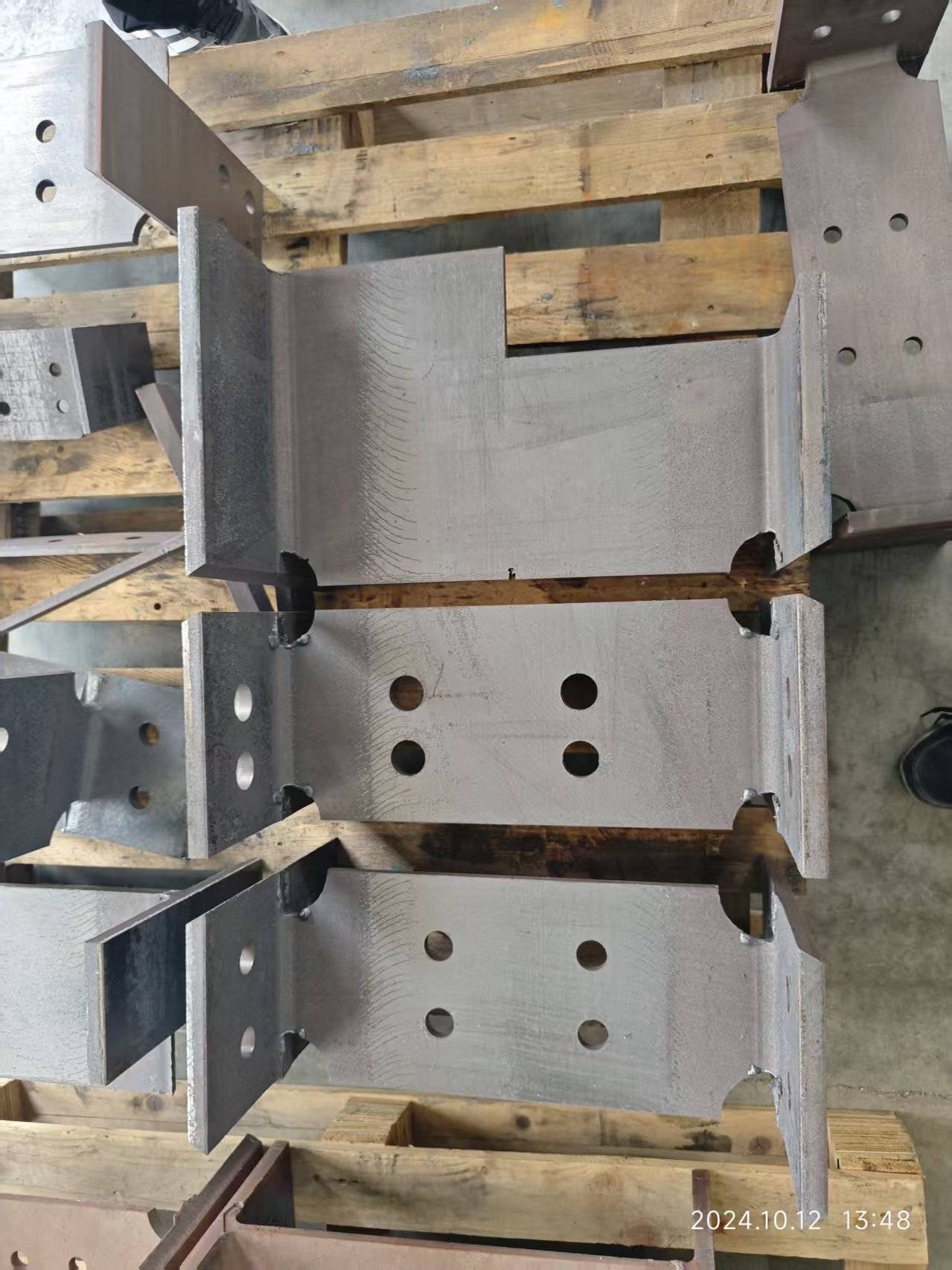
The infinite rotation technology utilizes sophisticated slip-ring or advanced fiber-delivery systems that allow the cutting torch to rotate 360 degrees (and beyond) without stopping. This is critical for H-beams because it allows the laser to transition seamlessly from the flange to the web and back to the flange. Furthermore, the 5-axis capability enables complex beveling—V, X, Y, and K joints—directly on the beam. In modular construction, where beams must fit together like precision machinery, the ability to cut these bevels in a single pass ensures that the subsequent welding process is faster and requires significantly less filler material.
Impact on Modular Construction and Off-site Fabrication
Modular construction is the practice of assembling large sections of a building in a factory setting before transporting them to the final site. This method demands a level of accuracy that traditional construction cannot match. If an H-beam in a modular frame is off by even 3 millimeters, the cumulative error across a 20-story stack can be catastrophic.
The 20kW laser machine solves this through its integration with Building Information Modeling (BIM) software. Engineers in Haiphong can now export TEKLA or CAD files directly to the laser’s CNC controller. The machine then executes the cuts—including bolt holes, utility pass-throughs, and interlocking notches—with a precision of ±0.1mm. This “digital-to-physical” workflow means that when the modular units arrive at a site in Hanoi or Ho Chi Minh City, they bolt together perfectly, eliminating the need for on-site grinding or “forcing” fits.
Technical Superiority: 20kW vs. Lower Power Alternatives
One might ask why 20kW is the “sweet spot” for H-beam processing in Haiphong. While 6kW or 10kW lasers are excellent for thin sheet metal, H-beams used in heavy infrastructure often feature thicknesses exceeding 20mm.
A 20kW source provides the “power density” required to maintain high feed rates on thick materials. At this power level, the laser uses nitrogen or high-pressure air as an assist gas to achieve “high-speed melting,” which results in a mirror-like finish on the cut edge. This eliminates the need for post-cut de-burring. For a Haiphong shipyard or a modular factory, this means a single machine can replace three or four traditional processing stations, drastically reducing the factory footprint and the electricity cost per part.
The Infinite Rotation Advantage in Complex Joint Geometry
In advanced modular design, H-beams are rarely just cut to length. They require complex copes, miters, and “bird’s mouth” cuts to accommodate interlocking structural members. The infinite rotation 3D head excels here. Because the head can tilt up to 45 or even 50 degrees while rotating continuously, it can follow the internal radius of an H-beam (where the web meets the flange) with surgical precision.
This capability allows for the creation of “self-locating” joints. Instead of relying on expensive jigs to hold beams in place for welding, the laser cuts tabs and slots into the H-beams. These beams then “click” together, ensuring the geometry of the modular frame is perfect before the first bead of weld is even laid. This is a game-changer for Haiphong’s export market, as it allows local fabricators to meet the stringent quality standards of European and American construction markets.
Overcoming Environmental Challenges in Haiphong
Operating a 20kW laser in a coastal city like Haiphong presents unique challenges, primarily humidity and salinity. High-power fiber lasers are sensitive to ambient conditions. Expert-grade machines deployed in this region are equipped with pressurized, climate-controlled enclosures for both the laser source and the optical path.
The 3D head itself must be ruggedized. The infinite rotation mechanism involves precision bearings and sensors that must be shielded from the fine metallic dust generated during the cutting of heavy H-beams. Advanced dust extraction systems, often utilizing pulse-jet cartridge filters, are integrated into these machines to maintain a clean working environment and protect the sophisticated optics from contamination.
Economic Transformation: ROI for Vietnamese Fabricators
The capital expenditure for a 20kW H-beam laser with an infinite rotation head is significant, but the Return on Investment (ROI) in the Haiphong context is driven by three factors: labor savings, material utilization, and speed.
1. **Labor:** A traditional H-beam line requires a crane operator, a saw operator, a drill operator, and a layout specialist. The laser machine consolidates these roles into one technician and one loader.
2. **Material:** Advanced nesting software optimizes the cuts on a 12-meter H-beam, reducing scrap. Because the laser kerf is so thin (less than 1mm), more of the raw material ends up in the final building.
3. **Throughput:** A 20kW laser can process an H-beam up to five times faster than a plasma system and ten times faster than mechanical methods. For a modular construction company facing tight deadlines, this throughput is the difference between winning and losing international contracts.
The Future: AI and Autonomous Fabrication
Looking ahead, the 20kW H-beam machines being installed in Haiphong are increasingly being equipped with AI-driven vision systems. These systems can automatically detect the slight deviations in the shape of a raw H-beam (which is rarely perfectly straight from the mill) and adjust the cutting path in real-time. This “active compensation” ensures that even if a beam has a slight twist, the bolt holes will be perfectly aligned relative to the global coordinate system of the modular unit.
As Haiphong continues to cement its status as an industrial hub, the marriage of high-power fiber lasers and 5-axis motion control will be the defining characteristic of its structural steel industry. We are moving toward a future where buildings are not “built” in the traditional sense, but “manufactured” with the same precision as an aircraft engine.
Conclusion
The 20kW H-Beam Laser Cutting Machine with an Infinite Rotation 3D Head is more than a tool; it is a catalyst for an industrial revolution in Haiphong. By providing the modular construction industry with the ability to produce high-precision, complex structural components at unprecedented speeds, this technology is lowering the cost of infrastructure and improving the safety and longevity of buildings. For the fiber laser expert, seeing this technology move from high-end aerospace applications into the “heavy metal” world of Vietnamese structural steel is a testament to the incredible versatility and power of light. Haiphong is no longer just a port; it is now the forge of the future.