The Dawn of Ultra-High Power in Structural Fabrication
The global landscape of civil engineering is shifting toward faster, more resilient, and more sustainable construction methods. In Hamburg, a city synonymous with bridges—boasting more than London, Amsterdam, and Venice combined—the demand for precision-engineered structural steel is relentless. As a fiber laser expert, I have witnessed the transition from plasma and CO2 systems to fiber technology, but the jump to 30kW is a transformative event.
A 30kW fiber laser is not simply a faster version of a 10kW machine; it is a different tool entirely. At this power level, the physics of the melt pool changes. The high energy density allows for “high-speed vaporization cutting,” significantly reducing the Heat Affected Zone (HAZ). In bridge engineering, where fatigue resistance and structural integrity are paramount, minimizing the HAZ is critical. Traditional thermal cutting methods often leave a brittle edge that requires secondary grinding to meet Eurocode 3 standards. The 30kW fiber laser produces an edge quality so clean that it often moves directly from the laser profiler to the welding station, saving thousands of man-hours.
Anatomy of the Heavy-Duty I-Beam Profiler
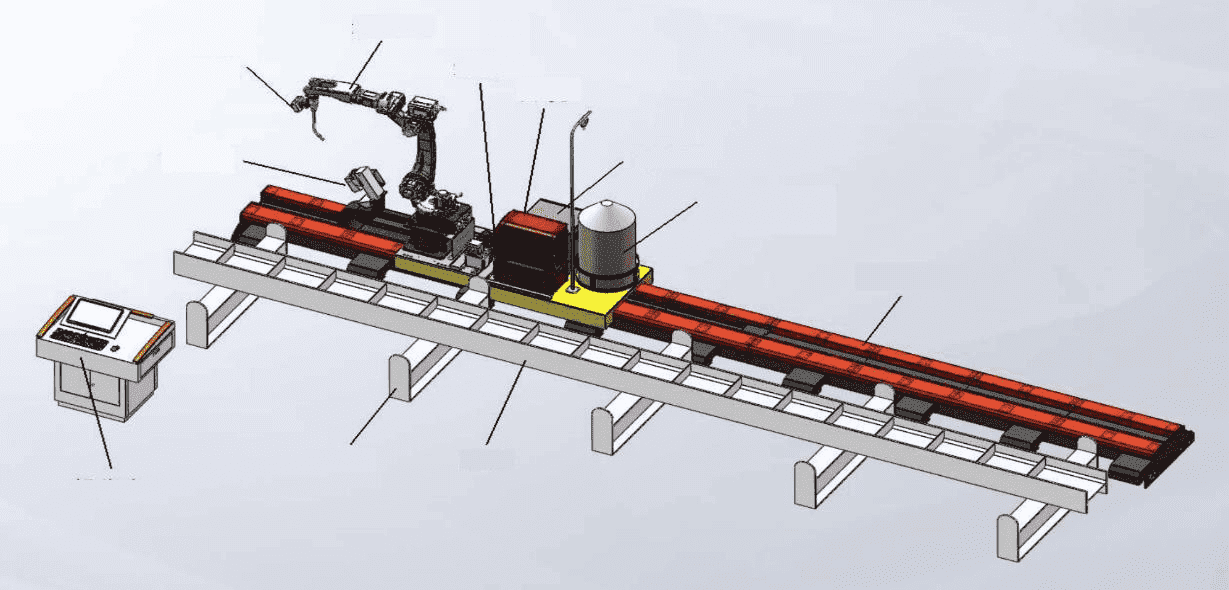
Processing an I-beam is vastly more complex than cutting a flat plate. An I-beam (or H-beam) possesses structural depth, internal radii, and varying thicknesses between the flange and the web. The Heavy-Duty I-Beam Profiler utilized in Hamburg’s latest facilities is a marvel of 5-axis or 6-axis robotic integration.
The system features a massive rotary chuck and a “through-hole” design that allows beams of up to 12 meters (or more) to be fed through the machine. The 30kW laser head is mounted on a high-dynamic gantry or a robotic arm capable of “spatial cutting.” This means the laser can perform complex beveling, cope cuts, and bolt-hole piercing across all three faces of the beam in a single setup.
The “heavy-duty” designation refers to the machine’s ability to handle beams weighing several tons. In Hamburg’s bridge projects, where spans must support heavy port traffic and high-speed rail, the beams are exceptionally thick. A 30kW source can effortlessly pierce 50mm flange thicknesses, providing the kind of versatility that was previously reserved for massive, slow-moving mechanical drills and saws.
Zero-Waste Nesting: The Algorithm of Sustainability
In bridge engineering, the cost of material—high-grade structural steel—represents a significant portion of the total budget. Traditional I-beam processing often results in “drops” or “offcuts” that are too short to be useful, leading to 10-15% material waste. In Hamburg, where sustainability is a core municipal directive, “Zero-Waste Nesting” has become the operational philosophy.
Zero-Waste Nesting utilizes advanced CAD/CAM algorithms to “puzzle” different components of the bridge design onto a single length of raw I-beam. The software analyzes the required lengths, cope shapes, and bolt patterns for an entire project phase. It then nests these parts back-to-back, using “common-line cutting” where a single laser pass creates the end of one part and the beginning of the next.
Furthermore, the 30kW laser’s precision allows for “micro-jointing,” where small components can be cut into the web of a larger beam and held in place by a tiny tab of metal. This allows engineers to harvest smaller brackets and gusset plates from what would otherwise be scrap metal. By maximizing every millimeter of the I-beam, Hamburg’s fabricators are reducing their carbon footprint and significantly lowering material procurement costs.
Precision Beveling and Weld Preparation
One of the most significant challenges in bridge engineering is the “Weld Prep.” For a bridge to withstand decades of vibration and thermal expansion, its joints must be perfectly fused. This requires complex bevels—V-grooves, Y-grooves, and K-grooves—on the ends of the I-beams.
The 30kW laser profiler excels here. Because the laser head can tilt up to 45 or 50 degrees, it can cut these bevels in a single pass. Unlike plasma, which often leaves dross and a rounded top edge, the fiber laser maintains a sharp, consistent geometry. This precision is vital for automated welding robots, which are increasingly used in Hamburg’s shipyards and bridge fabrication shops. If the fit-up is perfect, the weld is perfect. The 30kW laser ensures a “zero-gap” fit-up that is unattainable with manual cutting or mechanical sawing.
Hamburg: A Hub for Infrastructure Innovation
Why Hamburg? The city is currently undergoing massive infrastructure renewals, including the replacement of the aging Köhlbrand Bridge and the expansion of the Port of Hamburg’s rail links. These projects require thousands of tons of structural steel that must meet the highest safety standards in the world.
The deployment of 30kW laser technology in this region is also driven by the high cost of labor and the scarcity of skilled welders and fabricators. By automating the most difficult parts of the fabrication process—measuring, marking, cutting, and beveling—Hamburg is able to keep its infrastructure projects on schedule and within budget. The “Made in Germany” label, specifically from the Hamburg industrial cluster, now implies a level of digital precision that integrates the entire workflow from the architect’s 3D model directly to the laser profiler’s CNC controller.
Mitigating Thermal Distortion
A common concern with high-power lasers is thermal distortion. However, the 30kW fiber laser actually *reduces* distortion compared to lower-power variants. This seems counterintuitive, but it is a matter of “thermal input per unit of time.”
Because the 30kW laser cuts at such high speeds, the heat is concentrated in a very narrow area and is moved away quickly. The surrounding metal does not have time to absorb the heat and warp. In the context of a 20-meter bridge girder, maintaining straightness is essential. Any deviation requires expensive “flame straightening” later in the process. The 30kW laser’s ability to maintain the structural “truth” of the beam is a hidden but massive cost saver for Hamburg’s bridge builders.
The Digital Twin and Industry 4.0
The 30kW I-Beam Profiler is a cornerstone of the “Industry 4.0” movement in civil engineering. Every beam processed in the Hamburg facility is tracked via a “Digital Twin.” Before the laser even touches the steel, the nesting software simulates the entire cut, checking for potential collisions and optimizing the path for speed.
Once the cut is complete, the machine can use integrated scanning technology to verify the dimensions of the finished part against the original CAD model. For bridge engineering, where a 2mm error over 10 meters can cause a catastrophic misalignment during site assembly, this level of automated quality control is revolutionary. The data collected by the machine—laser gas pressure, cutting speed, power modulation—is stored, providing a complete “birth certificate” for every structural component of the bridge.
Economic and Environmental Impact
The shift to 30kW Zero-Waste Nesting has a dual impact. Economically, the speed of the 30kW laser increases throughput by 300% compared to traditional 6kW systems. This allows Hamburg-based firms to compete for international contracts, offering faster delivery times and better pricing.
Environmentally, the efficiency of fiber lasers is unmatched. They convert electrical energy into light with nearly 40% efficiency, compared to the 10% of CO2 lasers. When you combine this electrical efficiency with the Zero-Waste Nesting that minimizes steel scrap, you have a fabrication process that aligns with the European Green Deal. Steel production is energy-intensive; every ton of steel saved through intelligent nesting is a direct reduction in the project’s total CO2 emissions.
Conclusion: The Future of the Hamburg Skyline
As we look toward the future of bridge engineering in Hamburg, the 30kW Fiber Laser Heavy-Duty I-Beam Profiler stands as a symbol of progress. It bridges the gap between massive, heavy-duty construction and high-tech digital precision. By eliminating waste, ensuring perfect weld preparations, and processing steel at unprecedented speeds, this technology ensures that the next generation of bridges over the Elbe will be safer, more sustainable, and more beautiful than ever before. For the fiber laser expert, the message is clear: the era of “brute force” fabrication is over; the era of “intelligent power” has arrived.