The Evolution of Infrastructure Fabrication in the Middle East
Dubai has long been a global benchmark for rapid architectural and infrastructural development. From the expansion of the Dubai Metro to the massive undertakings of the Etihad Rail project, the demand for structural steel has never been higher. Traditionally, the fabrication of railway components—ranging from bridge supports to station skeletons—relied on a fragmented workflow of manual marking, mechanical band-sawing, and CNC drilling.
The introduction of the 6000W Universal Profile Steel Laser System has consolidated these disparate processes into a single, high-efficiency workstation. As a fiber laser expert, I have observed that the transition to 6kW power is not merely an incremental upgrade; it is a fundamental shift in the capability to process “heavy” sections. In the context of Dubai’s railway infrastructure, where heat-induced deformation and salt-air corrosion resistance are critical, the precision of a fiber laser ensures that every profile is cut with a minimal Heat Affected Zone (HAZ), preserving the metallurgical integrity of the steel.
Technical Prowess: Why 6000W is the “Sweet Spot”
In the world of fiber lasers, wattage dictates both the maximum thickness and the speed of the “melt and blow” process. For railway infrastructure, most structural components fall within the 10mm to 20mm range, with occasional heavy plates reaching 25mm.
A 6000W fiber source offers a power density that allows for high-speed nitrogen or oxygen-assisted cutting. When cutting thick carbon steel for rail supports, the 6000W system maintains a stable “keyhole” in the melt pool, resulting in a perpendicularity tolerance that mechanical saws simply cannot match. This is vital for railway assembly; when beams are being bolted or welded in the desert heat, a deviation of even a few millimeters can lead to catastrophic structural stress due to thermal expansion. The 6000W system ensures that every bolt hole is perfectly circular and every bevel for welding is precise to within ±0.05mm.
The “Universal” Capability: Beyond Flat Sheets
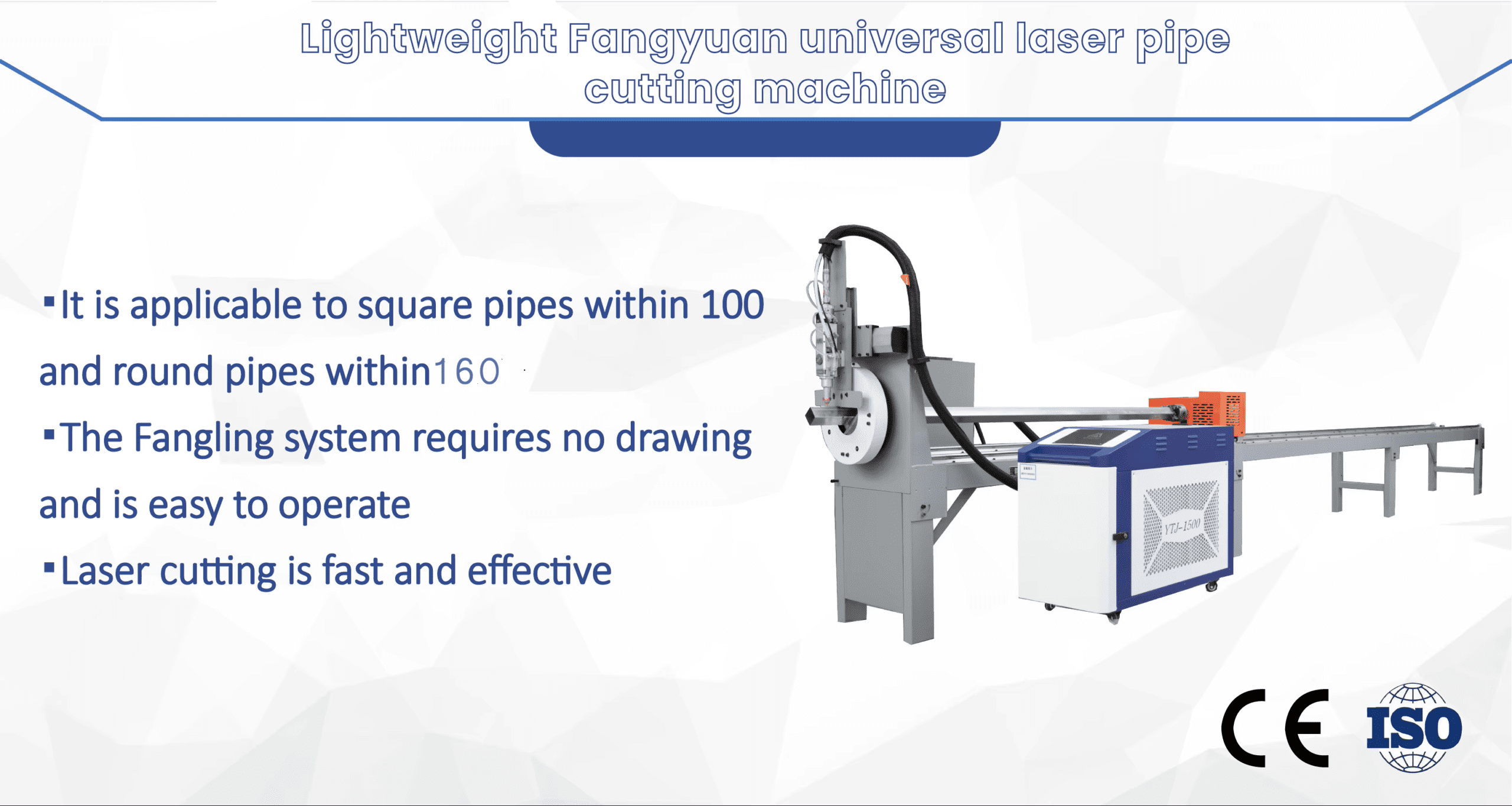
What defines a “Universal Profile” system is its ability to handle three-dimensional geometries. Railway infrastructure does not run on flat plates alone; it relies on I-beams, H-sections, angle irons, and square hollow sections (SHS).
These systems utilize specialized chucking mechanisms—often a four-chuck system—that allow the laser head to rotate around the profile or for the profile itself to be rotated with extreme synchronization. For a Dubai-based fabricator, this means a single machine can process the complex fishplates used in rail joining, the hollow sections for station canopies, and the heavy I-beams for elevated track sections. The “Universal” aspect refers to the multi-axis cutting head, which can perform 45-degree bevels for miter joints, a requirement for the aesthetic yet structurally sound architecture found in Dubai’s modern transit hubs.
The Game Changer: Automatic Unloading Systems
In heavy steel fabrication, the “laser time” is often overshadowed by “handling time.” A 12-meter I-beam is incredibly heavy and dangerous to move manually. This is where the Automatic Unloading System becomes indispensable.
In a typical 6000W setup in Dubai, the unloading system uses a series of hydraulic lifters and motorized conveyor belts. Once the laser completes the intricate cuts and hole-popping on a profile, the system automatically detects the finished part. It gently lowers the beam from the cutting zone and transports it to a sorting area.
This automation serves three critical functions:
1. **Safety:** It removes the need for overhead cranes and forklifts to enter the immediate vicinity of the laser enclosure, drastically reducing the risk of workplace accidents.
2. **Duty Cycle:** It allows the laser to begin the next “nest” immediately. While the first beam is being unloaded, the next raw profile is already being indexed by the loading system.
3. **Surface Integrity:** Automated rollers are often coated or designed to prevent scratching, which is essential when working with pre-primed or specialized weather-resistant steels used in the humid, saline environment of the Arabian Gulf.
Meeting the Demands of Dubai’s Harsh Environment
Operating a high-power fiber laser in Dubai presents unique challenges, specifically regarding ambient temperature and airborne particulate matter (sand). A 6000W system generates significant heat within the resonator and the cutting head.
Expertly designed systems for this region feature “Tropicalized” industrial chillers. These dual-circuit cooling systems ensure that both the fiber source and the cutting optics remain at a constant 22°C, even when the external warehouse temperature exceeds 45°C. Furthermore, the 6000W Universal Profile systems deployed in the UAE are equipped with pressurized bellows and specialized dust extraction. The fine desert sand can be abrasive to linear guides; therefore, high-end systems utilize positive air pressure to keep contaminants out of the motion system, ensuring the longevity of the machine despite the local climate.
Software Integration and Smart Rail Manufacturing
The “brain” of the 6000W laser system is its CAD/CAM nesting software. For railway projects, where material costs are a significant portion of the budget, optimizing the layout on a 12-meter beam is essential.
Modern systems used in Dubai integrate directly with Tekla or SolidWorks files used by railway engineers. The software can “nest” various parts—such as gussets, brackets, and beams—onto a single length of steel to minimize “remnant” or scrap. In an era where sustainability is a pillar of the UAE’s development strategy, reducing steel waste via intelligent laser nesting is a major selling point. Additionally, the system can etch part numbers, QR codes, and alignment marks directly onto the steel, facilitating rapid assembly on-site at the rail link.
Precision and Safety Standards in Railway Infrastructure
Railway infrastructure is governed by some of the strictest safety standards in the engineering world. Every cut, hole, and notch must adhere to international standards such as EN 1090 (for structural steel) and specific rail-grade certifications.
The 6000W fiber laser provides a “clean cut” that often requires no secondary finishing. Mechanical drilling creates burrs that can become stress-concentration points, leading to cracks over years of vibration from passing trains. The laser, however, creates a smooth, thermally treated edge. For the engineers overseeing Dubai’s rail networks, this consistency is a guarantee of longevity. The automatic unloading system further contributes to this by ensuring that parts are not dropped or dented during the transition from the machine to the pallet, maintaining the dimensional accuracy required for high-speed rail tolerances.
Economic Impact: The ROI for Dubai Fabricators
While the initial investment in a 6000W Universal Profile Laser with automatic unloading is significant, the Return on Investment (ROI) in the Dubai market is exceptionally fast. The reduction in labor costs is the most immediate benefit; a process that once required five technicians (sawing, drilling, moving, marking) can now be overseen by a single laser operator.
Furthermore, the speed of the 6000W fiber source allows fabricators to bid on larger contracts with shorter lead times. In the competitive landscape of Middle Eastern infrastructure, the ability to deliver 1,000 tons of precision-cut structural steel two weeks faster than a competitor is a decisive advantage. The automatic unloading system ensures the machine can run 24/7, maximizing the “power-on” time and turning the workshop into a high-output factory.
Conclusion: The Future of Rail Fabrication
The 6000W Universal Profile Steel Laser System with Automatic Unloading is more than just a tool; it is a critical component of Dubai’s industrial evolution. As the region continues to link its cities via rail and modernize its logistics hubs, the reliance on high-power fiber lasers will only grow.
By combining the raw power of 6kW fiber optics with the versatility of universal profile handling and the efficiency of automated unloading, Dubai is building a railway infrastructure that is not only robust and safe but also a testament to the power of modern manufacturing technology. For the fiber laser expert, seeing these systems in action is a glimpse into the future of global construction—where light replaces blades, and automation replaces manual toil.