The Dawn of 20kW Fiber Laser Power in Rayong’s Industrial Corridor
Rayong has long been the heartbeat of Thailand’s heavy industry, but the demands of 21st-century architecture—specifically the sweeping, cantilevered geometries of modern stadiums—have outpaced traditional fabrication methods. Conventional plasma cutting and mechanical sawing, while reliable for decades, lack the precision and speed required for the complex joinery found in large-scale sports arenas. Enter the 20kW Heavy-Duty I-Beam Laser Profiler.
At 20,000 watts, the fiber laser source provides a power density that transforms thick carbon steel into a malleable medium. For the steel fabricators located in Rayong’s Eastern Economic Corridor (EEC), this technology represents more than just a faster cut; it is a fundamental shift in capacity. A 20kW system can penetrate the thickest flanges of structural I-beams (up to 40mm or more) with a heat-affected zone (HAZ) so minimal that the metallurgical integrity of the beam remains uncompromised—a critical factor for structures designed to hold tens of thousands of spectators.
Unlocking the Potential of Heavy-Duty I-Beam Profiling
I-beams and H-beams are the skeletal backbone of any stadium. They must support massive vertical loads while resisting lateral forces such as wind and seismic activity. Traditionally, preparing these beams involved multiple stages: sawing to length, drilling bolt holes, and manual oxy-fuel cutting for bevels. Each stage introduced the potential for human error and cumulative tolerances.
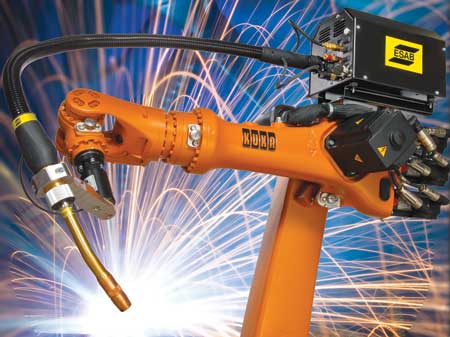
The 20kW laser profiler streamlines this into a single-pass process. Equipped with a 5-axis or 6-axis robotic cutting head, the machine can rotate around the stationary or moving beam, performing complex “bird-beak” cuts, miter joints, and circular penetrations for utility routing simultaneously. The precision of the fiber laser ensures that bolt holes are perfectly cylindrical and exactly positioned, allowing for “click-and-connect” assembly on the construction site. In the context of stadium construction in Rayong, this reduces onsite labor costs and eliminates the need for field corrections, which are both expensive and dangerous at the heights required for stadium roofing.
Zero-Waste Nesting: The Economics of Efficiency
In large-scale stadium projects, material costs account for a significant portion of the total budget. Thousands of tons of steel are processed, and even a 5% waste margin can translate into millions of Thai Baht lost. Zero-waste nesting is the software-driven solution to this economic challenge.
Modern nesting algorithms for I-beams differ from flat-sheet nesting. They must account for the 3D geometry of the profile, including the web and the flanges. The “Zero-Waste” philosophy utilizes “common-line cutting,” where one laser path creates the finished edge of two separate parts. Furthermore, the software can intelligently “nest” smaller attachment plates or stiffeners into the “scrap” sections of the main beam’s cutouts.
By implementing these strategies in Rayong’s fabrication facilities, companies are achieving material utilization rates previously thought impossible. This not only lowers the carbon footprint of the stadium project by reducing the amount of raw steel required but also minimizes the energy consumed in recycling scrap metal.
Engineering Stadium Safety through Precision Beveling
The structural integrity of a stadium roof depends on the quality of its welds. To achieve full-penetration welds on heavy I-beams, the edges must be beveled (angled) with extreme accuracy. Manual beveling or plasma beveling often leaves behind dross or a rough surface finish that requires secondary grinding.
The 20kW fiber laser profiler produces a “welding-ready” edge. The 3D head can tilt up to 45 degrees, cutting complex V, Y, or K-shaped bevels directly into the I-beam. Because the laser’s focal point is so concentrated, the resulting surface is smooth and free of oxides. This allows Rayong’s engineers to move beams directly from the laser bed to the welding station. In a sector where safety is non-negotiable, the consistency of laser-cut bevels ensures that every weld joint meets international standards for stadium load-bearing structures.
Why Rayong is the Ideal Hub for This Technology
The choice of Rayong as the center for high-power laser profiling is strategic. Proximity to the Laem Chabang deep-sea port allows for the efficient import of high-grade raw steel and the export of finished structural components to global stadium sites. Additionally, the region’s existing infrastructure of skilled engineers and technicians provides a fertile ground for adopting sophisticated CNC (Computer Numerical Control) technologies.
Moreover, the Thai government’s push for “Industry 4.0” aligns perfectly with the deployment of 20kW lasers. These machines are IoT-ready, providing real-time data on gas consumption, cutting speed, and beam stability. For a project manager overseeing a massive stadium build, this data provides a level of transparency and predictability in the supply chain that traditional fabrication simply cannot offer.
Technical Challenges and the 20kW Solution
Operating at 20kW presents unique challenges, most notably thermal management. Cutting through thick I-beam flanges generates immense heat. However, the latest generation of profilers used in Rayong features advanced cooling systems—both for the laser source and the cutting head itself. Nitrogen or oxygen assist gases are used not just to clear the molten metal but to cool the cut path, ensuring that the beam does not warp during the process.
Furthermore, the “Heavy-Duty” aspect of the machine refers to its physical construction. The beds must support beams weighing several tons, often 12 meters or more in length. Automated loading and unloading systems, integrated with the laser, ensure that the machine remains in constant operation. This high duty cycle is what makes the 20kW laser commercially viable for the aggressive timelines often associated with stadium construction.
Environmental Impact and Sustainable Construction
Sustainability is no longer an optional add-on in stadium design; it is a requirement. Using a 20kW fiber laser contributes to “Green Building” certifications in several ways. First, fiber lasers are significantly more energy-efficient than older CO2 lasers, converting a higher percentage of electrical wall power into light. Second, the zero-waste nesting mentioned earlier directly reduces resource extraction.
Finally, the precision of the laser allows for the design of “optimized” steel structures. Engineers can use thinner, higher-strength steel grades because they can trust the precision of the cuts and the integrity of the joints. This reduces the overall weight of the stadium roof, which in turn reduces the amount of concrete needed for the foundations—a cascading effect of environmental benefits starting from a single laser cut in a Rayong workshop.
The Future: From Rayong to the World’s Greatest Arenas
As we look toward the future of structural engineering, the marriage of high-power fiber lasers and intelligent software will only deepen. We are already seeing the integration of BIM (Building Information Modeling) directly with laser profilers. A structural engineer in London or Bangkok can design a complex I-beam joint, and the digital file can be sent directly to a 20kW laser in Rayong for immediate fabrication.
The 20kW heavy-duty I-beam laser profiler is not just a tool; it is a catalyst for architectural possibility. It allows for the creation of stadium structures that are lighter, stronger, and more beautiful. For the industrial sector in Rayong, it represents a move up the value chain—from simple material processing to high-tech, high-precision manufacturing. As the world watches the next generation of iconic stadiums rise, the invisible hand of Rayong’s fiber laser technology will be found in the perfect curves and unbreakable joints of the steel skeletons that hold them up.