The Evolution of Structural Steel Fabrication in Jakarta’s Infrastructure
Jakarta, the economic heart of Indonesia, is currently witnessing an infrastructure boom characterized by ambitious aviation projects. From the expansion of Soekarno-Hatta International Airport to the development of supporting logistics hubs, the demand for structural steel—specifically I-beams, H-beams, and channels—has reached an all-time high. In this high-stakes environment, the traditional methods of steel fabrication are becoming bottlenecks.
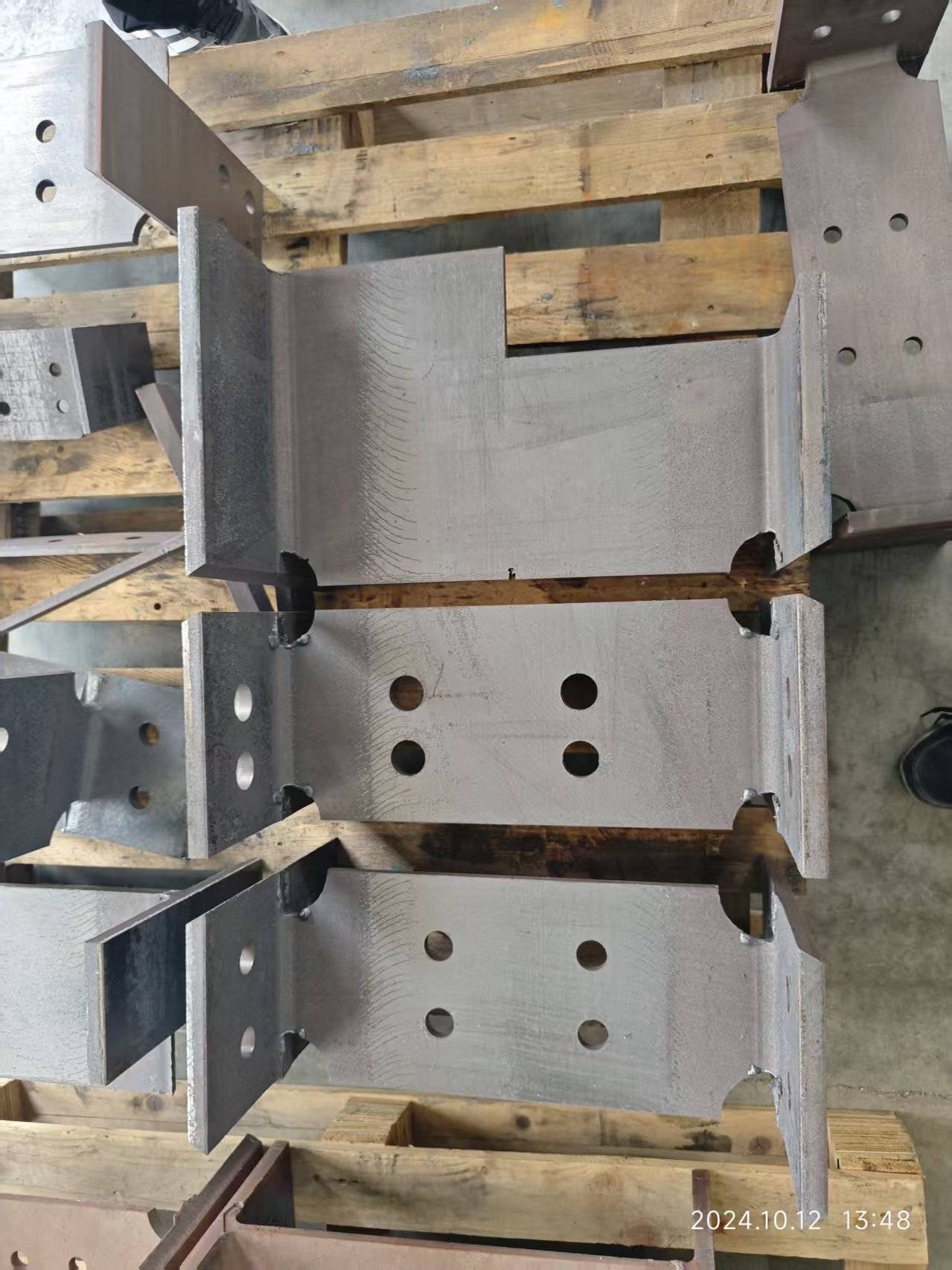
Historically, Indonesian fabricators relied on band saws, plasma cutters, and manual grinding to prepare heavy-duty steel profiles. While functional, these methods are labor-intensive and prone to human error. The introduction of the 6000W Heavy-Duty I-Beam Laser Profiler has fundamentally changed this landscape. As a fiber laser expert, I have observed that the primary driver for this adoption is the need for “first-time-right” precision. In airport construction, where massive spans of steel must support immense roof loads and withstand seismic activity, the tolerance for error is virtually zero. The laser profiler brings CNC-controlled accuracy to the world of heavy structural steel, ensuring that every bolt hole and every miter cut aligns perfectly on the construction site.
Understanding the 6000W Fiber Laser Advantage
The choice of a 6000W power source is a strategic “sweet spot” for structural steel. While lower power lasers (2kW–3kW) are excellent for thin sheet metal, they struggle with the thickness of the flanges and webs found in heavy-duty I-beams. A 6000W fiber laser provides the necessary energy density to achieve high-speed melt-shearing through carbon steel up to 25mm or 30mm with clean, dross-free edges.
For Jakarta’s fabricators, this power translates to throughput. In airport construction, time is the most expensive commodity. A 6000W laser can cut through an H-beam five to ten times faster than a traditional plasma system when accounting for the total processing time. Furthermore, the fiber laser’s beam quality allows for a much narrower kerf (cut width) and a significantly smaller Heat Affected Zone (HAZ). This is critical for maintaining the metallurgical integrity of the steel, ensuring that the beams do not become brittle at the edges—a vital consideration for the long-term safety of airport terminals.
Mastering the ±45° Bevel: Revolutionizing Weld Preparation
Perhaps the most significant technological advancement in these machines is the ±45° 3D beveling head. In heavy-duty structural engineering, beams are rarely joined with simple butt welds. They require complex V-type, Y-type, or K-type grooves to allow for deep weld penetration, ensuring the joint is as strong as the beam itself.
Conventionally, a fabricator would cut a beam to length and then send it to a secondary station where a technician would manually grind a bevel onto the edge. This process is slow, dusty, and inconsistent. The 6000W Heavy-Duty Laser Profiler eliminates this entire secondary step. By utilizing a five-axis motion system, the laser head can tilt up to 45 degrees in any direction, cutting the bevel simultaneously with the profile.
This capability is revolutionary for Jakarta’s airport projects. Whether it is the curved architectural elements of a terminal roof or the heavy load-bearing columns of a hangar, the laser can produce ready-to-weld parts directly off the machine bed. This level of automation ensures that the weld volume is consistent, which in turn leads to higher-quality welds and faster ultrasonic testing (UT) approvals by site inspectors.
Seismic Resilience and Precision Engineering
Indonesia is located in one of the most seismically active regions in the world. Consequently, the structural requirements for Jakarta’s airports are governed by rigorous codes that demand high ductility and precise fitment of steel components. When I-beams are fabricated using 6000W lasers, the precision of the interlocking joints (such as “cope” cuts or “dog-bone” connections) significantly improves the building’s ability to dissipate energy during an earthquake.
The 6000W laser profiler uses advanced software to compensate for the natural deviations in hot-rolled steel. I-beams are rarely perfectly straight; they often have slight bows or twists from the rolling mill. High-end laser profilers utilize touch-probes or laser sensors to “map” the actual surface of the beam before cutting. This ensures that the ±45° bevel and all bolt holes are placed with absolute precision relative to the beam’s actual geometry, not just the theoretical CAD model. This level of precision is what makes the construction of massive, long-span airport structures feasible and safe.
Overcoming Jakarta’s Environmental Challenges
Operating a high-power 6000W laser in Jakarta presents unique environmental challenges, specifically regarding heat and humidity. Fiber laser sources are sensitive to ambient conditions. As an expert, I emphasize that these heavy-duty profilers must be equipped with specialized industrial chillers and climate-controlled cabinets for the electronics.
In Jakarta’s tropical climate, the dew point is often high. If a laser’s internal components are cooler than the surrounding air, condensation can form, leading to catastrophic failure of the optical modules. Therefore, the “Heavy-Duty” designation of these machines in Indonesia refers not only to their ability to carry 2-ton beams but also to their robust environmental sealing and thermal management systems. Modern systems implemented in Jakarta now feature double-circuit cooling and desiccant-based air drying systems to ensure that the 6000W beam remains stable and the optics remain clear, regardless of the monsoon season.
Economic Impact and ROI for Airport Contractors
While the initial investment in a 6000W Heavy-Duty I-Beam Laser Profiler is higher than traditional equipment, the Return on Investment (ROI) in the context of Jakarta’s airport construction is compelling. The cost savings are found in three primary areas:
1. **Labor Reduction:** The machine replaces multiple manual stages (cutting, drilling, and grinding). A single operator can now perform the work of a five-man fabrication team.
2. **Material Efficiency:** Advanced nesting software optimizes the placement of cuts on a 12-meter beam, minimizing “drop” or scrap metal. With the high cost of structural steel in Indonesia, even a 5% improvement in material utilization can save billions of Rupiah on a large project.
3. **Assembly Speed:** Because the parts are cut to sub-millimeter precision, the “fit-up” time on the construction site is drastically reduced. Beams slot into place without the need for on-site torch cutting or re-drilling, which keeps airport expansion projects on their tight schedules.
Digital Integration: BIM and the Laser Profiler
The modern Jakarta airport project is managed through Building Information Modeling (BIM). The 6000W Laser Profiler fits perfectly into this digital ecosystem. Engineers can export TEKLA or AutoCAD structural files directly to the laser’s software. This “Design-to-Fabrication” workflow eliminates the risk of transcription errors.
As the laser cuts the I-beam, it can also use low-power settings to “etch” part numbers, alignment marks, and QR codes directly onto the steel. This provides full traceability—a requirement for international aviation standards. If a structural issue is identified years later, the QR code can reveal exactly which batch of steel was used, the date of fabrication, and the technician who operated the laser.
Conclusion: The Future of Indonesian Steel
The deployment of 6000W Heavy-Duty I-Beam Laser Profilers with ±45° beveling is more than just an upgrade in machinery; it is an upgrade in Jakarta’s industrial capacity. For airport construction, where the stakes involve public safety and national pride, the precision and efficiency of fiber laser technology provide a foundation for excellence.
As Jakarta continues to grow and its airports become more complex, the ability to manipulate heavy steel with the grace and accuracy of a laser will be the defining factor in successful infrastructure delivery. The synergy between high-power fiber lasers and complex structural engineering is setting a new standard for Indonesia, ensuring that its gateways to the world are built with the highest levels of integrity, speed, and technological sophistication.