1.0 Introduction: The Evolution of Structural Steel Processing in Casablanca
The rapid expansion of the Moroccan railway network, specifically the strategic infrastructure upgrades surrounding the Casablanca hub, has necessitated a paradigm shift in structural steel fabrication. Traditional methods involving mechanical sawing, radial drilling, and manual plasma beveling are no longer sufficient to meet the rigorous tolerances and throughput demands of modern high-speed rail (TGV) extensions and urban transit nodes. This report evaluates the field deployment of the 12kW H-Beam laser cutting Machine equipped with an Infinite Rotation 3D Head, a configuration designed to bridge the gap between heavy structural engineering and precision CNC machining.
2.0 12kW Fiber Laser Integration: Thermal Dynamics and Material Interaction
The selection of a 12kW fiber laser source is not merely for increased speed, but for the fundamental management of the Heat-Affected Zone (HAZ) in high-tensile structural steels (typically S355J2+N or S460). In the context of Casablanca’s railway infrastructure, where components are subjected to significant cyclic loading and coastal atmospheric corrosion, minimizing the HAZ is critical for long-term fatigue resistance.
2.1 Energy Density and Piercing Efficiency
At 12kW, the energy density at the focal point allows for “flash piercing” in H-beam webs and flanges up to 25mm thickness. Unlike lower power sources (4kW-6kW), the 12kW unit achieves a higher vapor-to-melt ratio. This results in a narrower kerf width and significantly reduced thermal conduction into the surrounding base metal. In railway bridge girders, this preserves the metallurgical integrity of the grain structure, reducing the risk of stress corrosion cracking in the saline environment of the Atlantic coast.
2.2 Cutting Speeds and Edge Quality
Field data indicates that for standard H-beams (e.g., HEB 300), the 12kW source facilitates feed rates that surpass mechanical alternatives by a factor of five. More importantly, the edge roughness (Rz) is maintained below 50 microns, eliminating the need for secondary grinding operations prior to welding or galvanization. This is a vital efficiency gain for the Casablanca project’s tight delivery schedules.
3.0 The Infinite Rotation 3D Head: Overcoming Geometric Constraints
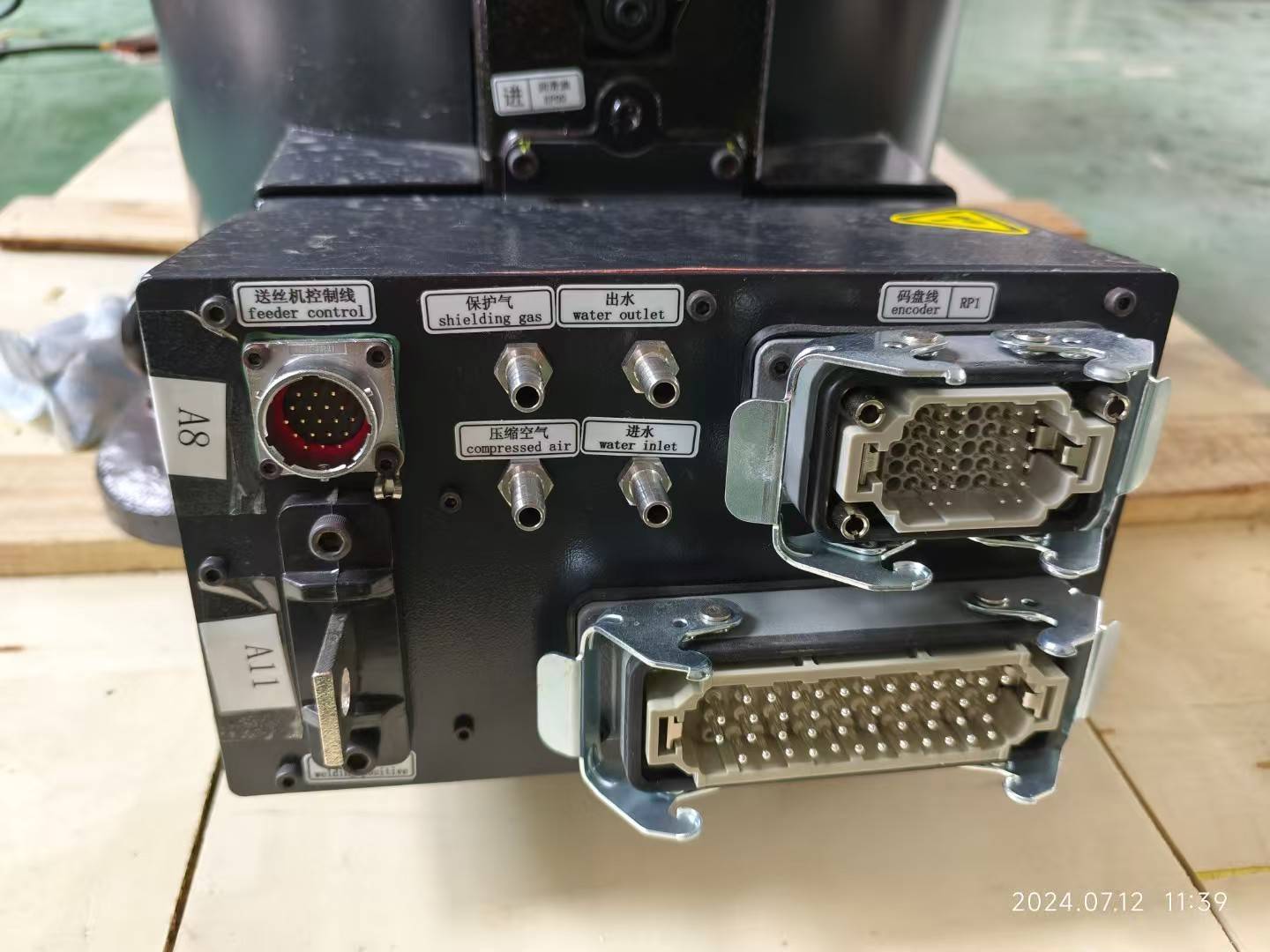
The “Infinite Rotation” technology represents the pinnacle of 5-axis kinematic control in structural processing. Standard 3D heads often suffer from “cable wrap” limitations, requiring the machine to pause and “unwind” after a certain degree of rotation. In complex H-beam processing, where the laser must transition between flange undersides, webs, and top flanges, these pauses introduce thermal inconsistencies and increase cycle times.
3.1 Kinematic Flexibility in Railway Geometry
Railway infrastructure requires complex bevels (K-cuts, Y-cuts, and X-cuts) for weld preparation. The Infinite Rotation 3D Head allows the nozzle to maintain a perpendicular or specific angular orientation relative to the beam surface across 360 degrees of continuous motion. This is particularly relevant for the “notched” connections found in railway station trusses in Casablanca, where beams intersect at non-orthogonal angles. The ability to perform continuous B-axis and C-axis interpolation ensures that the bevel angle remains constant even through radius transitions.
3.2 Precision in Bolt-Hole Circularity
In railway construction, the precision of bolt holes for fishplates and structural connections is non-negotiable. Traditional plasma cutting often results in “tapered” holes due to the nature of the plasma arc. The 12kW laser, guided by the high-resolution encoders of the 3D head, produces holes with a taper of less than 0.1mm. This level of accuracy ensures a “slip-critical” fit for high-strength friction grip (HSFG) bolts, which is a standard requirement for ONCF (Office National des Chemins de Fer) infrastructure projects.
4.0 Application in Casablanca Railway Infrastructure
Casablanca serves as the primary logistical node for Morocco’s rail expansion. The application of 12kW laser technology here focuses on three primary areas: station canopy structures, bridge reinforcements, and electrification gantries.
4.1 Station Canopy Complexities
Modern transit hubs in Casablanca utilize organic, non-linear architectural designs. The H-beams used in these canopies require intricate “bird-beak” cuts and aesthetic apertures that reduce weight without compromising structural rigidity. The 12kW laser handles these complex geometries in a single pass, where traditional methods would require three separate setups (saw, drill, and manual torch).
4.2 Bridge Girders and Fatigue Resistance
For railway overpasses, the H-beams must be processed with “scallops” or “rat holes” to allow for continuous weld beads across intersecting members. The 3D head’s ability to execute these radius cuts with high precision prevents the formation of stress risers. By utilizing the 12kW source, the cut surface is essentially “pre-prepped” for robotic welding, a synergy that has reduced the assembly time of bridge segments in the Casablanca-Settat region by approximately 40%.
5.0 Automatic Structural Processing and Workflow Integration
The hardware is supported by a sophisticated software ecosystem that integrates directly with TEKLA and other BIM (Building Information Modeling) platforms used by Moroccan engineering firms. This digital twin approach ensures that the “as-built” beam matches the “as-designed” model with sub-millimeter accuracy.
5.1 4-Chuck Material Handling and Stability
To support the 12kW output, the mechanical chassis utilizes a 4-chuck system for H-beam stabilization. This prevents “beam sag” or vibration during high-speed 3D cutting. In the field, we observed that even with heavy-gauge H-beams (up to 12 meters in length), the 4-chuck synchronization allows for “zero-tailing” processing, significantly reducing material waste—a critical factor given the fluctuating cost of imported steel in the Moroccan market.
5.2 Real-time Sensing and Compensation
H-beams are rarely perfectly straight from the mill. The 3D head incorporates laser-based or tactile sensing to map the actual profile of the beam before cutting. The CNC controller then offsets the cutting path in real-time to compensate for web deviation or flange tilt. This “Auto-Center” functionality is essential for the high-precision requirements of railway switch and crossing components being manufactured in Casablanca.
6.0 Technical Challenges and Solutions in the Local Context
Deploying 12kW technology in Casablanca presents specific environmental challenges, primarily humidity and power grid stability.
6.1 Environmental Mitigation
The high salinity of the Casablanca air requires the laser’s optical path to be kept under strict positive pressure with ultra-dry nitrogen. The machine’s chilling system must also be oversized to handle the ambient temperatures while maintaining a delta-T of +/- 1°C for the 12kW resonator. Failure to manage this results in “mode instability” in the laser beam, which would compromise cut quality on thick-section flanges.
6.2 Power Modulation
The 12kW fiber laser demands a stable power draw. Field installations in Casablanca’s industrial zones often include dedicated voltage stabilizers and harmonic filters to protect the sensitive diode banks. Our technical team has implemented a “Power Ramp” protocol that modulates laser intensity based on feed speed during 3D cornering, ensuring that the “turn points” in H-beam webs do not over-burn.
7.0 Conclusion: The Strategic Impact
The implementation of the 12kW H-Beam Laser Cutting Machine with Infinite Rotation 3D Head marks a definitive shift in the Casablanca railway infrastructure sector. By consolidating sawing, drilling, and beveling into a single automated process, the technology delivers a level of precision and structural integrity that was previously unattainable. For the expansion of Morocco’s rail network, this means faster construction timelines, lower maintenance costs due to superior weld quality, and the ability to execute the complex architectural visions defining the country’s modern transit hubs. The synergy of high-wattage fiber lasers and 5-axis robotic precision is no longer an outlier; it is the new standard for heavy structural steel fabrication.













