Optimizing Stainless Steel Fabrication: The 4kW Fiber laser cutting Machine Guide
In the heart of Mexico’s industrial landscape, Guadalajara has emerged as a premier hub for high-tech manufacturing and metal fabrication. As the “Silicon Valley of Mexico,” the region demands precision, speed, and reliability. For local fabricators dealing with stainless steel, the 4kW fiber laser cutting machine represents the pinnacle of efficiency. This power level is widely considered the “sweet spot” for medium-to-heavy gauge materials, offering a perfect balance between capital investment and operational throughput.
The transition from traditional CO2 lasers or plasma systems to fiber technology has revolutionized how workshops in Jalisco approach complex geometries and high-volume production. Fiber laser cutting technology utilizes a solid-state gain medium, which allows for a more concentrated beam and significantly higher energy absorption in reflective metals like stainless steel. This guide explores the technical nuances of 4kW systems, their specific application in the Guadalajara industrial corridor, and the engineering principles that drive their success.

The Physics of 4kW Fiber Laser Technology
At its core, a 4kW fiber laser cutting system operates at a wavelength of approximately 1.06 microns. This is roughly ten times shorter than the wavelength of a CO2 laser. For stainless steel, this shorter wavelength is critical because the material absorbs the energy much more readily. When the beam hits the surface of a stainless steel sheet, the energy is concentrated into a microscopic spot size, leading to instantaneous sublimation or melting of the metal.
The “4kW” designation refers to the continuous output power of the laser source. In the context of laser cutting, power equates to speed and thickness capacity. A 4kW source can comfortably process stainless steel up to 12mm or 15mm with high-quality edge finishes, and can “sever” even thicker plates if edge quality is a secondary concern. For the diverse manufacturing needs of Guadalajara—ranging from food-grade kitchen equipment to aerospace components—this range covers over 90% of standard production requirements.
Stainless Steel Applications in Guadalajara’s Industrial Sector
Guadalajara and its surrounding municipalities, such as Zapopan and El Salto, host a variety of industries that rely heavily on stainless steel. The 4kW fiber laser is particularly well-suited for these local sectors:
- Food and Beverage Processing: Jalisco is a leader in agave processing and food packaging. These industries require 304 and 316-grade stainless steel for tanks, conveyors, and bottling lines. The precision of fiber laser cutting ensures that parts fit perfectly, reducing the need for extensive secondary welding or grinding.
- Electronics and Telecommunications: As a tech hub, Guadalajara produces high volumes of server racks, enclosures, and chassis. These often involve thin-to-medium gauge stainless steel where high-speed laser cutting is essential for maintaining competitive lead times.
- Medical Device Manufacturing: The medical sector requires extreme precision and clean edges to prevent bacterial growth. Fiber lasers provide a small heat-affected zone (HAZ), ensuring the structural integrity and corrosion resistance of the stainless steel are maintained.
Technical Parameters for Stainless Steel Cutting
To achieve the best results with a 4kW machine, engineers must calibrate several key parameters. Stainless steel is distinct from carbon steel due to its alloying elements like chromium and nickel, which affect its thermal conductivity and melting point.
Assist Gas Selection: Nitrogen vs. Oxygen
When laser cutting stainless steel, the choice of assist gas is paramount. For most professional applications in Guadalajara, Nitrogen is the preferred choice. Nitrogen acts as a shielding gas, blowing away the molten metal without allowing an exothermic reaction (oxidation) to occur. This results in a “bright” or “clean” edge that is ready for welding or painting without further treatment.
While Oxygen can be used to cut thicker sections of stainless steel by adding thermal energy to the process, it leaves an oxide layer on the cut edge. This layer must be removed if the part is to be welded or powder-coated, as it can lead to coating failure or brittle welds. In high-end Guadalajara fabrication shops, high-pressure Nitrogen systems are the standard for 4kW machines to maintain the aesthetic and functional properties of the stainless steel.
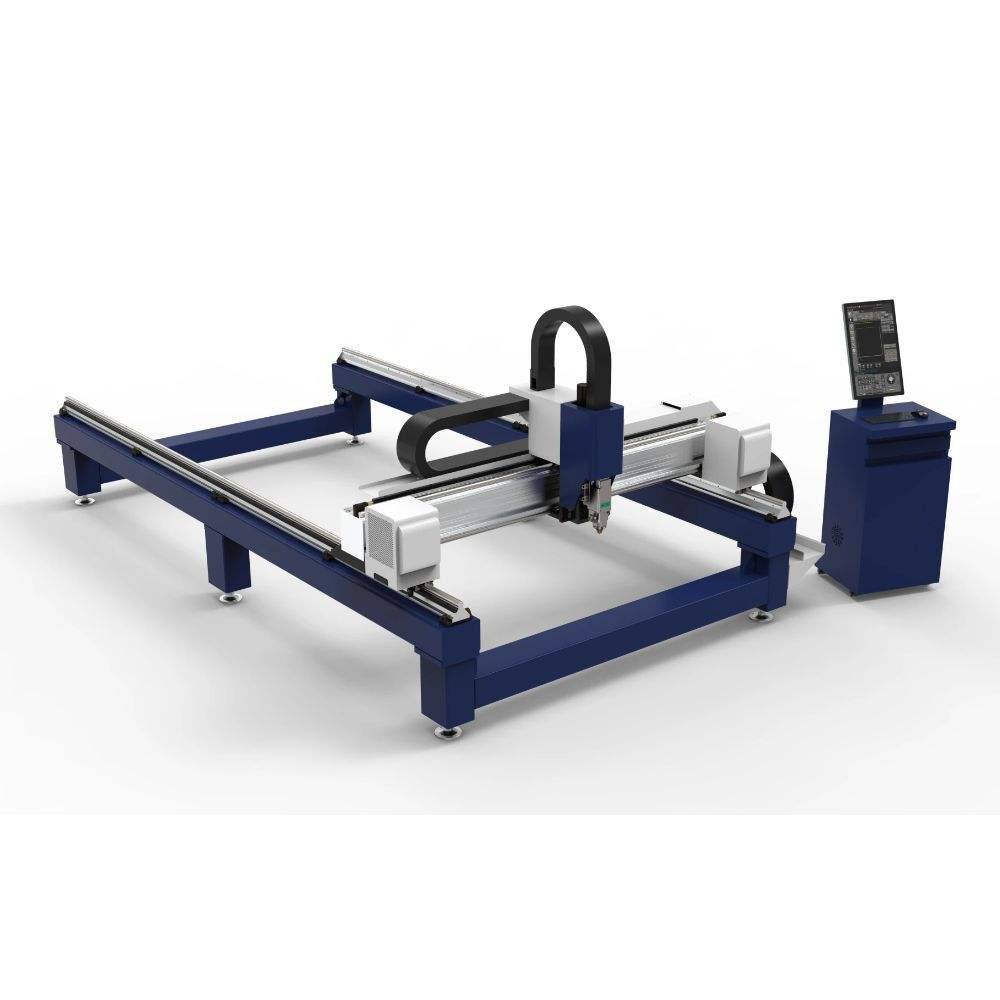
Nozzle Geometry and Focal Position
For a 4kW system, the nozzle design plays a critical role in gas flow dynamics. Double nozzles are often used for thicker stainless steel to stabilize the gas flow and protect the protective window from back-spatter. The focal position is typically set “negative” (inside the material) when cutting stainless steel with Nitrogen. This allows the beam to create a wider kerf at the bottom of the plate, facilitating the efficient removal of molten material and preventing “dross” or “burrs” from adhering to the bottom edge.
Operational Efficiency and ROI in the Mexican Market
Investing in a 4kW fiber laser cutting machine in Guadalajara offers a significant return on investment (ROI) compared to lower-power units or older technology. The primary driver of this ROI is “cost per part.” While a 4kW machine has a higher upfront cost than a 2kW unit, its cutting speed on 3mm to 6mm stainless steel can be more than double. This means more parts per shift, lower labor costs per component, and reduced electricity consumption per meter of cut.
Furthermore, the maintenance requirements for fiber lasers are remarkably low. Unlike CO2 lasers, there are no internal mirrors to align or bellows to maintain. The laser is delivered via a flexible fiber optic cable directly to the cutting head. For businesses in the El Salto industrial park, this translates to higher machine uptime and more predictable production schedules.
Software Integration and Nesting
Modern laser cutting is as much about software as it is about hardware. Advanced CNC controllers used in 4kW machines allow for sophisticated nesting algorithms. In the context of expensive materials like 316L stainless steel, minimizing scrap is essential for profitability. Nesting software can automatically arrange parts to maximize sheet utilization, often reaching efficiencies of over 85%.
Additionally, features like “FlyCut” (where the laser head does not stop between closely spaced cuts) and “Frog-Leg” movement (optimized head lifting) significantly reduce non-productive transition times. For Guadalajara’s fast-paced manufacturing environment, these seconds saved on every part accumulate into hours of extra capacity every week.
Challenges and Maintenance Best Practices
Despite their robustness, 4kW fiber lasers require disciplined maintenance to perform at their peak, especially in the varied climate of Guadalajara. The region’s humidity and temperature fluctuations can affect the chiller’s performance, which is vital for cooling the laser source and the cutting head.
- Chiller Maintenance: Ensure the cooling water is deionized and changed regularly to prevent Algae growth or mineral buildup in the laser source.
- Optics Care: The protective window is the most common consumable. It must be inspected daily in a clean-room environment to ensure no dust particles lead to thermal cracking under the 4kW beam.
- Gas Purity: Using low-purity Nitrogen can result in yellowing of the cut edge. For the high-quality standards expected in Jalisco’s export-oriented industries, a Nitrogen purity of 99.99% is recommended.
Conclusion: The Future of Metal Fabrication in Jalisco
The 4kW fiber laser cutting machine is more than just a tool; it is a catalyst for industrial growth in Guadalajara. By providing the ability to process stainless steel with extreme precision, speed, and cost-effectiveness, it enables local manufacturers to compete on a global stage. Whether it is producing intricate components for the aerospace sector or durable equipment for the tequila industry, the 4kW fiber laser remains the backbone of modern metalworking.
As the industry moves toward further automation and Industry 4.0 integration, these machines will continue to evolve, offering even greater connectivity and intelligence. For any fabrication business in Jalisco looking to scale, mastering the 4kW laser cutting process is the definitive step toward a more productive and profitable future.













