Introduction to 3kW Fiber laser cutting in Queretaro’s Industrial Sector
The industrial landscape of Queretaro has undergone a massive transformation over the last decade, evolving into one of Mexico’s primary hubs for aerospace, automotive, and heavy machinery manufacturing. Central to this growth is the adoption of advanced fabrication technologies, specifically the 3kW fiber laser cutting system. For engineers and workshop managers in the Bajío region, the 3kW power rating represents the “Golden Mean” of thermal processing—offering enough power to handle structural carbon steel while maintaining the precision required for intricate components.
Laser cutting technology has largely superseded traditional plasma and mechanical shearing methods due to its superior edge quality and reduced heat-affected zones (HAZ). In an environment like Queretaro, where Tier 1 and Tier 2 suppliers demand rigorous adherence to international standards (such as AS9100 or IATF 16949), the consistency provided by a 3kW fiber source is indispensable. This guide explores the technical nuances, operational strategies, and regional considerations for deploying these machines effectively.
Technical Specifications: Why 3kW for Carbon Steel?
When processing carbon steel, the 3kW fiber laser serves as a versatile workhorse. While higher wattage machines exist, the 3kW threshold is where the physics of fiber-delivered light interacts most efficiently with the iron-carbon molecular structure for medium-thickness plates. Typically, a 3kW system can comfortably process carbon steel from 0.5mm up to 20mm, though its high-speed production “sweet spot” lies between 3mm and 12mm.
Wavelength and Absorption
Fiber lasers operate at a wavelength of approximately 1.064 microns. This wavelength is absorbed much more efficiently by carbon steel compared to the 10.6 microns of traditional CO2 lasers. The result is a higher energy density at the focal point, allowing for faster piercing and cleaner separation. In Queretaro’s competitive market, the speed of laser cutting directly correlates to the cost-per-part, making the 3kW fiber source a high-ROI investment for local job shops.
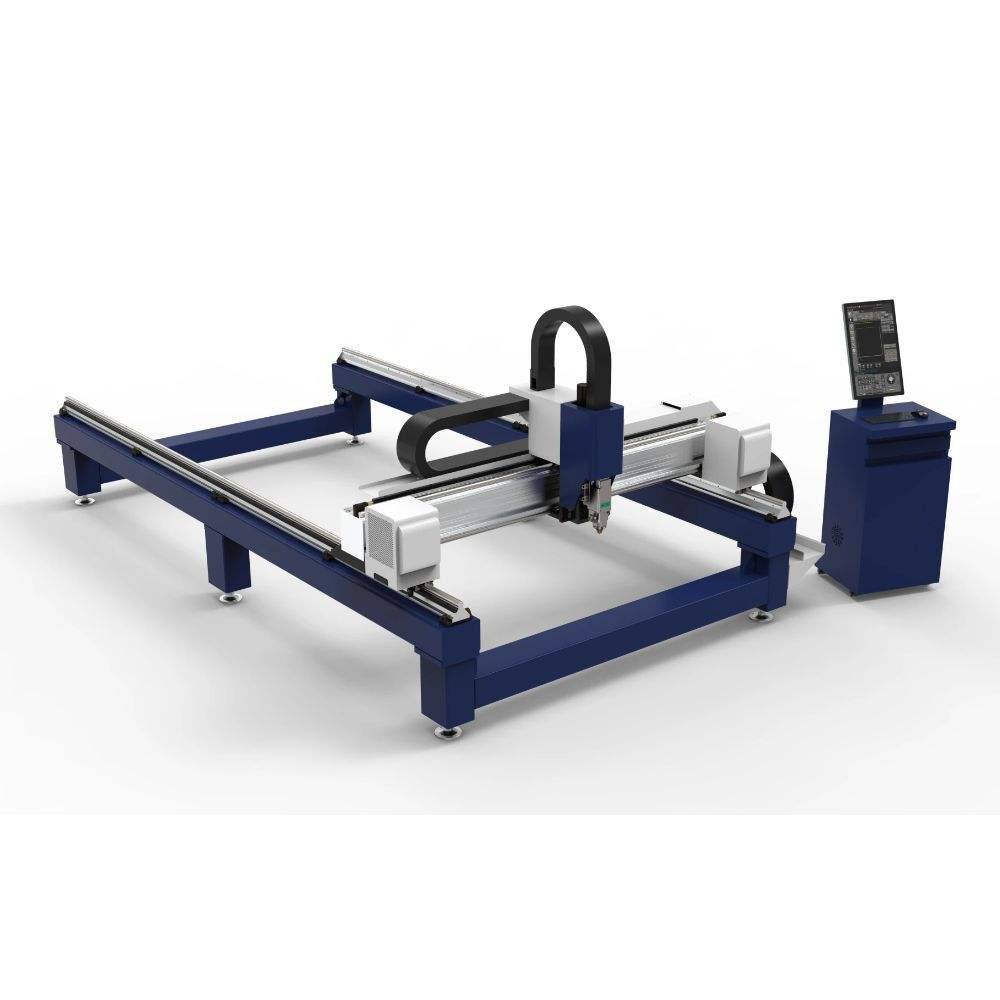
 laser cutting machine” style=”width: 100%; max-width: 800px; height: auto; margin: 20px 0;”>
Beam Quality and Focus
The Beam Parameter Product (BPP) of a 3kW laser ensures a tight, stable focus. For carbon steel, maintaining a consistent kerf width is vital. As the thickness of the plate increases, the laser cutting process relies more heavily on the assist gas, but the initial energy delivery must be precise to prevent “self-burning” or excessive dross at the bottom of the cut. Engineering teams in Queretaro often prefer 3kW systems because they offer a balance between raw power and the fine-tuned control needed for complex geometries.
Carbon Steel Processing: Metallurgy and Assist Gases
Carbon steel, ranging from mild steel (A36) to higher carbon grades, reacts differently to laser cutting than stainless steel or aluminum. The presence of carbon facilitates an exothermic reaction when oxygen is used as an assist gas, significantly boosting cutting speeds.
Oxygen vs. Nitrogen Cutting
For most 3kW applications in Queretaro involving carbon steel thicker than 3mm, Oxygen (O2) is the standard assist gas. The oxygen reacts with the molten metal, adding thermal energy to the cut. This allows the 3kW laser to penetrate 16mm or 20mm plates that would otherwise require much higher wattage if using inert gases. However, this leaves an oxide layer on the edge. For industries in the region that require immediate powder coating or welding without secondary cleaning, Nitrogen (N2) or compressed air can be used for thinner gauges (up to 4mm or 6mm), though this requires higher pressure and more precise focal point management.
The Impact of Material Quality
In the Mexican market, the quality of carbon steel can vary based on the mill source. High-quality, “laser-grade” steel with low silicon and phosphorus content is ideal. When using a 3kW laser cutting system, impurities in the steel can lead to “blowouts” during the piercing process. Engineers must calibrate their lead-in parameters and piercing frequencies to account for the specific metallurgical profile of the local steel supply in the Bajío area.
Operational Considerations for the Queretaro Climate
Queretaro sits at an altitude of approximately 1,820 meters above sea level with a semi-arid climate. These environmental factors are often overlooked but are critical for the long-term health of a 3kW laser cutting machine.
Altitude and Cooling Systems
The thinner air at higher altitudes affects the heat exchange efficiency of chillers. A 3kW fiber laser generates significant heat at the resonant source and the cutting head. It is imperative that the chilling unit is rated for the specific altitude of Queretaro to prevent overheating during peak summer months. Failure to maintain the laser source within its optimal temperature range (usually 22°C to 25°C) can lead to wavelength instability and premature diode failure.
Dust and Air Quality
The industrial zones in Queretaro, such as Parque Industrial Querétaro or El Marqués, can be dusty environments. Fiber lasers are extremely sensitive to contamination. Even a microscopic dust particle on the protective window of the cutting head can absorb the 3kW beam’s energy, causing the lens to shatter (thermal shock). Implementing a pressurized, clean-room environment for the laser source and ensuring a robust dust extraction system on the cutting table is mandatory for operational longevity.
Optimizing the Laser Cutting Workflow
To achieve maximum throughput with a 3kW system, the workflow must be optimized from CAD design to the final sorting of parts. In the context of carbon steel fabrication, several variables must be harmonized.
Nesting and Heat Management
When cutting thick carbon steel plates, heat accumulation in the sheet can cause the material to expand, leading to dimensional inaccuracies or “tip-ups” where the cutting head hits a tilted part. Advanced nesting software used by Queretaro’s leading manufacturers employs “cooling paths” or “common line cutting” to distribute the thermal load. For a 3kW laser, the piercing time is relatively short, but the sequence of cuts is vital to maintain the structural integrity of the skeleton.
Nozzle Selection and Centering
The choice of nozzle—single vs. double, and the diameter of the orifice—directly affects the flow of assist gas. For carbon steel, a double nozzle is often used with oxygen to stabilize the gas flow around the beam. Regular centering of the nozzle is a fundamental maintenance task; an off-center beam will result in asymmetrical edges, where one side of the part is smooth and the other shows heavy gouging.
Economic Impact and ROI for Local Manufacturers
The investment in a 3kW laser cutting machine in Queretaro is often justified by the reduction in secondary operations. Traditional methods like punching or plasma cutting often require deburring, grinding, or re-drilling of holes. The precision of a 3kW fiber laser allows for “bolt-ready” holes in carbon steel, which is a significant advantage for the local structural steel and automotive chassis sectors.
Energy Efficiency
Fiber lasers are remarkably efficient, converting roughly 30% to 35% of electrical energy into laser light. For a 3kW output, the draw is significantly lower than an equivalent CO2 laser. Given the fluctuating energy costs in Mexico, this efficiency provides a predictable overhead, allowing for more competitive bidding on large-scale carbon steel contracts.
Maintenance and Spare Parts
One of the advantages of the fiber laser is the lack of moving parts in the resonator and the absence of mirrors that require alignment. In Queretaro, where technical service response times can vary, the inherent reliability of fiber technology is a major benefit. Most maintenance focuses on “consumables”—nozzles, protective windows, and ceramic rings—which are easily stocked on-site to prevent downtime.
Safety Standards and Training
Operating a 3kW laser involves significant safety risks. The 1.064-micron beam is invisible and can cause permanent blindness instantly, even through reflections. Machines must be fully enclosed (Class 1 safety rating) with laser-safe viewing glass.
In Queretaro, training programs through institutions like UAQ or specialized technical centers are increasingly focusing on CNC laser operations. Operators must be trained not only in software but also in the “art” of reading the spark stream. For carbon steel, the color and direction of the sparks under the plate indicate whether the feed rate and gas pressure are optimized. Blue/white sparks indicate a clean cut, while red, upward-spraying sparks suggest a failure to penetrate, necessitating an immediate stop to prevent head damage.
Conclusion: The Future of Fabrication in Queretaro
The 3kW sheet metal laser has become the cornerstone of modern manufacturing in Queretaro. Its ability to bridge the gap between thin-gauge precision and heavy-plate capability makes it the ideal tool for the diverse industrial demands of the region. As carbon steel remains the primary material for the world’s infrastructure, the efficiency, speed, and accuracy of laser cutting will continue to drive the economic engine of Central Mexico.
For businesses looking to integrate this technology, the focus should remain on high-quality components, environmental control, and rigorous operator training. With the right 3kW system, Queretaro’s manufacturers are well-positioned to compete on a global stage, delivering high-precision components to the most demanding industries in the world.













