Comprehensive Guide to 6kW Precision Laser Systems for Aluminum Alloy Fabrication
The integration of high-power fiber laser technology has revolutionized the metalworking industry, particularly in regions like Leon, where automotive and aerospace manufacturing demand rigorous standards. A 6kW precision laser system represents a significant technological milestone, offering a balance of high-speed processing, energy efficiency, and the ability to handle non-ferrous metals with unparalleled accuracy. For engineers and facility managers, understanding the nuances of laser cutting aluminum alloys is essential for maintaining a competitive edge in a demanding market.
The Evolution of Laser Cutting in Modern Manufacturing
Historically, aluminum was considered a “difficult” material for laser systems due to its high reflectivity and thermal conductivity. Early CO2 lasers struggled with back-reflection, which could damage the resonator. However, the advent of fiber laser technology, operating at a wavelength of approximately 1.07 microns, changed the landscape. A 6kW fiber laser provides a power density that allows for rapid penetration of the material, significantly reducing the window for heat dissipation and reflection. This power level is often cited as the “sweet spot” for mid-to-thick plate processing, offering a versatile solution for shops that handle a variety of alloy grades.
 laser cutting machine” style=”width: 100%; max-width: 800px; height: auto; margin: 20px 0;”>
Aluminum Alloy Characteristics and Laser Interaction
Aluminum alloys, such as the 5000 and 6000 series commonly used in Leon’s industrial sectors, possess unique physical properties that dictate the laser cutting strategy. The high thermal conductivity of aluminum means that heat is rapidly drawn away from the cut zone. To counteract this, a 6kW system utilizes high-intensity energy to melt the material faster than the heat can conduct through the surrounding plate. This results in a narrower heat-affected zone (HAZ) and prevents structural deformation of the part.
Furthermore, the reflectivity of aluminum in its solid state requires a laser with high brightness and a robust optical isolation system. Modern 6kW systems are equipped with “back-reflection” protection, ensuring that any light bounced back from the shiny surface of the aluminum does not compromise the fiber source. This is particularly critical when cutting 1xxx and 3xxx series alloys, which are known for their high purity and mirror-like finishes.
Regional Industrial Impact: Leon’s Manufacturing Hub
In Leon, the manufacturing ecosystem is heavily influenced by the automotive supply chain and structural engineering. The transition to lightweight materials, specifically aluminum alloys, is a primary driver for adopting 6kW precision systems. These machines allow local fabricators to produce intricate components—such as chassis reinforcements, heat shields, and decorative trim—with tolerances that meet international standards. The 6kW threshold is particularly advantageous here, as it allows for the processing of aluminum plates up to 25mm in thickness, covering the vast majority of industrial requirements in the region.
Technical Specifications of 6kW Fiber Lasers
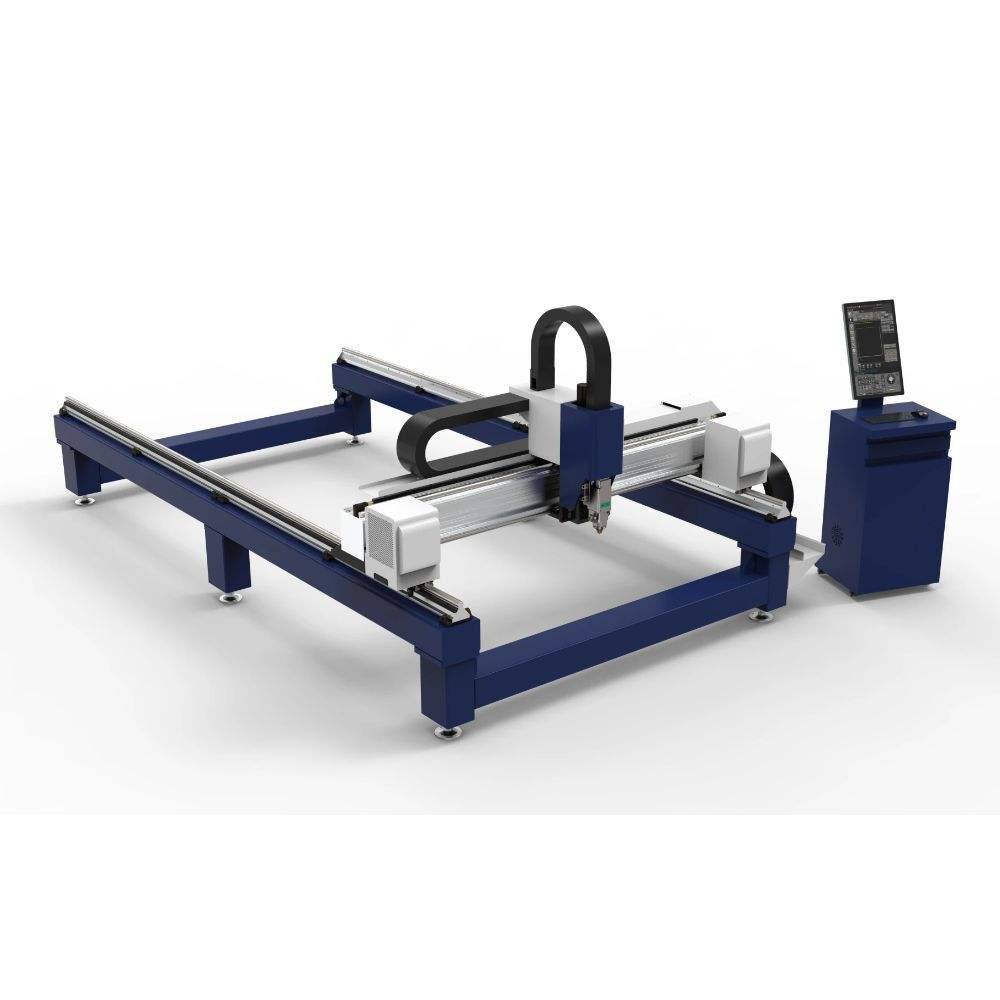
A 6kW precision laser system is defined by more than just its raw wattage. The beam quality, measured by the M2 factor, determines how tightly the laser can be focused. For aluminum fabrication, a high-quality beam ensures a small kerf width, which is vital for nesting parts closely together and reducing material waste. The motion system of the machine, often utilizing linear motors or high-precision rack-and-pinion drives, must match the laser’s capability to maintain accuracy at high feed rates.
Typical performance metrics for a 6kW system cutting aluminum include:
- 1mm Aluminum: Cutting speeds exceeding 60 m/min.
- 5mm Aluminum: Cutting speeds around 10-12 m/min.
- 12mm Aluminum: Cutting speeds around 2.5-3.5 m/min.
- Maximum piercing capacity: Up to 25mm-30mm depending on the alloy and assist gas.
Optimizing Cutting Parameters for Aluminum
Achieving a dross-free finish on aluminum requires precise calibration of several parameters. The focal position is perhaps the most critical variable. Unlike carbon steel, where the focus is often near the surface, aluminum laser cutting typically requires a “negative” focus—meaning the beam is focused inside the material or near the bottom of the plate. This encourages a wider melt pool at the base, allowing the assist gas to eject the molten metal more effectively.
Frequency and pulse width also play roles in the piercing process. High-frequency pulsing prevents the “explosion” of material during the initial pierce, which is common in thicker aluminum plates. By gradually increasing the duty cycle, the 6kW laser can create a clean entry hole, ensuring the subsequent cut starts with maximum stability.
Assist Gas Selection: Nitrogen vs. Compressed Air
The choice of assist gas is a determining factor in both the quality and cost of laser cutting in Leon. Nitrogen is the industry standard for high-quality aluminum fabrication. As an inert gas, nitrogen prevents oxidation of the cut edge, leaving a bright, weld-ready surface. This is essential for components that will undergo subsequent TIG or MIG welding, as an oxide layer can lead to porosity in the weld bead.
Alternatively, many facilities are moving toward high-pressure compressed air for 6kW systems. While this introduces a slight oxide layer, the cost savings are substantial. For structural components where aesthetic finish and weld purity are secondary to throughput and cost, compressed air provides a viable and aggressive cutting medium. A 6kW system provides enough power to overcome the slightly less efficient thermodynamics of air cutting compared to pure nitrogen.
Maintenance and Longevity of Precision Optics
To maintain precision in a 6kW system, a rigorous maintenance schedule is non-negotiable. The high power levels mean that even microscopic contaminants on the protective window or the focus lens can absorb energy, leading to thermal shift. Thermal shift causes the focal point to move during the cut, resulting in inconsistent edge quality and potential “self-cutting” of the nozzle. Operators in Leon must ensure that the cutting head environment remains pressurized with clean, dry air to prevent the ingress of metallic dust generated during the laser cutting process.
Furthermore, the chiller system must be monitored closely. A 6kW fiber laser generates significant heat within the resonator and the optical path. Maintaining a constant temperature (usually within +/- 0.1 degree Celsius) is vital for beam stability. In the varying climate of Leon, industrial-grade chillers with dual-circuit cooling—one for the laser source and one for the cutting head—are mandatory.
Safety Protocols in High-Power Laser Environments
Operating a 6kW laser involves significant safety considerations. Fiber lasers operate in a spectrum that is invisible to the human eye but highly damaging to the retina. The machine must be fully enclosed in a Class 4 safety housing with certified laser-safe glass viewing windows. In Leon, adherence to international safety standards (such as ISO 11553) is becoming a prerequisite for Tier 1 and Tier 2 suppliers.
Beyond optical safety, fume extraction is a critical concern when processing aluminum. Aluminum dust is not only a respiratory hazard but is also highly flammable and potentially explosive in specific concentrations. A high-volume dust collector with a spark arrestor and HEPA filtration is an integral part of a 6kW laser cutting installation. Regular cleaning of the slats and the under-machine trays is necessary to prevent the accumulation of “aluminum fines.”
The Competitive Advantage of 6kW Systems in Leon
For businesses in Leon looking to scale their production, the 6kW precision laser system offers a path to diversification. The ability to switch between thin-gauge decorative panels and thick structural plates allows a single machine to serve multiple industries. As the automotive sector shifts toward electric vehicles (EVs), the demand for aluminum battery enclosures and structural frames is projected to rise. A 6kW system provides the necessary throughput to handle these high-volume contracts while maintaining the tight tolerances required by EV manufacturers.
Conclusion: Future Outlook for Laser Technology
The 6kW precision laser system is more than just a tool; it is a cornerstone of modern industrial capability. By mastering the interaction between high-power fiber light and aluminum alloys, manufacturers in Leon can achieve levels of productivity that were previously impossible. As software integration and AI-driven nesting continue to evolve, the efficiency of laser cutting will only increase, further solidifying the 6kW system’s role as an essential asset in the global manufacturing landscape. Investing in this technology, supported by proper training and maintenance, ensures that the regional industry remains at the forefront of the global supply chain.













