Engineering Excellence: The 1.5kW Precision Laser System for Galvanized Steel
The industrial landscape of Guadalajara, often referred to as the “Silicon Valley of Mexico,” has seen a significant shift toward advanced manufacturing technologies. Among these, the 1.5kW precision fiber laser system stands out as a cornerstone for local fabrication shops specializing in galvanized steel. This guide provides a comprehensive technical analysis of how 1.5kW fiber technology optimizes the processing of zinc-coated materials, ensuring that engineering firms in Jalisco maintain a competitive edge in the global supply chain.
laser cutting technology has evolved rapidly, and the 1.5kW power rating represents a strategic “sweet spot” for many applications. It offers a balance between capital investment and operational capability, particularly for the gauges of galvanized steel commonly used in HVAC, automotive components, and electrical enclosures. In an environment like Guadalajara, where precision and throughput are paramount, understanding the nuances of this system is essential for any facility manager or lead engineer.
The Technical Mechanics of 1.5kW Fiber Laser Sources
At the heart of the precision system is the fiber laser source. Unlike CO2 lasers, fiber lasers utilize an optical fiber doped with rare-earth elements (typically ytterbium) as the active gain medium. For a 1.5kW system, the beam quality (M2 factor) is exceptionally high, allowing for a concentrated energy density that can easily penetrate the reflective surface of galvanized steel. The wavelength of approximately 1.06 micrometers is absorbed much more efficiently by metallic surfaces compared to the 10.6 micrometers of gas lasers.
This efficiency is critical when dealing with galvanized steel. The zinc coating, while excellent for corrosion resistance, presents a challenge for thermal processing. Zinc has a lower melting point (approx. 419°C) than the underlying carbon steel (approx. 1500°C). A 1.5kW system provides the necessary power density to vaporize the zinc and melt the steel simultaneously, but it requires precise control of the beam profile to prevent the zinc from “boiling” and creating turbulence in the melt pool, which leads to dross or burrs.

Processing Galvanized Steel: The Zinc Challenge
Galvanized steel is widely utilized in Guadalajara’s construction and automotive sectors due to its longevity. However, from a laser cutting perspective, the material is notoriously difficult. The primary issue is the volatile nature of the zinc layer. During the laser cutting process, the zinc vaporizes before the steel melts. If the cutting parameters are not perfectly tuned, this vapor can interfere with the assist gas flow, resulting in an unstable cut or “blowouts.”
The 1.5kW precision system addresses this through high-speed modulation and sophisticated CNC control. By using high-pressure Nitrogen (N2) as an assist gas, the system can mechanically “flush” the molten zinc and steel out of the kerf before the zinc vapor can contaminate the cut edge. This results in a clean, oxide-free edge that is ready for welding or painting without the need for secondary grinding operations—a major cost-saving factor for Guadalajara-based manufacturers.
Optimizing Parameters for Guadalajara’s Industrial Environment
Operating a high-precision laser in Jalisco requires consideration of local environmental factors. Guadalajara sits at an elevation of approximately 1,566 meters. The thinner air and local humidity levels can affect the performance of the laser’s cooling system and the purity of the assist gases. A 1.5kW system must be paired with a high-efficiency dual-circuit chiller to maintain the temperature of both the laser source and the cutting head within a 1-degree Celsius tolerance.
Furthermore, the choice of assist gas is critical. While Oxygen (O2) can be used to increase cutting speeds in thicker carbon steel, it is generally avoided for galvanized material when a high-quality finish is required. Oxygen reacts with the zinc to create zinc oxide, which leaves a rough, yellowish residue on the edge. For precision laser cutting of galvanized sheets up to 4mm, high-pressure Nitrogen is the industry standard in Guadalajara’s top-tier fabrication facilities, ensuring the integrity of the galvanized coating remains as close to the cut edge as possible.
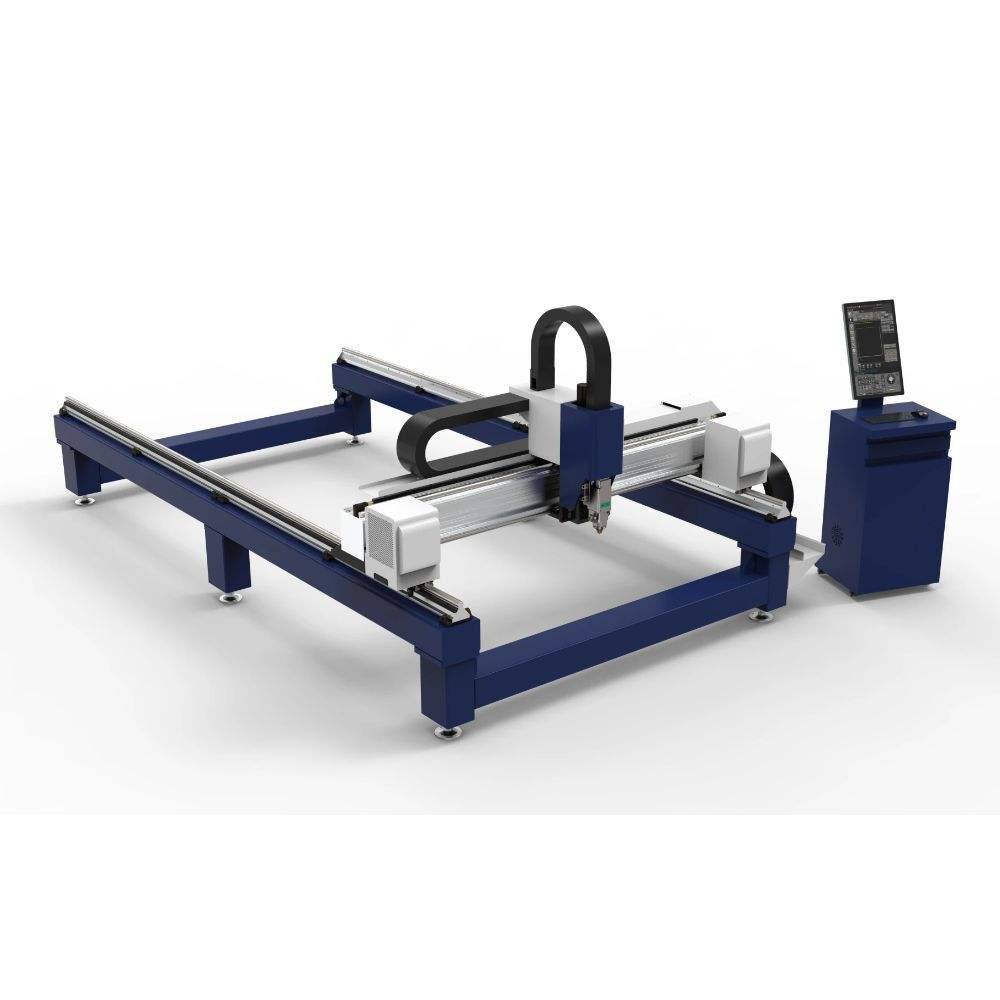
Hardware Integration: The Cutting Head and Motion Control
A 1.5kW system is only as good as its delivery mechanism. Modern precision systems utilize auto-focus cutting heads equipped with capacitive sensors. These sensors maintain a constant distance (standoff) between the nozzle and the galvanized sheet, even if the material has slight warping—a common occurrence in thin-gauge galvanized coils. The ability to adjust the focal point dynamically allows the operator to “bury” the focus slightly into the material, which helps in achieving a narrower kerf and reducing the heat-affected zone (HAZ).
The motion system—typically comprising AC servo motors and high-precision rack-and-pinion drives—must be capable of high acceleration. Because 1.5kW fiber lasers cut thin galvanized steel at very high linear speeds (often exceeding 20-30 meters per minute), the CNC controller must process code at microsecond intervals to maintain geometric accuracy in tight corners and intricate geometries.
Safety and Fume Extraction in Galvanized Fabrication
One of the most critical aspects of laser cutting galvanized steel in an urban industrial hub like Guadalajara is environmental safety. Vaporized zinc is toxic; inhaling zinc oxide fumes can lead to “metal fume fever.” A 1.5kW precision laser system must be integrated with a robust, high-volume dust extraction and filtration unit. The system should feature a partitioned exhaust table that opens only the sections directly beneath the cutting head, maximizing suction efficiency.
Engineers must ensure that the filtration system utilizes HEPA-grade filters capable of capturing sub-micron particles. In Guadalajara, where industrial regulations are increasingly aligning with international standards, proper fume management is not just a health requirement but a legal one. The precision system’s enclosed housing also serves to protect operators from reflected 1.06µm radiation, which is invisible to the human eye but highly damaging.
Economic Impact and ROI for Local Manufacturers
The transition to a 1.5kW fiber laser system represents a significant capital expenditure, but the Return on Investment (ROI) for Guadalajara’s workshops is often realized within 12 to 18 months. Compared to traditional plasma cutting or mechanical shearing, laser cutting offers significantly higher material utilization through advanced nesting software. Because the kerf width is so small (typically 0.1mm to 0.2mm), parts can be placed closer together, reducing scrap waste of expensive galvanized stock.
Additionally, the “precision” aspect of the 1.5kW system eliminates the need for downstream processes. In the competitive Guadalajara market, being able to move a part directly from the laser bed to the assembly line or a welding station provides a massive throughput advantage. The low maintenance requirements of fiber technology—boasting a diode life of up to 100,000 hours—further reduces the Total Cost of Ownership (TCO) compared to older CO2 technology.
Maintenance Protocols for Longevity
To maintain peak performance in Jalisco’s climate, a strict maintenance schedule is required. The optical path must remain pristine. Even though the fiber delivers the beam directly to the head, the protective window (cover glass) is a consumable that must be inspected daily. Dust from the galvanized coating can be abrasive; therefore, the linear guides and bellows must be cleaned and lubricated to prevent premature wear.
Checking the gas pressure regulators is also vital. Since galvanized laser cutting relies heavily on high-pressure Nitrogen, any fluctuation in gas flow can result in dross. Local service providers in Guadalajara recommend monthly checks on the chiller’s conductivity and refrigerant levels to ensure the 1.5kW source is not subjected to thermal stress, which can cause power degradation over time.
Conclusion: The Future of Fabrication in Guadalajara
The 1.5kW precision laser system is more than just a tool; it is a catalyst for industrial modernization in Guadalajara. By mastering the complexities of laser cutting galvanized steel—from managing zinc vaporization to optimizing high-pressure gas flow—local manufacturers can produce components that meet the rigorous standards of the aerospace, medical, and automotive industries. As Jalisco continues to grow as a global manufacturing hub, the adoption of high-precision fiber laser technology will be the defining factor for shops aiming to deliver world-class quality with localized efficiency.
For engineers and business owners in the region, investing in this technology means embracing a future where speed, precision, and material versatility converge. The 1.5kW system provides the perfect entry point for high-performance fabrication, offering the power needed for production and the precision required for innovation.













