The Strategic Advantage of 3kW Tube laser cutting in Toluca’s Industrial Sector
The industrial landscape of Toluca, State of Mexico, has undergone a significant transformation over the last decade. As one of Mexico’s most critical manufacturing hubs, the region demands high-precision solutions to support the automotive, aerospace, and food processing industries. At the heart of this technological evolution is the 3kW fiber laser cutting system, specifically designed for tube and profile processing. For engineers and plant managers in the Lerma-Toluca corridor, transitioning to a 3kW fiber source represents a quantum leap in production efficiency, particularly when working with stainless steel.
Stainless steel is prized for its corrosion resistance and structural integrity, but it poses unique challenges during the fabrication process. Conventional methods like mechanical sawing or plasma cutting often result in burrs, heat distortion, and secondary finishing requirements. However, the implementation of 3kW laser cutting technology allows for high-speed, high-precision processing that eliminates these bottlenecks. This guide explores the technical nuances of utilizing a 3kW tube laser for stainless steel applications within the specific environmental and economic context of Toluca.
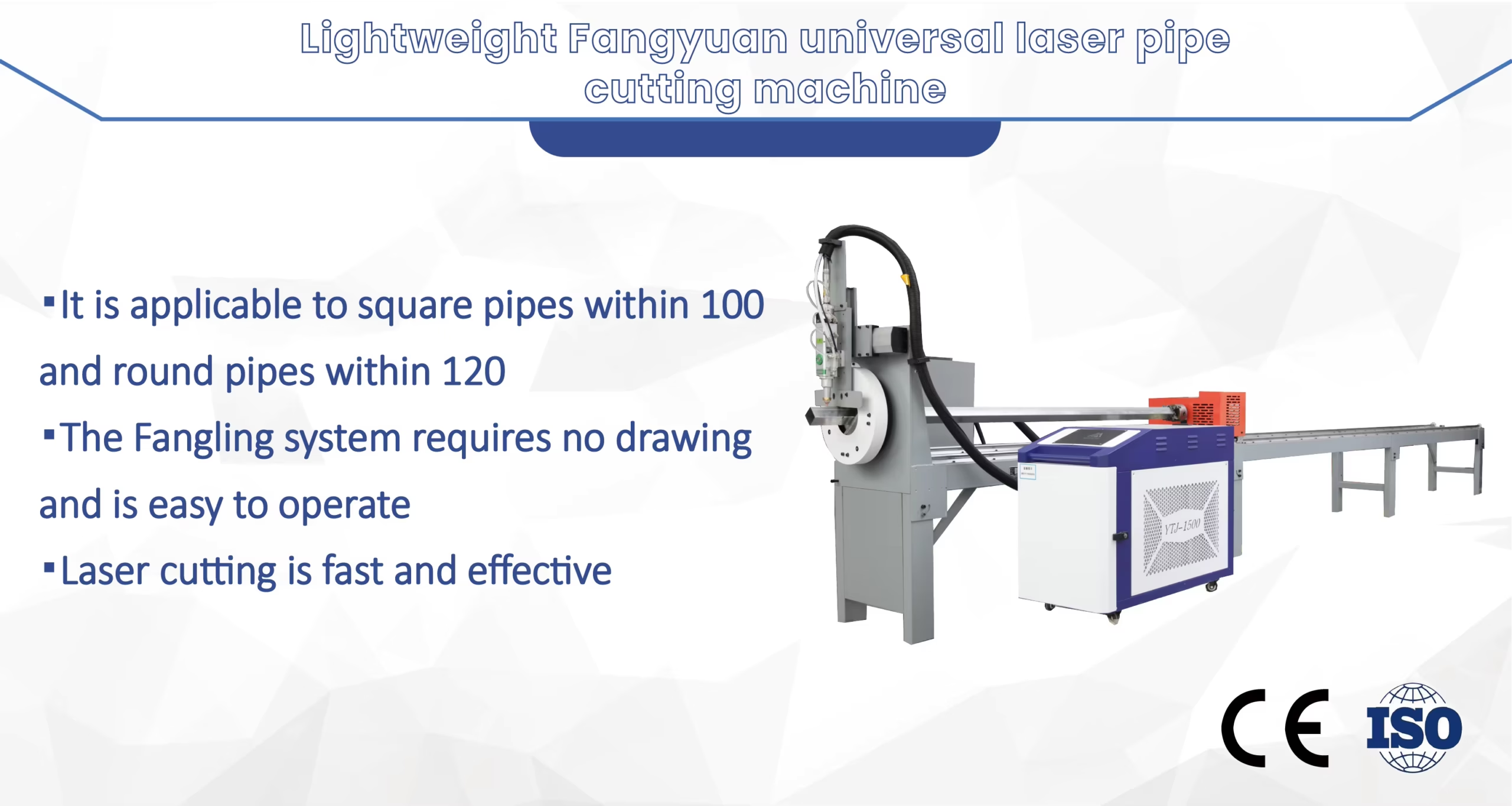 laser cutting machine” style=”width: 100%; max-width: 800px; height: auto; margin: 20px 0;”>
Technical Specifications: Why 3kW is the Optimal Choice for Stainless Steel
In the realm of fiber laser cutting, power selection is critical. While 1kW or 2kW systems are capable of cutting thin-walled tubes, the 3kW threshold is widely considered the “sweet spot” for industrial stainless steel applications. A 3kW fiber laser provides the necessary energy density to maintain high feed rates on wall thicknesses ranging from 1mm to 8mm, which covers the vast majority of structural and decorative stainless steel tubes used in Mexican manufacturing.
Beam Quality and Wavelength
Fiber lasers operate at a wavelength of approximately 1.07 microns. This wavelength is highly absorbed by metallic materials, especially stainless steel. Compared to CO2 lasers, fiber technology is significantly more efficient at converting electrical energy into a concentrated beam. For a 3kW system, the beam quality (M2 factor) is optimized to produce a narrow kerf width. This precision is essential when cutting complex geometries in tubes, such as interlocking joints or intricate perforations, where tolerances must be kept within +/- 0.1mm.
Speed and Productivity Gains
The 3kW power level allows for a dramatic increase in linear cutting speed. For a standard 2mm thick stainless steel tube, a 3kW laser cutting machine can achieve speeds that are 20-30% faster than a 2kW counterpart. In a high-volume production environment like those found in Toluca’s automotive parts suppliers, these seconds saved per part translate into thousands of additional units per month, significantly lowering the cost per part and accelerating the return on investment (ROI).
Processing Stainless Steel: Overcoming Material Challenges
Stainless steel, particularly grades 304 and 316, behaves differently under a laser beam than carbon steel. Its lower thermal conductivity and higher thermal expansion coefficient mean that heat management is paramount. If the laser cutting process is not finely tuned, the material can warp, or the edges can become discolored due to oxidation.
The Role of Assist Gases: Nitrogen vs. Oxygen
When laser cutting stainless steel, the choice of assist gas is the most influential factor in edge quality. For 3kW systems, Nitrogen is the industry standard. Nitrogen acts as a shielding gas, blowing away the molten metal from the kerf without reacting with the material. This results in a “bright” or “clean” cut edge that is free of oxides. This is crucial for industries in Toluca that require sanitary finishes, such as pharmaceutical or food processing equipment manufacturing, where any oxidation could lead to premature corrosion or bacterial growth.
Managing Reflectivity
Polished stainless steel is highly reflective. In the early days of fiber technology, back-reflection could damage the laser source. Modern 3kW tube laser cutters are equipped with back-reflection protection and advanced optical isolators. Furthermore, the high power density of a 3kW beam ensures that the material is instantly coupled, transitioning from a reflective solid to an absorbent molten state in microseconds, thereby protecting the machine’s internal components.

The Toluca Context: Altitude and Environmental Factors
Operating high-tech machinery in Toluca requires an understanding of the local geography. Situated at an altitude of approximately 2,660 meters (8,727 feet) above sea level, Toluca presents environmental variables that can affect laser cutting performance if not properly managed.
Cooling and Chiller Efficiency
The lower atmospheric pressure at high altitudes affects the cooling efficiency of air-cooled components. A 3kW fiber laser generates significant heat within the resonator and the cutting head. It is imperative that the water chiller system is rated for the specific altitude of Toluca. Engineers must ensure that the heat exchange capacity is sufficient to maintain a stable temperature for the laser source and the optics, as fluctuations can lead to beam instability and reduced cutting quality.
Gas Dynamics at Altitude
The behavior of assist gases changes slightly at higher altitudes. The pressure settings for Nitrogen may need to be calibrated differently than at sea level to achieve the same kinetic energy at the nozzle. Professional laser cutting operators in the region often use high-pressure piping and specialized regulators to ensure that the 3kW beam is supported by a consistent gas flow, preventing dross (slag) from adhering to the bottom of the tube.
Optimization and Automation in Tube Processing
A 3kW tube laser cutter is only as effective as the software and mechanical systems that support it. Unlike plate cutting, tube laser cutting involves managing the rotation of the workpiece and accounting for the structural integrity of the tube as material is removed.
Advanced Nesting and CAD/CAM Integration
To maximize the efficiency of a 3kW system, manufacturers in Toluca utilize sophisticated nesting software. This software calculates the most efficient way to place cuts on a 6-meter or 9-meter tube to minimize scrap. For stainless steel, which is more expensive than mild steel, reducing waste by even 5% can result in massive annual savings. Furthermore, the ability to import 3D files directly from design software ensures that complex “fish-mouth” joints and miter cuts are executed with perfect geometry, allowing for seamless assembly and welding.
Pneumatic Chuck Systems and Support
The mechanical handling of the tube is vital. High-speed 3kW laser cutting requires a chuck system that can rotate and move the tube with high acceleration without slippage. Dual pneumatic chucks provide the necessary clamping force for various profiles—round, square, rectangular, and even oval. In Toluca’s heavy-duty manufacturing sector, the ability to handle heavy wall thicknesses and large diameters (up to 220mm or more) on the same machine is a significant competitive advantage.
Maintenance Protocols for Long-Term Reliability
Investing in a 3kW tube laser cutter is a long-term commitment. In the industrial environment of Toluca, where dust and humidity can fluctuate, a rigorous maintenance schedule is non-negotiable. The “Professional Engineering” approach to maintenance involves several key areas:
- Optics Care: The protective windows and lenses must be inspected daily. Even a microscopic speck of dust can absorb 3kW of energy, leading to thermal cracking and expensive downtime.
- Lubrication: The racks, pinions, and linear guides that facilitate the high-speed movement of the cutting head must be lubricated to prevent wear, especially given the high duty cycles common in Mexican factories.
- Chiller Maintenance: Regular water changes and the use of specialized additives prevent algae growth and scale buildup within the laser’s internal cooling circuits.
Conclusion: Future-Proofing Manufacturing in Central Mexico
The adoption of 3kW tube laser cutting technology is more than just an equipment upgrade; it is a strategic move for any Toluca-based business looking to compete on a global scale. The precision, speed, and versatility offered by these systems allow manufacturers to take on more complex projects, reduce lead times, and maintain the high quality standards required by international partners.
As the automotive and industrial sectors in Mexico continue to move toward lightweighting and the use of high-strength alloys, the 3kW fiber laser remains the most capable tool for the job. By understanding the technical requirements of stainless steel processing and the specific environmental considerations of the Toluca region, companies can harness the full power of laser cutting to drive innovation and growth in the heart of Mexico’s industrial zone.













