Maximizing Industrial Efficiency: The 12kW Tube laser cutter for Stainless Steel in Puebla
The industrial landscape of Puebla, Mexico, has undergone a radical transformation over the last decade. As a primary hub for automotive manufacturing, aerospace components, and heavy structural engineering, the demand for high-precision metal fabrication has never been higher. At the forefront of this technological evolution is the 12kW tube laser cutting system. This high-power fiber laser technology represents the pinnacle of efficiency, particularly when processing stainless steel—a material prized for its corrosion resistance and aesthetic appeal but known for its demanding machining requirements.
In the context of Puebla’s “Corredor Industrial,” where Tier 1 and Tier 2 suppliers for giants like Volkswagen and Audi operate, the integration of 12kW laser cutting capabilities is no longer a luxury; it is a competitive necessity. The 12kW threshold allows for unprecedented cutting speeds and the ability to process thicker wall dimensions with a level of precision that traditional mechanical sawing or lower-wattage lasers simply cannot match. This guide explores the technical nuances, operational advantages, and strategic importance of 12kW tube laser cutting for stainless steel applications in the Puebla region.
Technical Superiority of 12kW Fiber Lasers
The leap from 6kW or 8kW to 12kW is significant in the realm of fiber laser technology. Fiber lasers utilize a solid-state gain medium, which is inherently more stable and efficient than gas-based CO2 lasers. When scaled to 12kW, the energy density at the focal point is immense. For stainless steel, this means the laser can reach the melting point of the material almost instantaneously, allowing for high-speed “vaporization” cutting rather than simple melting.
One of the primary advantages of the 12kW power rating is the improvement in beam quality and stability. High-power systems are equipped with advanced collimators and adaptive optics that maintain a consistent beam diameter across the entire length of the tube, regardless of the distance from the laser source. This is critical for tube laser cutting, where the workpiece can be up to 12 meters long. The ability to maintain a tight, high-intensity spot ensures that the kerf width remains narrow, reducing material waste and ensuring that complex geometries—such as interlocking joints or intricate decorative patterns—are executed with micron-level accuracy.

Processing Stainless Steel: Metallurgy and Precision
Stainless steel, particularly grades 304 and 316, presents unique challenges for laser cutting. Its high chromium and nickel content makes it more reflective than carbon steel, and its thermal conductivity is lower. In lower-power systems, this can lead to heat accumulation, resulting in “dross” or slag formation on the underside of the cut. However, a 12kW system provides enough energy to overcome these metallurgical hurdles.
When cutting stainless steel in Puebla’s high-altitude environment (approximately 2,135 meters above sea level), atmospheric pressure affects the assist gas dynamics. To achieve a “bright” or “clean” edge, Nitrogen is typically used as the assist gas. The Nitrogen acts as a shielding agent, preventing oxidation and ensuring that the cut edge remains silver and ready for welding or immediate assembly without secondary finishing. The 12kW power allows for higher Nitrogen pressures and flow rates, which effectively “blows” the molten material out of the kerf at speeds that prevent the heat-affected zone (HAZ) from expanding. This results in a superior metallurgical finish that preserves the stainless steel’s anti-corrosive properties at the cut edge.
Puebla’s Strategic Manufacturing Landscape
Puebla serves as a critical node in the North American supply chain. The region’s reliance on the automotive and food processing industries makes stainless steel tube cutting a high-demand service. In food-grade applications—such as the production of industrial mixers, conveyors, and storage tanks for the local beverage industry—the precision of a 12kW laser cutting machine is paramount. These industries require tubes with perfectly smooth edges to prevent bacterial growth in joints and seams.
Furthermore, the automotive sector in Puebla utilizes stainless steel for exhaust systems, structural chassis components, and fluid delivery lines. The 12kW tube laser can process these components with high repeatability. By utilizing automated loading and unloading systems, manufacturers in Puebla can achieve 24/7 production cycles, meeting the rigorous Just-In-Time (JIT) delivery requirements of the major OEMs in the area. The integration of 12kW technology directly supports the regional goal of increasing local content in manufactured goods, reducing the reliance on imported pre-cut components.
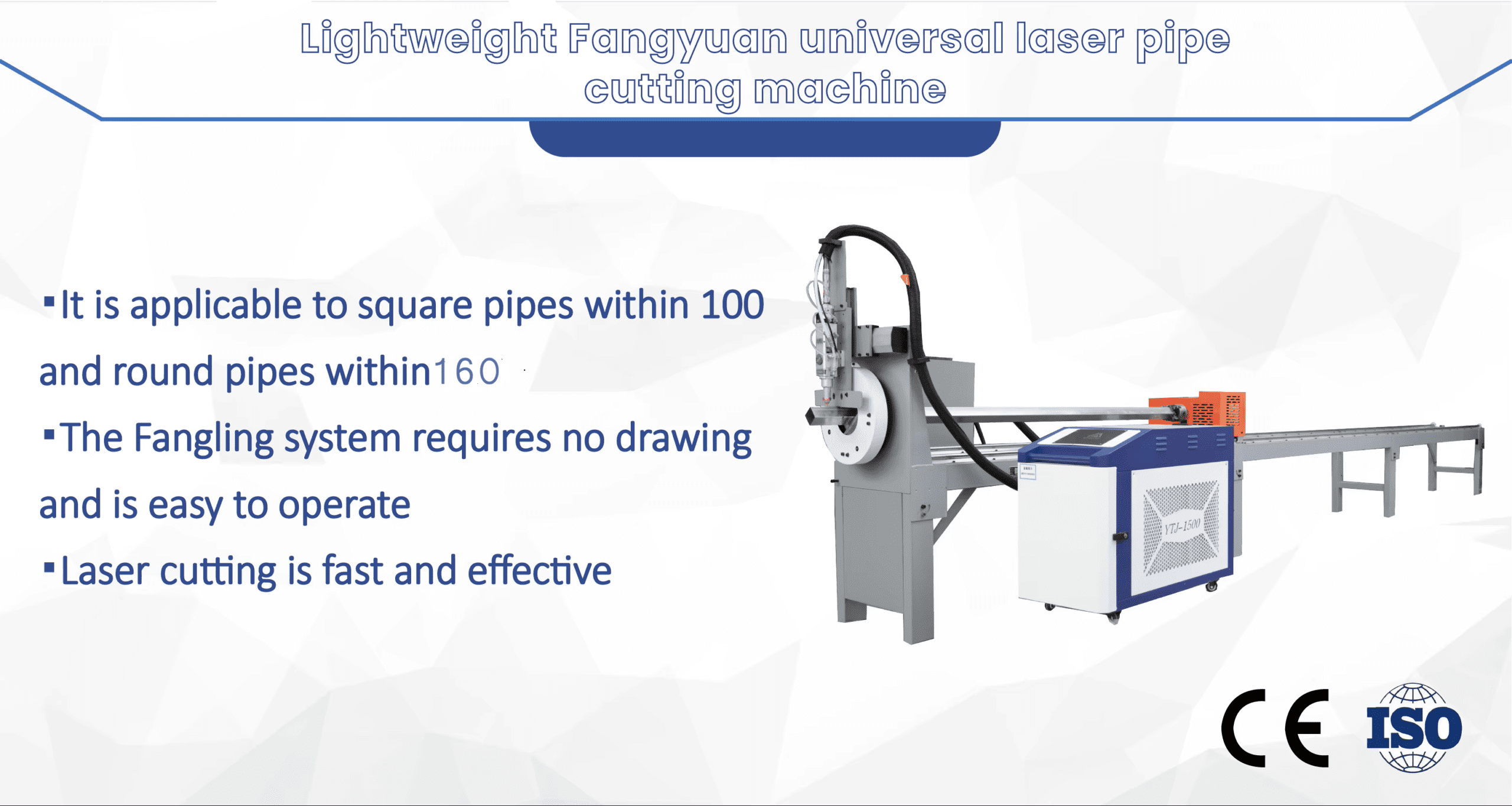
Operational Excellence and Software Integration
The hardware of a 12kW tube laser cutter is only half of the equation. To truly leverage this power in a professional engineering environment, sophisticated software integration is required. Modern systems utilize advanced CAD/CAM nesting software specifically designed for tube geometries (round, square, rectangular, and open profiles like C-channels or L-angles). This software calculates the optimal cutting path to minimize “air time” and maximize material utilization.
In a 12kW setup, the software also manages dynamic power modulation. As the laser head navigates tight corners or small holes, the power is automatically throttled down to prevent over-burning, then ramped back up to 12kW for long straightaways. This ensures a consistent finish across the entire part. For engineers in Puebla, this means the ability to design more complex assemblies. Features like “tab-and-slot” construction can be cut directly into the tubes, allowing for self-fixturing assemblies that significantly reduce the time and cost associated with manual welding jigs.
Maintenance and Infrastructure Requirements
Operating a 12kW laser cutting system requires a robust infrastructure, particularly regarding electrical supply and cooling. Fiber lasers are highly efficient, but a 12kW source still generates significant heat that must be dissipated. High-capacity industrial chillers are essential to maintain the laser source and the cutting head at stable temperatures. In Puebla, where seasonal temperature fluctuations can be notable, climate-controlled environments for the laser resonator are recommended to ensure long-term reliability.
Maintenance protocols for high-power systems are rigorous. The protective windows in the cutting head must be inspected daily, as even a microscopic speck of dust can be vaporized by the 12kW beam, causing damage to the lens. However, compared to older CO2 technology, the maintenance of fiber lasers is far less intensive. There are no internal mirrors to align and no turbine oil to change. This increased uptime is a vital factor for Puebla-based shops looking to maximize their Return on Investment (ROI).
Economic Impact and Future Outlook
The investment in a 12kW tube laser cutter is substantial, but the economic returns in a high-output region like Puebla are compelling. The primary driver of ROI is the “cost per part.” Because the 12kW system cuts significantly faster than 4kW or 6kW machines—sometimes up to 3 or 4 times faster on medium-thickness stainless steel—the labor and overhead costs are spread across a much larger volume of finished goods.
Moreover, the versatility of the 12kW system allows shops to take on a wider variety of contracts. While a 4kW machine might struggle with 10mm stainless steel tubing, the 12kW machine handles it with ease, opening doors to structural and architectural projects that were previously inaccessible. As Puebla continues to attract international investment in the “nearshoring” trend, having the local capacity for high-power laser cutting positions the region as a premier destination for complex manufacturing.
Conclusion: The Standard for Modern Fabrication
The 12kW tube laser cutter is more than just a piece of machinery; it is a catalyst for industrial growth in Puebla. By mastering the nuances of laser cutting stainless steel at high power, local manufacturers can deliver products that meet global standards of precision and quality. The combination of high-speed processing, reduced secondary operations, and the ability to handle complex geometries ensures that the 12kW fiber laser remains the gold standard for tube fabrication.
As we look toward the future of manufacturing in Mexico, the continued adoption of high-wattage laser technology will be the defining factor in operational success. For engineers and facility managers in Puebla, the transition to 12kW laser cutting represents a commitment to excellence, providing the tools necessary to innovate, compete, and lead in an increasingly demanding global market. Whether it is for automotive exhaust systems, food-grade piping, or structural frameworks, the 12kW tube laser is the engine driving the next generation of industrial productivity.













