Introduction to 6kW Precision Laser Systems in Monterrey’s Industrial Landscape
Monterrey, often referred to as the industrial capital of Mexico, has long been a hub for advanced manufacturing, automotive assembly, and aerospace engineering. As the region continues to integrate into global supply chains, the demand for high-precision fabrication has skyrocketed. Among the various materials processed in the local workshops of Nuevo León, brass stands out as a critical yet challenging alloy. To meet the stringent tolerances required by modern engineering, the 6kW fiber laser system has emerged as the gold standard for laser cutting operations.
A 6kW system offers a unique balance of power and precision. While lower wattage machines might struggle with the high reflectivity of yellow metals, and higher wattage systems might prove overkill for thin-to-medium gauge components, the 6000-watt threshold provides the thermal density necessary to stabilize the cutting process. In Monterrey’s competitive landscape, adopting this technology is no longer just an advantage—it is a necessity for firms looking to provide Tier 1 and Tier 2 components to international partners.
The Metallurgy of Brass and Laser Interaction
Brass, an alloy primarily composed of copper and zinc, presents specific physical properties that dictate its behavior during laser cutting. It possesses high thermal conductivity and high reflectivity, particularly in the infrared spectrum where fiber lasers operate. In the past, these characteristics made brass difficult to process with CO2 lasers, as the reflected beam could travel back into the resonator and cause catastrophic damage.
Modern 6kW fiber lasers utilize a wavelength of approximately 1.06 microns, which is much more readily absorbed by non-ferrous metals than the 10.6 microns of a CO2 laser. However, even with fiber technology, the initial “pierce” phase remains critical. A 6kW system provides enough “punch” to overcome the initial reflectance, transitioning the material into a molten state where absorption increases significantly. This ensures a stable kerf and prevents the back-reflection that can plague lower-powered units.
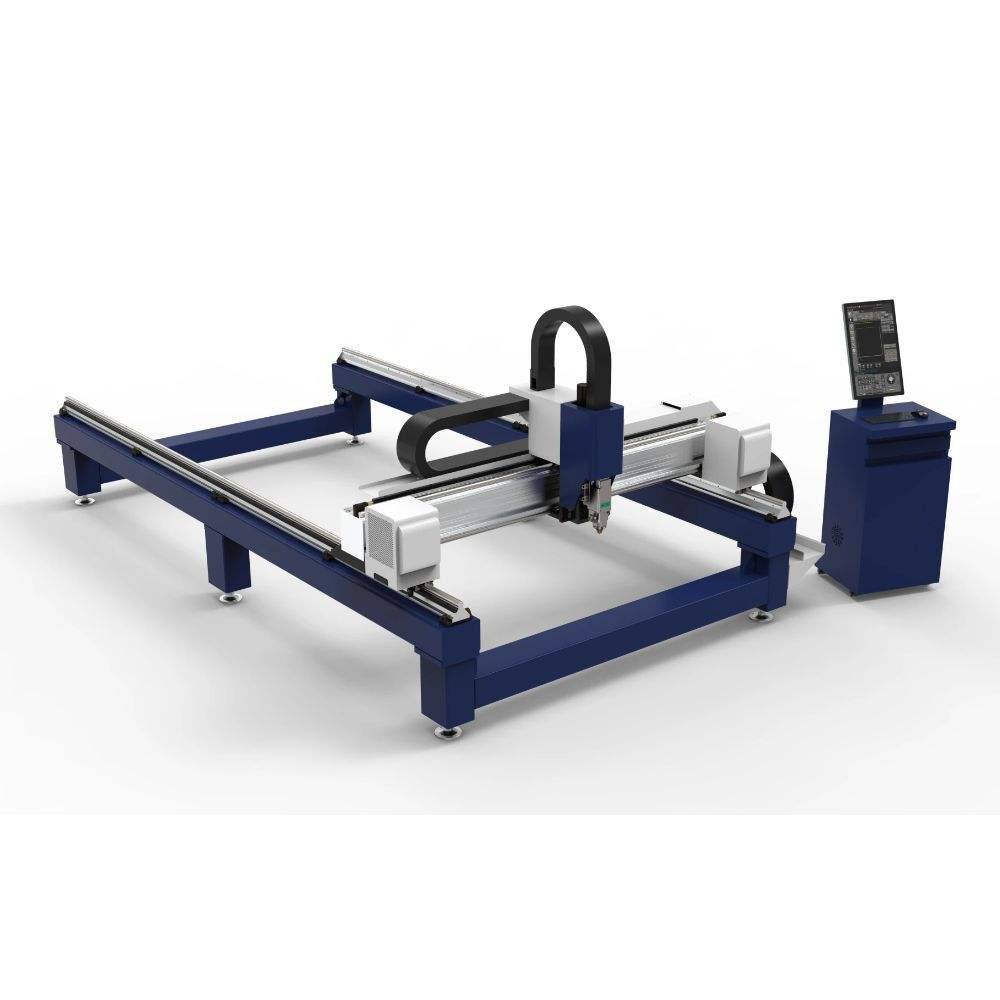
 laser cutting machine” style=”width: 100%; max-width: 800px; height: auto; margin: 20px 0;”>
Technical Advantages of the 6kW Power Level for Brass
The choice of a 6kW resonator is a strategic engineering decision. In the context of laser cutting brass, power directly correlates to the maximum thickness of the material that can be processed with a high-quality edge finish. While a 3kW machine might cap out at 6mm or 8mm for “clean” brass cuts, a 6kW system comfortably handles up to 12mm or even 15mm depending on the alloy composition and gas pressure.
Enhanced Cutting Speeds and Throughput
For Monterrey-based manufacturers dealing with high-volume orders, throughput is the primary metric of success. A 6kW laser can process 3mm brass plate at speeds significantly higher than its 2kW or 4kW counterparts. This speed does more than just increase parts-per-hour; it reduces the Heat Affected Zone (HAZ). Because the laser moves faster, the heat is concentrated in a narrower area, preventing the zinc in the brass from vaporizing excessively along the edges, which can lead to porosity or discolored finishes.
Beam Quality and Focus Stability
Precision laser cutting requires a stable BPP (Beam Parameter Product). At 6kW, the beam delivery systems are engineered with high-grade optics that can withstand the thermal load without “thermal lensing.” Thermal lensing occurs when the optics heat up and slightly deform, shifting the focal point during a long production run. High-end 6kW systems used in Monterrey’s aerospace sector incorporate cooled optics and auto-focusing heads that compensate for these variables in real-time, ensuring that the first part of the day is identical to the last.
Assist Gas Selection for Brass Fabrication
In any laser cutting operation, the assist gas is as vital as the laser beam itself. For brass, the choice usually falls between Nitrogen and Oxygen, though Nitrogen is the preferred medium for precision engineering applications in the Monterrey region.
Nitrogen: The Clean Edge Standard
Nitrogen is used as a high-pressure shielding gas to blow the molten brass out of the kerf before it can react with atmospheric oxygen. This results in a “bright” cut edge that is free of oxidation. For Monterrey’s decorative and architectural hardware industries, this is essential, as it eliminates the need for secondary grinding or polishing. The 6kW system provides the necessary energy to maintain a high feed rate while the Nitrogen maintains the metallurgical integrity of the edge.
Oxygen: For Thicker Sections
While less common for thin brass, Oxygen can be used for thicker plates where an exothermic reaction is needed to assist the melt. However, this often results in a darkened, oxidized edge. In heavy industrial applications in Monterrey’s energy sector, where the edge might be welded later, this oxidation may be acceptable, but for most precision work, Nitrogen remains the industry standard.
Operational Excellence in Monterrey’s Workshops
Implementing a 6kW laser cutting system in a Monterrey facility requires more than just the hardware. The local environmental conditions—specifically humidity and temperature—must be managed to ensure the longevity of the fiber source and the precision of the gantry.
Climate Control and Chiller Integration
Monterrey is known for its extreme heat. A 6kW laser generates significant internal heat that must be dissipated. High-efficiency dual-circuit chillers are mandatory. These chillers regulate the temperature of both the laser source and the cutting head. Engineers must ensure that the dew point inside the cabinet is monitored to prevent condensation on the sensitive electronics and optical fibers, a common challenge during Monterrey’s humid seasons.
Software and Nesting Optimization
To maximize the ROI of a 6kW system, local shops utilize advanced CAD/CAM software. Precision laser cutting of brass is often expensive due to the raw material costs. Efficient nesting algorithms minimize scrap. Furthermore, “Common Line Cutting” (where two parts share a single cut path) is frequently employed to reduce the total distance traveled by the head, further increasing the lifespan of the consumables like nozzles and ceramic rings.
Maintenance and Local Support
The proximity of Monterrey to the US border and its own internal logistics network means that high-quality consumables and technical support are readily available. Regular maintenance of a 6kW system involves checking the protective windows (cover glass) for “spatter” from the brass. Because brass is prone to spitting during the piercing process, the use of high-quality, coated protective windows is a standard operating procedure to protect the expensive collimating lenses above.
Applications of Precision Brass Cutting in Nuevo León
The versatility of the 6kW laser cutting system allows Monterrey manufacturers to serve a diverse range of industries. Each sector has its own set of requirements for precision and finish.
Electrical and Electronics
Brass is a primary material for busbars, connectors, and switchgear components due to its conductivity. Precision laser cutting allows for the creation of intricate geometries and tight-tolerance holes that are essential for high-voltage assemblies. The 6kW power level ensures that even thick, highly conductive brass plates can be cut without the “rounding” of corners that occurs with mechanical stamping or lower-power lasers.
Automotive and HVAC
Monterrey’s massive automotive cluster relies on brass for various sensors, fittings, and radiator components. The ability to switch between laser cutting thin shims and thick fittings on the same machine provides the flexibility needed for “Just-In-Time” (JIT) manufacturing. In the HVAC sector, brass valves and manifold plates are routinely processed using 6kW systems to ensure leak-proof fits and smooth internal surfaces.
Decorative and Architectural
From luxury hotel signage to custom furniture components, the aesthetic appeal of brass is unmatched. The precision of a 6kW fiber laser allows for extremely fine detail—down to 0.1mm—enabling designers to push the boundaries of what is possible with metal filigree and ornamental screens. The clean-cut edge provided by Nitrogen assist gas is particularly valued here, as it preserves the natural luster of the alloy.
Economic Impact and Future Outlook
The investment in a 6kW precision laser cutting system represents a significant capital expenditure for any Monterrey firm. However, the economic justification is found in the reduction of secondary operations. By producing a finished or near-finished part directly from the laser bed, companies reduce labor costs and lead times.
As Industry 4.0 takes hold in Mexico, these 6kW systems are increasingly being integrated into automated warehouses and robotic sorting cells. The data generated by the laser—monitoring gas consumption, power levels, and cutting time—allows Monterrey’s factory managers to optimize their supply chains with unprecedented accuracy. The future of brass fabrication in the region lies in this intersection of high-power photonics and digital manufacturing, ensuring that Monterrey remains a global leader in precision engineering for decades to come.
Conclusion
The 6kW precision laser system has redefined the possibilities for brass fabrication in Monterrey. By overcoming the metallurgical challenges of reflectivity and thermal conductivity, this technology enables local manufacturers to produce world-class components with speed and accuracy. As the industrial sector in Nuevo León continues to evolve, the 6kW laser cutting platform will remain a cornerstone of production, driving innovation across the automotive, electrical, and architectural landscapes.













