Introduction to 3kW Tube laser cutting in the Mexican Industrial Sector
The industrial landscape of Mexico City (CDMX) and its surrounding metropolitan areas, such as Naucalpan and Tlalnepantla, has undergone a significant technological transformation. At the forefront of this evolution is the implementation of fiber laser technology. The 3kW tube laser cutter has emerged as the “gold standard” for medium-to-heavy duty fabrication, offering a precise balance between capital investment and operational throughput. For engineers and fabricators in the Valle de México, mastering the nuances of laser cutting—specifically when applied to galvanized steel—is essential for maintaining competitiveness in the automotive, construction, and HVAC sectors.
A 3kW fiber laser source provides sufficient power density to process a wide array of tube profiles, including round, square, rectangular, and elliptical sections. However, the application of this power to galvanized steel presents a unique set of metallurgical and atmospheric challenges. This guide explores the technical parameters, environmental considerations of high-altitude operation in Mexico City, and the optimization strategies required to achieve high-quality results in galvanized tube fabrication.
The Technical Advantage of 3kW Fiber Power
In the realm of laser cutting, power determines both the maximum thickness of the material and the speed at which it can be processed. A 3kW system is particularly adept at handling wall thicknesses commonly found in structural and decorative tubing (typically 1mm to 8mm). Unlike CO2 lasers of the past, fiber lasers operate at a wavelength of approximately 1.06 microns, which is more readily absorbed by metals. This leads to higher electrical efficiency and significantly lower maintenance costs, as there are no complex mirrors or bellows to align.
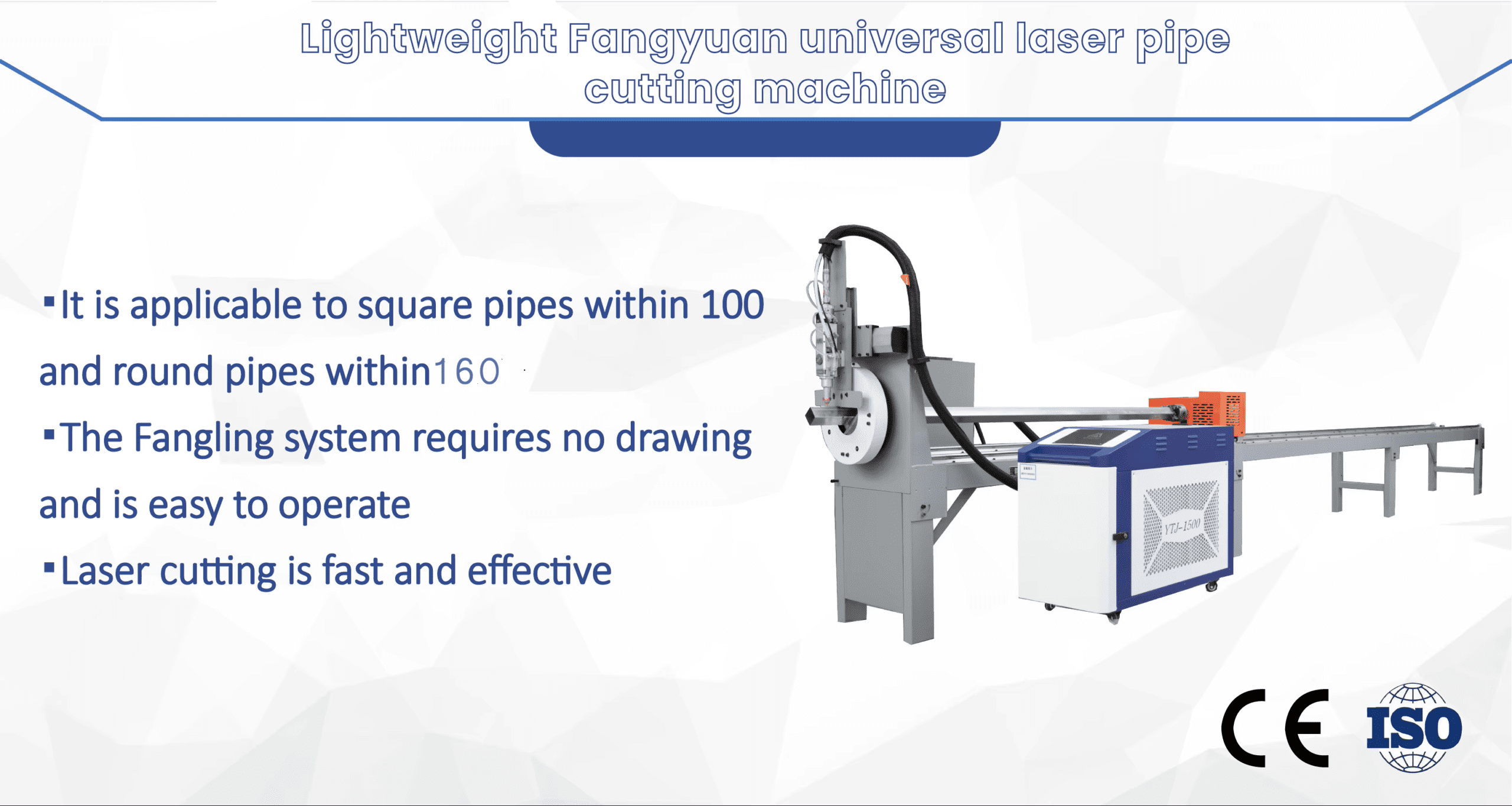 laser cutting machine MAK160″>
Processing Galvanized Steel: Technical Challenges and Solutions
Galvanized steel is preferred in Mexican infrastructure projects due to its superior corrosion resistance, provided by a protective zinc coating. However, for laser cutting processes, this coating introduces a significant variable. Zinc has a much lower melting point (approx. 419°C) than the underlying steel (approx. 1500°C). When the laser beam strikes the surface, the zinc vaporizes before the steel melts, creating a high-pressure gas pocket that can interfere with the stability of the laser beam and the assist gas flow.
Managing Zinc Vaporization and Dross
One of the primary issues when laser cutting galvanized tubes is the “spatter” or dross that adheres to the underside of the cut. This occurs because the vaporized zinc can contaminate the molten steel pool, altering its surface tension. To mitigate this, engineers must fine-tune the piercing parameters. A multi-stage piercing approach, where the laser gradually increases power while modulating frequency, allows the zinc to clear the area before the final cut begins. This results in a cleaner edge and reduces the need for secondary grinding operations, which is a critical factor in reducing labor costs in CDMX fabrication shops.
Gas Selection Strategies: Nitrogen vs. Oxygen
The choice of assist gas is perhaps the most critical decision when using a 3kW tube laser on galvanized material.
- Nitrogen (High Pressure): This is the preferred method for high-quality finishes. Nitrogen acts as a mechanical force to blow away the molten material without causing oxidation. Because there is no exothermic reaction, the cut remains “bright” and the zinc layer remains relatively intact right up to the edge. However, this requires higher pressures (often 15-20 bar), necessitating a robust gas delivery system or an on-site nitrogen generator.
- Oxygen: Oxygen triggers an exothermic reaction, significantly increasing cutting speed and allowing for the processing of thicker walls. However, it leaves an oxidized edge that must be cleaned if the tube is to be painted or powder-coated later. In the context of galvanized steel, oxygen can cause excessive burning of the zinc layer, leading to a wider heat-affected zone (HAZ).
- Compressed Air: For many shops in Mexico City looking to optimize costs, high-pressure filtered compressed air is a viable middle ground for 3kW systems, provided the air is bone-dry and oil-free.

Operating at High Altitude: The Mexico City Factor
Mexico City sits at an average elevation of 2,240 meters (7,350 feet) above sea level. For thermal processes like laser cutting, altitude is not a negligible factor. The atmospheric pressure in CDMX is roughly 25% lower than at sea level. This thin air affects the physics of the laser path and the cooling efficiency of the machine’s components.
Atmospheric Pressure and Gas Dynamics
The lower air density impacts the behavior of the assist gas as it exits the nozzle. Engineers may find that the pressure settings recommended by manufacturers (usually calibrated at sea level) need to be increased by 10-15% to achieve the same kinetic force required to clear the melt from the kerf. Furthermore, the cooling capacity of air-cooled chillers is reduced at high altitudes. It is imperative that 3kW systems installed in CDMX utilize oversized industrial chillers to ensure the laser source and cutting head maintain a stable operating temperature, preventing thermal drift and beam instability.
Humidity and Optics Integrity
While Mexico City is generally considered to have a temperate climate, the rainy season brings high humidity levels. In a fiber laser system, the “business end”—the cutting head—contains sensitive optics. If the internal temperature of the head drops below the dew point, condensation can form on the protective windows, leading to catastrophic failure when the 3kW beam passes through. Integrating a desiccant air dryer into the machine’s pneumatic line is an absolute requirement for local operators.
Machine Maintenance and Longevity in CDMX
Maintaining a 3kW tube laser cutter in an urban industrial environment requires a disciplined schedule. The dust and particulate matter common in the Mexico City atmosphere can settle on the linear guides and rack-and-pinion systems of the tube feeder. A build-up of grime increases friction, leading to servo motor strain and a loss of precision in the “notching” and “tabbing” features often required in tube fabrication.
Fume Extraction and Filtration Systems
When laser cutting galvanized steel, the vaporization of zinc produces zinc oxide fumes. These fumes are not only toxic to operators but are also highly “sticky” and can clog standard filtration systems quickly. In the densely populated industrial zones of CDMX, environmental regulations regarding emissions are increasingly stringent. A high-volume dust collector with a PTFE-coated flame-retardant filter is necessary. The 3kW power level generates a significant volume of these particulates, so the extraction system must be synchronized with the laser’s movement to capture fumes directly at the source (the cutting head).
Daily and Weekly Calibration
To ensure the longevity of the machine, the centering of the nozzle must be checked daily. For galvanized tubes, which often have slight dimensional variances or “bowing,” the capacitive height sensor (the “follow” system) must be calibrated to the specific conductivity of the zinc coating. This ensures the 3kW beam stays perfectly focused despite the irregularities of the tube surface.
Economic Viability and Local Industry Applications
The investment in a 3kW tube laser cutter is particularly lucrative in the Mexican market due to the “nearshoring” trend. As more North American companies move production to Mexico, the demand for high-precision components grows. Galvanized tubing processed via laser cutting is essential for:
- Solar Racking Systems: Mexico’s growing solar sector requires millions of meters of galvanized square tubing with precision-cut mounting holes.
- Automotive Chassis Components: Light-duty trailers and specialized vehicle frames utilize the high strength-to-weight ratio of laser-cut tubes.
- Urban Infrastructure: Street furniture, telecommunications towers, and public transport barriers in CDMX rely on the corrosion resistance of galvanized steel and the aesthetic precision of fiber lasers.
The transition from manual sawing and drilling to automated laser cutting reduces the production cycle from minutes to seconds. For a 3kW system, a typical 50mm square galvanized tube with a 3mm wall can be cut and notched in less than 15 seconds, including the loading and unloading cycle. This throughput allows local shops to handle larger contracts that were previously outsourced.
Conclusion: The Future of Fabrication in Mexico City
The 3kW tube laser cutter represents a significant leap forward for the metalworking industry in Mexico City. By understanding the specific requirements of galvanized steel—ranging from gas dynamics to altitude-adjusted parameters—fabricators can unlock new levels of efficiency. As the technology continues to mature, those who invest in high-quality fiber systems and prioritize rigorous maintenance will define the next generation of Mexican manufacturing. In the competitive landscape of the Valle de México, the precision of laser cutting is no longer a luxury; it is a fundamental requirement for industrial success.







