Introduction to 1.5kW Tube laser cutting in Monterrey’s Industrial Sector
Monterrey, Nuevo León, stands as the industrial heart of Mexico, a hub where the automotive, aerospace, and construction industries converge. Within this competitive landscape, the adoption of advanced manufacturing technologies is not merely an advantage but a necessity. The 1.5kW tube laser cutter has emerged as a cornerstone technology for small to medium-sized enterprises (SMEs) and large-scale fabricators alike. This power class offers a strategic balance between capital investment and high-performance output, particularly when processing carbon steel—the backbone of Monterrey’s structural and mechanical projects.
The shift from traditional mechanical sawing and drilling to fiber laser cutting represents a paradigm shift in throughput. Where traditional methods required multiple setups, manual measurements, and deburring phases, a 1.5kW fiber laser consolidates these steps into a single automated process. This guide explores the technical nuances, operational efficiencies, and local economic advantages of utilizing 1.5kW laser cutting technology for carbon steel in the Monterrey region.
Technical Specifications of the 1.5kW Fiber Laser Source
The 1.5kW (1500-watt) fiber laser source is specifically engineered for high-speed processing of thin to medium-gauge metals. In the context of carbon steel, this power level is exceptionally efficient for wall thicknesses ranging from 0.5mm to 6mm, with the capability to pierce up to 8mm or 10mm under optimized conditions.
 laser cutting machine MAK160″>
Wavelength and Absorption Characteristics
Fiber lasers operate at a wavelength of approximately 1.06 microns. This wavelength is highly absorbed by carbon steel, ensuring that a significant portion of the 1.5kW energy is converted into heat at the material’s surface. This high absorption rate allows for a narrow kerf width and a minimal heat-affected zone (HAZ), which is critical for maintaining the structural integrity of the tube, especially in precision automotive components manufactured in Apodaca or Santa Catarina.
Beam Quality and Density
The “BPP” (Beam Parameter Product) of a 1.5kW source ensures a concentrated focal point. For tube laser cutting, this means the energy density is sufficient to vaporize or melt the steel instantly as the rotary axis moves. Unlike CO2 lasers, the fiber delivery system is maintenance-free, lacking the complex mirrors and gas-flow requirements of older technologies, which significantly reduces downtime in high-demand Monterrey factories.
Processing Carbon Steel: The Role of Assist Gases
In the laser cutting process, the choice of assist gas is pivotal to the quality of the edge and the speed of the cut. When working with carbon steel, Oxygen (O2) is the standard choice for a 1.5kW system.
Exothermic Reaction with Oxygen
When Oxygen is used, it reacts chemically with the heated carbon steel, creating an exothermic reaction that adds thermal energy to the cutting process. This allows a 1.5kW machine to cut thicker sections of steel than would be possible with an inert gas like Nitrogen. The result is a fast, efficient cut, though it does leave a thin oxide layer on the edge. For many structural applications in Monterrey’s construction sector, this oxide layer is acceptable; however, for parts requiring high-quality powder coating, secondary cleaning may be necessary.
Nitrogen for Thin-Wall Precision
For carbon steel tubes with wall thicknesses below 2mm, some operators opt for Nitrogen. While it requires higher pressure and does not benefit from the exothermic reaction, it prevents oxidation, leaving a “bright” edge that is immediately ready for welding or painting. In the competitive Monterrey appliance market (Mabe, Whirlpool supply chains), this reduction in post-processing time can offer a significant cost-per-part advantage.
Mechanical Design: Rotary Axis and Chucking Systems
A tube laser cutter is defined by its ability to handle various profiles—round, square, rectangular, and even specialized D-profiles or C-channels. The 1.5kW machine typically features a dual-chuck system (front and rear) that ensures the tube remains centered and stable during high-speed rotation.
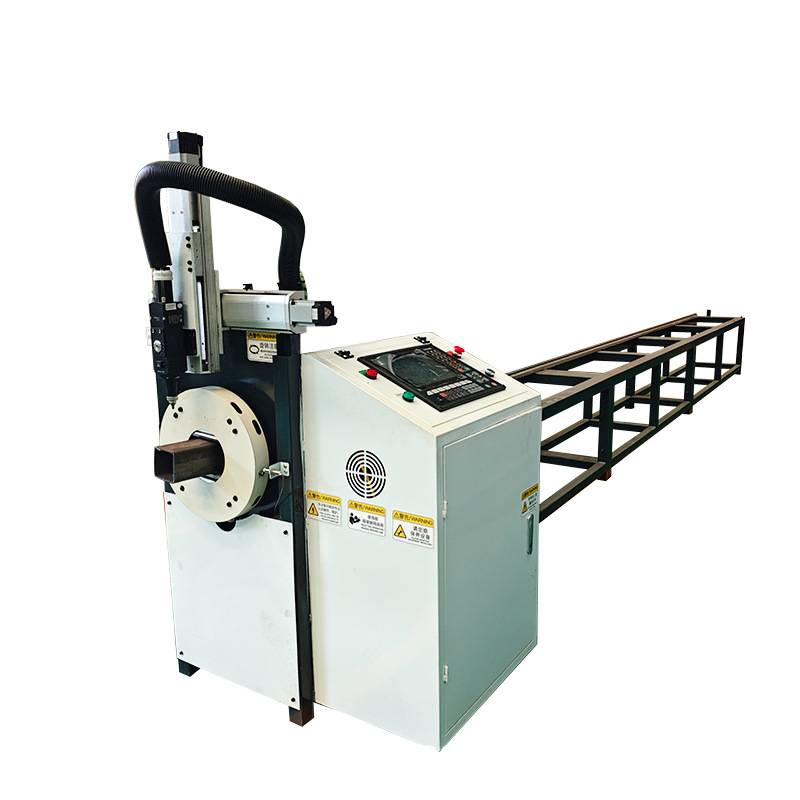
Pneumatic vs. Electric Chucks
In the Monterrey market, where production volumes can fluctuate, pneumatic chucks are often preferred for their speed and self-centering capabilities. They provide the necessary clamping force to prevent slippage during the rapid acceleration and deceleration cycles of the laser cutting process. High-end 1.5kW models may feature “full-stroke” chucks that eliminate the need for manual adjustment when switching between different tube diameters, further increasing uptime.
Vibration Dampening and Bed Stability
The accuracy of laser cutting is only as good as the machine’s frame. For carbon steel processing, which often involves heavy raw materials, a heavy-duty welded or cast-iron bed is essential. This stability prevents resonance and vibration from affecting the cut quality, ensuring that holes and notches remain perfectly circular and aligned across the entire length of the tube (often up to 6 meters).
Software Integration and Nesting in Monterrey’s Supply Chain
The intelligence of a 1.5kW tube laser cutter lies in its CNC controller and nesting software. For Monterrey-based manufacturers, optimizing material usage is critical due to the fluctuating costs of raw steel.
Automated Nesting for Waste Reduction
Advanced software allows engineers to import 3D files (STEP or IGES) and automatically nest parts along the length of the tube. This minimizes the “remnant” or scrap piece at the end of the tube. In a region where Ternium and other major steel producers provide the raw material, maximizing the yield from every 6-meter length of carbon steel directly impacts the bottom line.
Common Cut and Micro-Joints
The software can also implement “common cut” paths, where two parts share a single cut line, reducing processing time and gas consumption. Additionally, micro-joints are used to keep parts attached to the tube skeleton until the cycle is complete, preventing parts from falling and potentially damaging the machine’s internal components or the laser head.
Economic Impact: Why 1.5kW is Ideal for Monterrey
The industrial landscape of Monterrey is characterized by a mix of Tier 1 automotive suppliers and smaller job shops. The 1.5kW tube laser cutter fits perfectly into this ecosystem for several reasons:
Lower Operating Costs
Compared to 3kW or 6kW systems, the 1.5kW machine has a significantly lower power draw. For a shop in Guadalupe or San Nicolas, this translates to lower monthly utility bills and a smaller carbon footprint. The cooling requirements (chiller size) are also reduced, further lowering maintenance costs.
Versatility in Application
While a 1.5kW laser may not cut 20mm plate, it is the “workhorse” for the most common tube specifications used in furniture, automotive exhaust systems, bike frames, and light structural trusses. Its ability to perform complex geometries—such as saddle cuts for tube-to-tube joining—eliminates the need for manual grinding and fitting, which are labor-intensive and prone to human error.
Maintenance and Longevity in Industrial Environments
To maintain the precision of laser cutting in the dusty, high-temperature environment of a typical Monterrey workshop, a strict maintenance protocol is required.
Optical Component Care
The cutting head contains protective windows and lenses that must be inspected daily. Even a speck of carbon steel dust can absorb laser energy, leading to thermal distortion or “lens blow-out.” Ensuring a clean-room environment for lens changes is vital.
Chiller and Filtration Systems
The 1.5kW fiber source generates heat that must be dissipated by a dual-circuit water chiller. In Monterrey’s summer heat, ensuring the chiller is properly sized and the coolant is deionized is critical to prevent the laser source from overheating. Furthermore, high-quality air filtration is necessary to protect the machine’s electronics from the fine metallic dust generated during the laser cutting of carbon steel.
Conclusion: The Future of Metal Fabrication in Monterrey
The integration of 1.5kW tube laser cutting technology is transforming how carbon steel is processed in Monterrey. By combining speed, precision, and material efficiency, these machines allow local manufacturers to compete on a global scale. As the “Nearshoring” trend continues to bring more manufacturing back to North America, the demand for high-quality, laser-cut components will only grow.
Investing in a 1.5kW system provides a scalable entry point into automated fabrication. It empowers engineers to design more complex and lightweight structures, reduces the reliance on skilled manual labor for cutting and drilling, and ensures that Monterrey remains at the forefront of the global manufacturing industry. Whether for structural tubing or intricate automotive parts, the 1.5kW fiber laser is the definitive tool for modern carbon steel fabrication.













