Introduction to 2kW Fiber laser cutting in Toluca’s Industrial Landscape
Toluca, the capital of the State of Mexico, stands as one of the most significant industrial corridors in North America. With a heavy concentration of automotive, aerospace, and heavy machinery manufacturing, the demand for precision metal fabrication has never been higher. Among the various technologies driving this sector, the 2kW fiber laser cutting machine has emerged as the “gold standard” for small to medium-sized enterprises (SMEs) and specialized fabrication shops focusing on carbon steel components.
The transition from traditional CO2 lasers and plasma cutting to fiber laser technology represents a paradigm shift in efficiency. A 2kW system offers a unique balance of power, precision, and operational cost, making it particularly effective for the gauges of carbon steel most commonly utilized in Toluca’s supply chains. This guide explores the technical nuances of utilizing 2kW fiber technology to optimize carbon steel processing in the local high-altitude environment.
Technical Specifications of the 2kW Fiber Laser Source
A 2kW (2000-watt) fiber laser utilizes a solid-state gain medium, typically an optical fiber doped with rare-earth elements such as ytterbium. Unlike CO2 lasers, which require complex gas mixtures and mirror alignments, the fiber laser generates its beam within the fiber itself and delivers it via a flexible cable directly to the cutting head. This results in a beam with a much shorter wavelength—typically around 1.06 microns—which is absorbed more efficiently by metals like carbon steel.
In terms of performance, a 2kW source provides sufficient energy density to achieve high-speed cutting on thin sheets while maintaining the capability to pierce and cut through thicker plates. For carbon steel, which is the backbone of the Toluca manufacturing sector, the 2kW threshold is ideal for materials ranging from 0.5mm to 16mm, with the “sweet spot” for high-speed production falling between 1mm and 10mm.

Energy Efficiency and Wall-Plug Conversion
One of the primary engineering advantages of the 2kW fiber laser cutting system is its electrical efficiency. Fiber lasers boast a wall-plug efficiency of approximately 30% to 35%, compared to the 8% to 10% seen in CO2 systems. For a workshop in Toluca, this translates to significantly lower electricity bills and a reduced requirement for industrial cooling capacity, which is critical for maintaining consistent performance during the warmer months in the Valley of Toluca.
Optimizing Carbon Steel Processing in Toluca
Carbon steel, specifically grades like A36, AISI 1018, and high-strength low-alloy (HSLA) steels, remains the most processed material in the region. When using a 2kW fiber laser, the interaction between the beam and the carbon steel is influenced by the material’s carbon content and surface finish. In Toluca’s industrial parks, such as Parque Industrial Lerma or Exportec, precision is paramount for Tier 1 and Tier 2 automotive suppliers.
To achieve a clean, dross-free edge on carbon steel, the laser cutting process must be finely tuned. For 2kW systems, the focal point is usually positioned slightly above or at the material surface for thin sheets, and deeper into the material for thicker plates. This ensures that the kerf—the width of the cut—is wide enough for the assist gas to clear out the molten metal effectively.
The Importance of Assist Gases: Oxygen vs. Nitrogen
In carbon steel laser cutting, the choice of assist gas is a critical engineering decision.
- Oxygen (O2): For thicknesses above 3mm, oxygen is the standard choice. It creates an exothermic reaction with the carbon steel, adding thermal energy to the cutting process and allowing the 2kW laser to cut through plates up to 16mm. However, this leaves a thin oxide layer on the cut edge which may require removal before painting or welding.
- Nitrogen (N2): Often used for thinner gauges (under 3mm) where a “clean cut” is required. Nitrogen acts as a shielding gas, preventing oxidation. While it requires higher pressures and consumes more gas, it eliminates post-processing steps, which is vital for high-throughput automotive assembly lines.
Environmental Considerations: Altitude and Humidity in Toluca
Toluca sits at an elevation of approximately 2,660 meters (8,730 feet) above sea level. This high altitude results in lower atmospheric pressure and lower oxygen density compared to coastal regions. While fiber laser cutting is a closed-loop system, the ambient air density can affect the cooling efficiency of the chiller and the performance of air compressors if shop air is used as an assist gas.
Engineers must ensure that the 2kW laser’s cooling system is rated for high-altitude operation to prevent overheating. Furthermore, the lower air pressure can subtly influence the fluid dynamics of the assist gas as it exits the nozzle. Calibration of the gas pressure sensors and flow meters is essential to maintain the precision required for tight-tolerance carbon steel components.
Precision, Tolerance, and the Heat Affected Zone (HAZ)
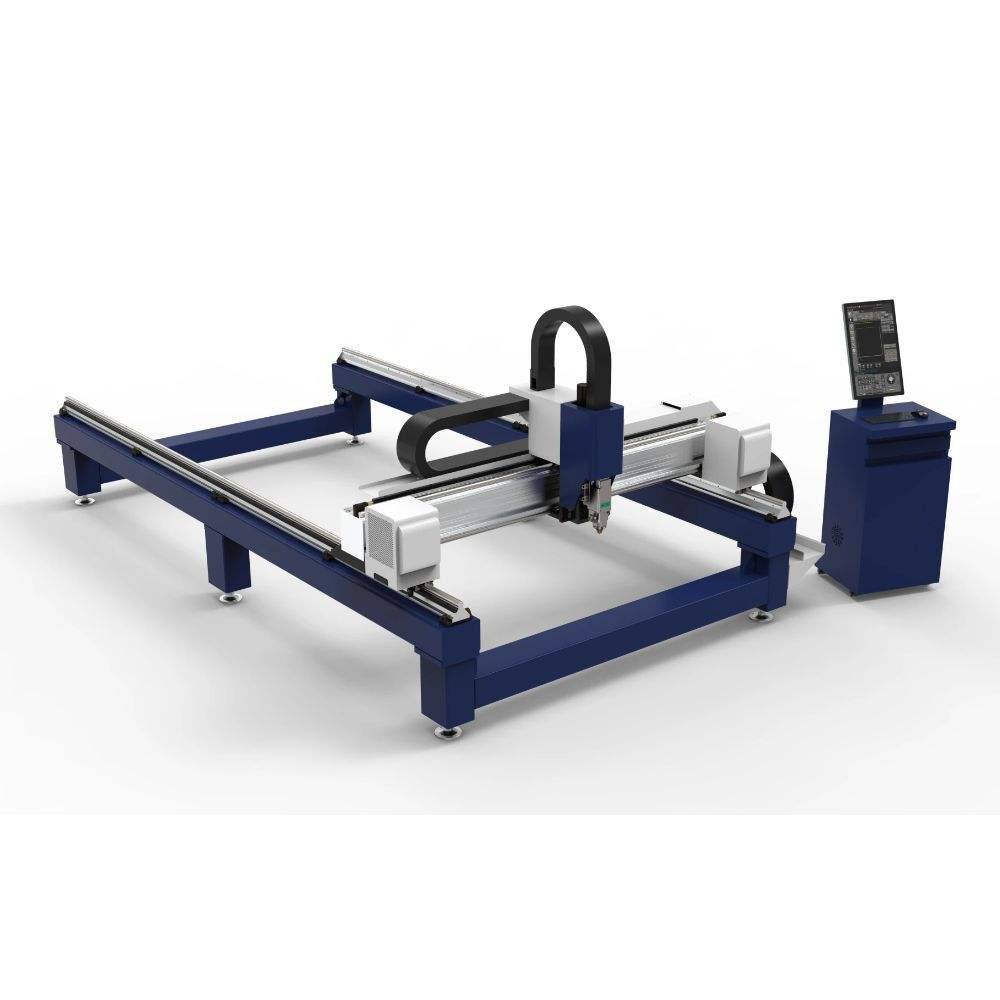
One of the significant advantages of the 2kW fiber laser cutting process is the minimized Heat Affected Zone (HAZ). Carbon steel is susceptible to structural changes when exposed to prolonged heat. Because the fiber laser concentrates energy into an extremely small spot size (often measured in microns), the cutting speed is high enough that heat does not have time to dissipate into the surrounding material.
For manufacturers in Toluca producing structural brackets, engine mounts, or chassis components, this means the mechanical properties of the steel remain intact. The 2kW laser can maintain tolerances as tight as +/- 0.1mm, ensuring that parts are ready for robotic welding or precision assembly without the need for secondary machining or straightening.
Piercing Strategies for Thicker Carbon Steel
Piercing is often the most challenging part of cutting thick carbon steel with a 2kW source. A “staged piercing” approach is recommended, where the laser starts with low power and high frequency to create a small pilot hole, gradually increasing power to penetrate the full thickness. This prevents “blowouts” and protects the laser optics from back-reflection and molten splatter, extending the life of the protective windows in the cutting head.
Maintenance and Operational Longevity
In a high-production environment like Toluca, machine uptime is the most critical metric. The 2kW fiber laser cutting machine is known for its low maintenance requirements compared to older technologies. There are no mirrors to align and no laser gas to replenish. However, the “consumables”—nozzles, ceramics, and protective windows—must be monitored daily.
The dusty environment of industrial zones requires robust dust extraction and filtration systems. Carbon steel cutting produces significant amounts of iron oxide dust; if not properly managed, this dust can contaminate the linear guides and ball screws, leading to premature wear and loss of accuracy. Regular lubrication and bellows inspections are mandatory for maintaining the machine’s 10-15 year service life.
Economic Impact and ROI for Mexican Manufacturers
The investment in a 2kW fiber laser cutting machine provides a rapid Return on Investment (ROI) for Toluca-based fabricators. The combination of high cutting speeds (up to 30-40 m/min on thin carbon steel) and low operating costs allows shops to bid more competitively on large-scale contracts.
Furthermore, as the Mexican manufacturing sector moves toward “Industry 4.0,” these machines are often equipped with advanced CNC controllers that support automated nesting. Nesting software optimizes the layout of parts on a carbon steel sheet, reducing scrap rates to less than 10%. In a market where raw material prices fluctuate, this material efficiency is a direct contributor to the bottom line.
Conclusion
The 2kW fiber laser cutting machine represents the perfect synergy of power and precision for the modern Toluca workshop. By understanding the specific requirements of carbon steel—from gas selection to altitude-adjusted cooling—manufacturers can unlock unprecedented levels of productivity. As Toluca continues to grow as a global manufacturing hub, the adoption of fiber laser technology will remain a cornerstone of industrial competitiveness, providing the speed and accuracy necessary to meet the world’s most demanding engineering standards.













