Comprehensive Engineering Guide to 2kW Sheet Metal laser cutting of Aluminum Alloys in Tijuana
The manufacturing landscape in Tijuana, Baja California, has undergone a significant transformation over the last decade. As a critical hub for the aerospace, medical device, and automotive industries, the demand for high-precision fabrication has never been higher. Among the various technologies driving this evolution, the 2kW fiber laser cutting system stands out as a versatile and efficient solution, particularly when processing aluminum alloys. This guide explores the technical nuances, operational parameters, and regional advantages of utilizing 2kW laser cutting technology for aluminum sheet metal in the Tijuana industrial corridor.
The Rise of Fiber Laser Technology in the Border Region
Tijuana’s proximity to the United States and its robust infrastructure of “maquiladoras” have made it a prime location for advanced manufacturing. In this environment, the 2kW fiber laser has become the workhorse of many fabrication shops. Unlike traditional CO2 lasers, fiber lasers utilize an optical fiber doped with rare-earth elements to amplify light. For a 2kW system, this results in a high-power density beam that is exceptionally well-suited for the reflective nature of aluminum.
The efficiency of a 2kW system offers a balance between capital investment and operational capability. While higher wattage machines exist, the 2kW range provides sufficient throughput for the majority of sheet metal thicknesses used in regional electronics enclosures, heat sinks, and structural components for the aerospace sector.

Material Science: Understanding Aluminum Alloy Interaction
Aluminum is notoriously difficult to process via laser cutting compared to carbon steel. This difficulty stems from two primary physical properties: high thermal conductivity and high reflectivity. Aluminum alloys, such as the 5052 and 6061 series commonly used in Tijuana’s manufacturing plants, tend to reflect a significant portion of the laser’s energy back into the cutting head, which can damage sensitive optical components if the system is not properly configured.
A 2kW fiber laser operates at a wavelength of approximately 1.06 microns. This wavelength is absorbed much more readily by aluminum than the 10.6-micron wavelength of a CO2 laser. However, even with fiber technology, the initial “pierce” stage requires careful modulation of power and frequency to prevent back-reflection. The 5000 series (magnesium-alloyed) typically offers better cut quality and speed than the 6000 series (silicon and magnesium-alloyed) due to the way the alloying elements affect the melt pool viscosity.
Technical Parameters for 2kW Laser Cutting
To achieve a burr-free finish on aluminum, engineers must fine-tune several variables. For a 2kW system, the optimal thickness range for aluminum is generally between 1.0mm and 6.0mm. While it can cut up to 8mm or 10mm, the speed drops significantly, and the edge quality may degrade.
Optimization of Cutting Speeds
In a 2kW configuration, cutting 2mm aluminum 5052 can typically be achieved at speeds ranging from 8 to 12 meters per minute, depending on the machine’s motion control system. As the thickness increases to 5mm, the speed drops to approximately 1.5 to 2.5 meters per minute. Engineering teams in Tijuana must balance these speeds against the required production volume to maximize machine uptime.
Focus Position and Nozzle Selection
For aluminum, the focal point is usually set deeper into the material or even slightly below the bottom surface. This encourages a wider kerf, which allows the assist gas to eject the molten aluminum more effectively. A double-layer nozzle is standard for these applications, as it provides a more stable gas flow, reducing the “dross” or slag that often adheres to the bottom edge of the cut.
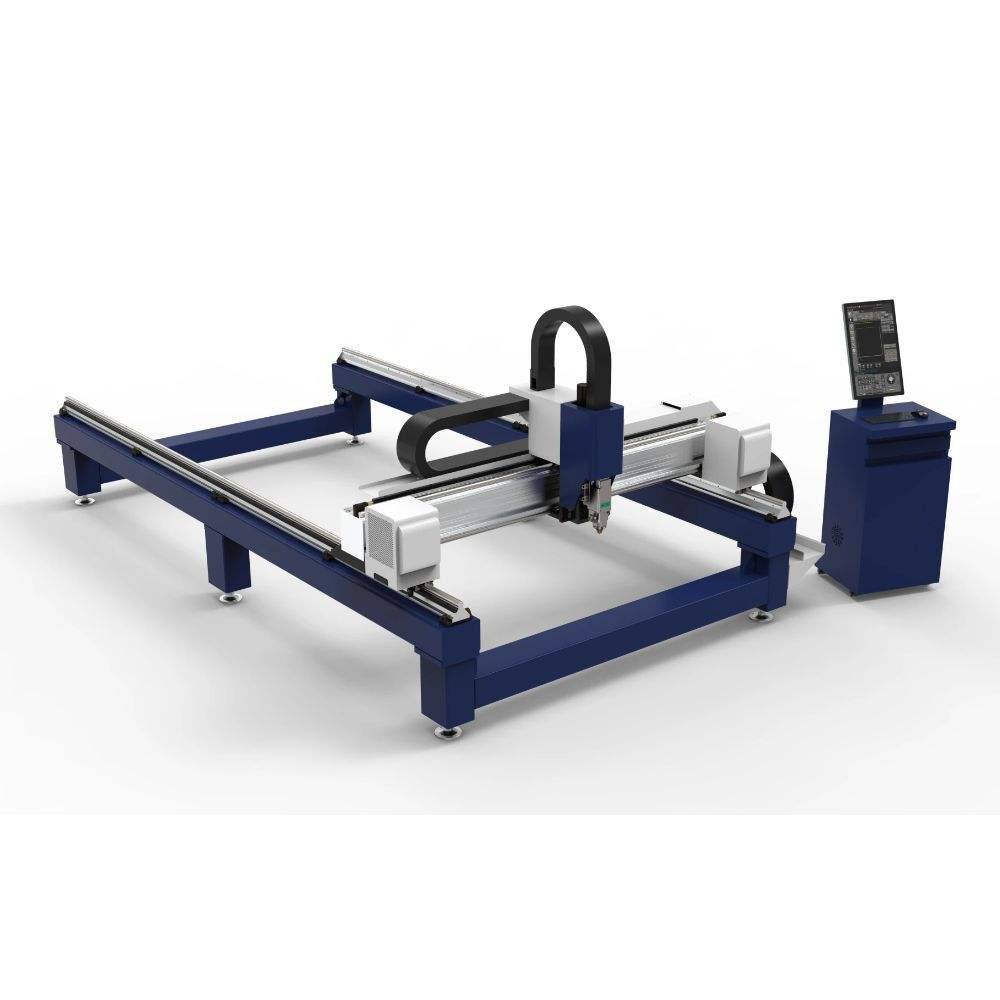
The Role of Assist Gases: Nitrogen vs. Oxygen
The choice of assist gas is critical when laser cutting aluminum in an industrial setting. In Tijuana’s high-precision sectors, Nitrogen is the preferred choice. Nitrogen acts as an inert shield, preventing the oxidation of the aluminum at the cut edge. This results in a clean, bright finish that is ready for welding or painting without secondary cleaning processes.
Using Oxygen as an assist gas for aluminum is less common but can be used for thicker plates. However, Oxygen promotes an exothermic reaction that can lead to a rougher edge and heavy oxidation. For the 2kW power level, high-pressure Nitrogen (typically between 12 and 18 bar) is the industry standard for maintaining the high-quality standards required by international clients sourcing parts from the Baja region.
Overcoming the Challenges of Reflectivity
Reflectivity remains the primary concern for any engineer operating a laser cutting system on aluminum. Modern 2kW fiber lasers are equipped with “back-reflection” protection. These systems detect if a dangerous amount of light is being reflected back into the resonator and will shut the beam down instantly to prevent millions of pesos in damage to the fiber cable or the laser source. Proper lead-in techniques, such as circular or “ramped” pierces, are essential to minimize the time the beam spends perpendicular to a stationary reflective surface.
Tijuana’s Industrial Ecosystem and Logistics
Operating a 2kW laser in Tijuana offers specific logistical advantages. The city is home to a dense network of industrial gas suppliers, ensuring a steady flow of high-purity Nitrogen. Furthermore, the availability of skilled technicians trained in CNC (Computer Numerical Control) operations is higher in Tijuana than in many other Latin American cities, thanks to local technical universities and decades of industrial heritage.
Maintenance is another critical factor. The dusty environment in certain industrial zones like Otay Mesa or El Florido requires rigorous filtration and cooling system maintenance. A 2kW fiber laser relies on a water chiller to maintain the temperature of the laser source and the cutting head. In the semi-arid climate of Tijuana, ensuring the chiller is descaled and the ambient air is filtered prevents premature component failure.
Economic Impact and ROI for Local Manufacturers
For a medium-sized fabrication shop in Tijuana, the return on investment (ROI) for a 2kW sheet metal laser is often realized within 18 to 24 months. The ability to bring laser cutting in-house reduces lead times compared to outsourcing to San Diego or other Mexican states. It also allows for “Just-In-Time” (JIT) manufacturing, which is a requirement for many of the Tier 1 and Tier 2 suppliers operating in the region.
The 2kW power level is particularly cost-effective because it consumes less electricity than 6kW or 10kW models while still handling 80% of the common aluminum thicknesses found in consumer electronics and medical housing. With electricity costs being a significant factor in Mexico, the energy efficiency of the fiber laser (often 30-40% wall-plug efficiency) is a major competitive advantage over older CO2 technology.
Safety Standards and Environmental Regulations
Implementing laser cutting technology in Tijuana requires adherence to both Mexican Federal regulations (STPS) and often international standards (ISO/CE) required by export partners. A 2kW laser is a Class 4 laser product, meaning it can cause permanent eye damage and skin burns instantly. Fully enclosed “Class 1” housings are mandatory in modern Tijuana plants to protect workers from both the beam and the fine aluminum dust generated during the process.
Aluminum dust is highly flammable and, in certain concentrations, explosive. Proper dust extraction systems with spark arrestors are essential. Local environmental regulations in Baja California also dictate the disposal of aluminum dross and the management of water-cooling additives, requiring shops to maintain strict environmental compliance logs.
Conclusion: The Future of Fabrication in Baja
The integration of 2kW fiber laser cutting systems into the Tijuana manufacturing sector represents a commitment to quality and global competitiveness. By mastering the specific parameters required for aluminum alloys—from gas pressure optimization to reflectivity management—local engineers are producing components that meet the most stringent international standards. As the “nearshoring” trend continues to bring more complex manufacturing back to North America, the 2kW sheet metal laser will remain a cornerstone of Tijuana’s industrial capability, providing the precision and speed necessary to fuel the region’s economic growth.
Whether it is for a startup in the booming tech sector or a long-standing aerospace giant, the 2kW laser offers the perfect intersection of power, precision, and practicality for processing the aluminum alloys of tomorrow.













