The Strategic Shift to 6kW Fiber Laser Technology in Monterrey’s Kitchenware Sector
The industrial landscape of Monterrey, Nuevo León, has long been the heartbeat of Mexico’s manufacturing sector. As the region evolves into a global hub for appliance and industrial kitchenware production, the demand for high-precision, high-throughput fabrication has never been higher. For factory owners and engineers, the transition from traditional CO2 lasers or low-power fiber systems to the 6kW Sheet Metal Fiber Laser represents a critical technological leap.
A 6kW system is not merely an incremental upgrade; it is a fundamental shift in processing capability. In the context of kitchenware—where carbon steel is utilized for everything from heavy-duty range frames to industrial oven housings—the 6kW threshold offers the optimal balance between speed, edge quality, and operational cost. This guide explores the engineering nuances of the 6kW fiber laser, focusing on why the structural integrity of the machine bed and the precision of the beam are the two most vital factors for the Monterrey market.
Structural Integrity: The Engineering Behind the Plate-welded Heavy Duty Bed
In the world of high-power laser cutting, the “brain” of the machine (the CNC and laser source) is often given the most attention. However, for engineers, the “skeleton”—the machine bed—is the most critical component for long-term accuracy. A 6kW laser generates significant kinetic energy. As the cutting head moves at speeds exceeding 120m/min with accelerations up to 1.5G, the machine frame must absorb these forces without microscopic vibrations.
The Plate-welded Heavy Duty Bed is engineered specifically to meet these demands. Unlike lighter tube-welded frames or traditional cast iron beds, the plate-welded structure utilizes high-tensile strength steel plates (often 12mm to 20mm thick) that are strategically braced and welded into a honeycomb or cellular architecture.
The manufacturing process of this bed involves several critical engineering phases:
1. Stress Relief Annealing: After welding, the entire bed is placed in a high-temperature electric furnace. By heating the structure to over 600°C and cooling it slowly, internal stresses caused by the welding process are eliminated. This ensures that the bed will not deform over 20+ years of operation in Monterrey’s fluctuating climate.
2. Vibration Dampening: The mass of a heavy-duty bed (often weighing 4 to 6 tons for a standard 3015 format) provides the necessary inertia to dampen the vibrations of high-speed servo motors. In kitchenware production, where intricate patterns and small holes are common, any vibration results in “jagged” edges or loss of circularity.
3. Precision Milling: Once annealed, the mounting surfaces for the guide rails and racks are machined using large-scale 5-axis gantry milling machines. This ensures parallelism within 0.02mm, a necessity for the high-precision requirements of 6kW optics.
Optimizing Carbon Steel Cutting for the Kitchenware Industry
Carbon steel is the workhorse of the industrial kitchen industry. Whether it is cold-rolled sheet for decorative panels or thicker hot-rolled plates for structural supports, the 6kW laser provides a distinct advantage in “Bright Surface” cutting.
When cutting carbon steel, the 6kW laser source allows for the use of higher pressure oxygen (O2) or nitrogen (N2) depending on the desired finish. For Monterrey’s kitchenware manufacturers, the goal is often to reduce post-processing. A 6kW laser can cut 3mm carbon steel at speeds that prevent the formation of dross (slag) on the bottom edge. This “burr-free” finish means parts can move directly from the laser to the bending station or the powder coating line without manual grinding.
Technical Data Comparison (Carbon Steel):
– 1mm to 3mm: At 6kW, the cutting speed is nearly 300% faster than a 2kW system, effectively tripling the factory’s output per shift.
– 6mm to 12mm: The 6kW source allows for “Oxygen High-Speed Cutting,” which maintains a narrow kerf (cut width) and a smooth, vertical edge profile.
– Piercing Technology: 6kW systems utilize “Multi-stage Frequency Piercing,” reducing the piercing time on 10mm carbon steel from seconds to milliseconds, which significantly protects the ceramic nozzle and lens from back-splatter.
The Versatility Factor: Integrated Tube and Plate Processing
Many kitchenware designs require a combination of flat sheet metal and tubular frames (such as those found in industrial prep tables or shelving units). For the Monterrey market, where floor space in industrial parks like Santa Catarina or Apodaca is at a premium, a machine that can handle both is an engineering asset.

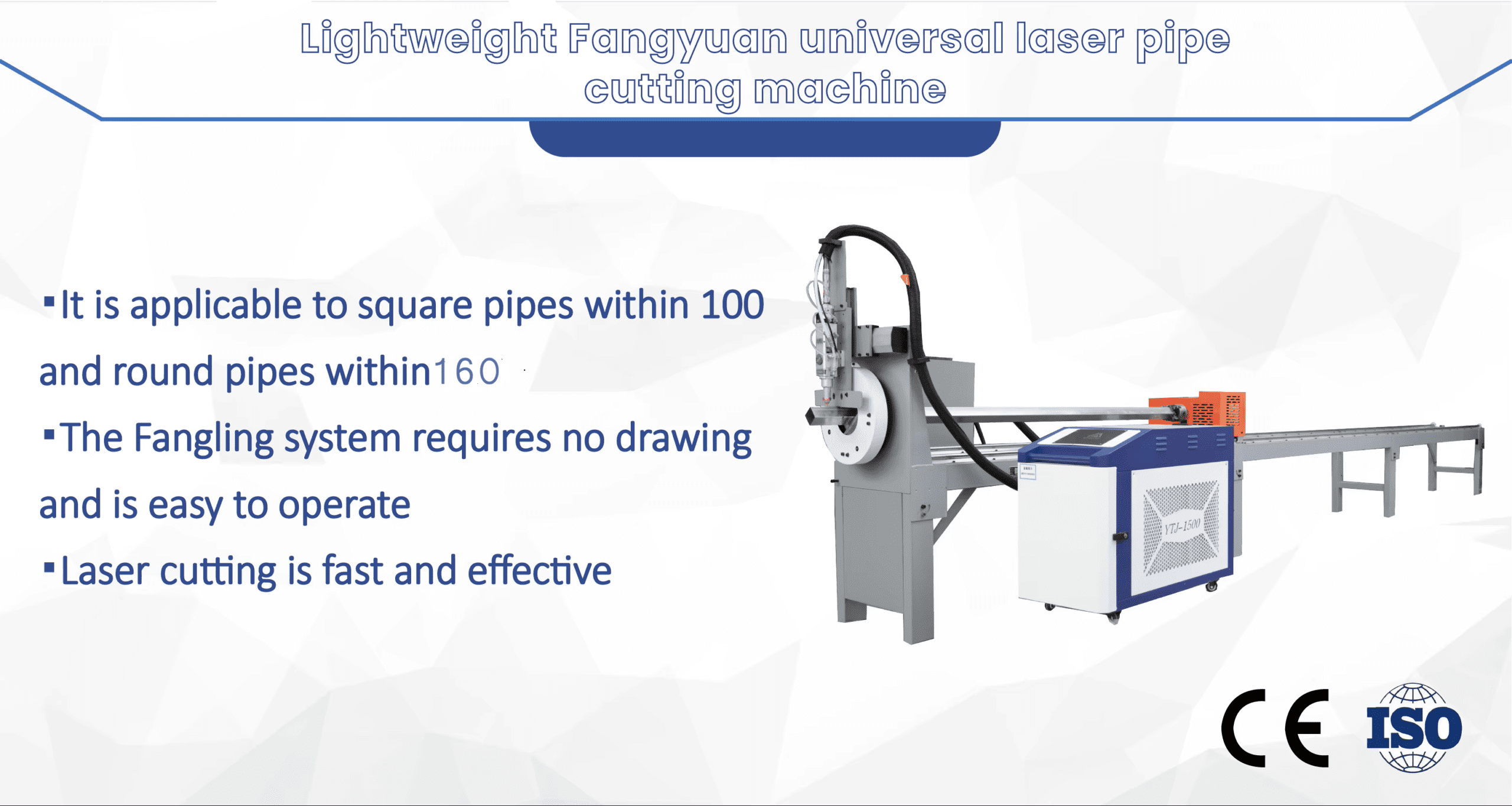
An integrated system allows engineers to switch between flat sheet cutting and tube processing seamlessly. The 6kW power remains consistent across both mediums, allowing for high-speed cutting of square, round, and D-shaped tubes used in kitchen furniture. The heavy-duty bed is extended to support the rotary axis, ensuring that the same level of vibration dampening and precision is applied to the tubular components.
Thermal Management and Environmental Considerations in Monterrey
Monterrey’s climate presents unique challenges for high-power fiber lasers. With summer temperatures frequently exceeding 40°C, thermal management of the laser source and the cutting head is paramount. A 6kW laser requires a sophisticated dual-circuit cooling system.
The “Engineering Guide” for local operators emphasizes:
– Dual-Circuit Chilling: One circuit cools the fiber laser source to prevent thermal degradation of the diodes, while the second circuit cools the cutting head optics.
– Dust Extraction: Carbon steel cutting produces significant fine particulate matter. A high-efficiency dust extraction system, integrated into the heavy-duty bed’s partitioned chambers, is essential for maintaining air quality and protecting the linear guides from abrasive dust.
– Voltage Stabilization: Given the industrial load in Monterrey’s power grid, a 6kW system should always be paired with a high-capacity voltage stabilizer to protect the sensitive CNC electronics from surges.
Operational Economics: ROI for the Factory Owner
From a business perspective, the 6kW laser is an investment in “Cost Per Part.” While the initial capital expenditure (CAPEX) is higher than lower-power models, the operational expenditure (OPEX) tells a different story.
1. Labor Efficiency: Because a 6kW machine processes sheets faster, fewer machines (and fewer operators) are required to meet the same production quotas. In a region where skilled CNC operators are in high demand, this is a significant advantage.
2. Gas Consumption: While 6kW uses more gas per minute, the time spent cutting each part is significantly lower. In many cases, the gas cost per part is actually lower than with a 3kW machine because the “beam-on” time is halved.
3. Material Utilization: Advanced nesting software, paired with the precision of the plate-welded bed, allows for tighter nesting of parts. This reduces the scrap rate of carbon steel, which is a vital metric given current global steel price volatility.
Maintenance Protocols for High-Precision Longevity
To maintain the high-precision standards required for kitchenware—where fit-and-finish are scrutinized by end consumers—a strict maintenance protocol must be followed.
– Daily: Clean the protective window of the laser head. Even a speck of carbon steel dust can cause “thermal lensing” at 6kW, ruining the cut quality.
– Weekly: Lubricate the high-precision racks and pinions. The heavy-duty bed features automatic lubrication systems, but manual inspection ensures no debris has bypassed the wipers.
– Monthly: Check the perpendicularity of the X and Y axes. Even with a heavy-duty bed, the extreme accelerations of a 6kW head require periodic verification to maintain the ±0.03mm tolerance.
Conclusion: The Competitive Edge in Northern Mexico
For kitchenware manufacturers in Monterrey, the 6kW Sheet Metal Laser with a Plate-welded Heavy Duty Bed is more than a piece of equipment; it is a statement of quality and capability. The ability to process carbon steel with extreme precision, high speed, and minimal maintenance allows local factories to compete not just on a national level, but on a global scale.
By investing in a machine that prioritizes structural rigidity and high-power efficiency, engineers and factory owners ensure that their production lines are future-proofed against the increasing demands of the North American market. In the rigorous environment of Monterrey’s industrial sector, only the most robust and precise engineering solutions will prevail.













