The Industrial Paradigm Shift: 40kW Fiber Laser Integration in Tijuana’s Automotive Sector
The manufacturing landscape in Tijuana, Baja California, has undergone a radical transformation. As a primary hub for the North American automotive supply chain, the demand for high-throughput, high-precision components has never been greater. For Tier 1 and Tier 2 suppliers, the transition from traditional mechanical processing to ultra-high-power fiber laser technology is no longer optional—it is a competitive necessity.
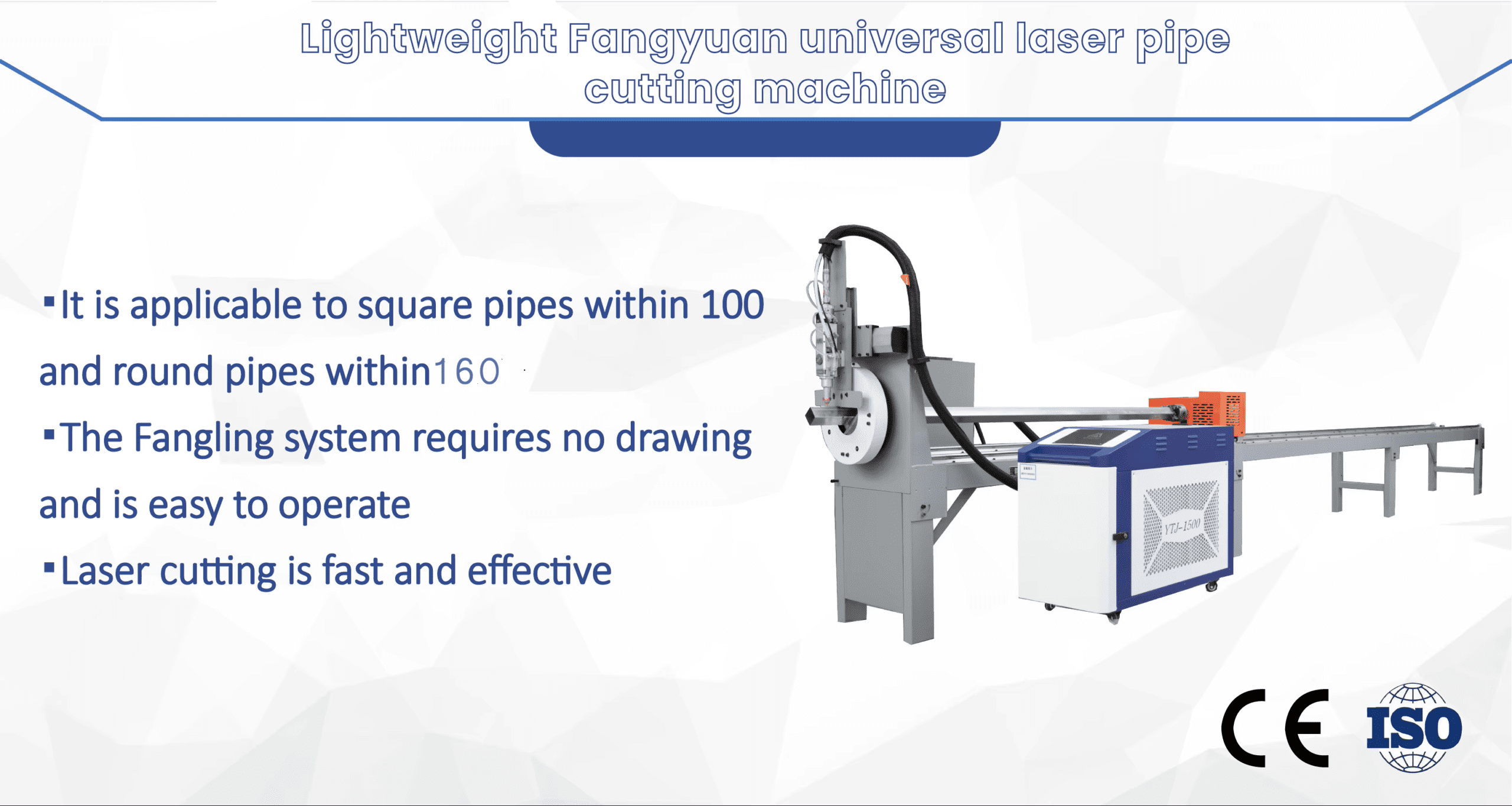
The introduction of the 40kW Tube Laser Cutter represents the pinnacle of this technological evolution. Specifically engineered to handle the complexities of galvanized steel, this machine addresses the dual challenges of material reflectivity and the volatile nature of zinc coatings. In an environment where “Just-in-Time” (JIT) delivery is the standard, the 40kW system provides the speed and reliability required to maintain seamless integration with assembly plants across the border and within Mexico.
Structural Integrity: The Engineering of the Plate-Welded Heavy Duty Bed
At the heart of any ultra-high-power laser system is its structural foundation. A 40kW laser source generates immense kinetic energy during high-speed acceleration and deceleration. To maintain micron-level precision, the machine bed must exhibit exceptional rigidity and vibration damping characteristics.
The Plate-Welded Heavy Duty Bed is engineered using high-tensile strength carbon steel plates, ranging from 16mm to 25mm in thickness. Unlike cast iron beds which can be brittle, or light-duty tube-welded frames that succumb to thermal deformation, the plate-welded structure is designed for “infinite” fatigue life under industrial loads.
The manufacturing process involves:
1. Precision Oxygen Cutting: Individual plates are cut to exact geometries.
2. Plug Welding and Groove Welding: Ensuring deep penetration and structural homogeneity.
3. Stress Relief Annealing: The entire bed is placed in a high-temperature electric furnace (exceeding 600°C) for 24 hours. This eliminates internal stresses generated during welding, preventing the frame from warping over the next 20 years of operation.
4. Five-Axis Milling: The guide rail and rack seats are machined in a single setup to ensure absolute parallelism and perpendicularity.
For automotive engineers in Tijuana, this translates to a machine that maintains its factory-spec accuracy even when operating at 1.5G acceleration, 24/7.

Optimizing 40kW Power for Galvanized Steel Processing
Galvanized steel is a staple in automotive chassis and structural reinforcements due to its corrosion resistance. However, it is notoriously difficult to laser cut. The zinc coating has a significantly lower melting point (419°C) and boiling point (907°C) than the base steel (approx. 1500°C). During traditional cutting, the zinc vaporizes explosively, often interfering with the laser beam and causing “dross” or slag attachment.
The 40kW power threshold changes the physics of the cut. By utilizing ultra-high power density, the machine achieves a “vaporization cutting” state at much higher speeds. This minimizes the Heat Affected Zone (HAZ).
Technical Advantages include:
– Enhanced Piercing Speed: 40kW allows for “flash piercing,” reducing the time the laser dwells on a single spot, which prevents the zinc from bubbling and damaging the nozzle.
– High-Pressure Nitrogen Assist: At 40kW, the cutting speed is so high that the nitrogen gas effectively “washes” the molten zinc away before it can bond with the cut edge, resulting in a silver, burr-free finish that requires no secondary grinding.
– Beam Shaping Technology: The system dynamically adjusts the beam profile to optimize the energy distribution for different tube wall thicknesses, ensuring that the zinc layer on the inside of the tube is also cleanly severed.
Precision Motion Control and Chuck Technology
Tube cutting requires more complex motion coordination than plate cutting. The 40kW system utilizes a sophisticated four-chuck or three-chuck synchronization system to handle heavy-duty tubes with zero slippage.
In the Tijuana market, where automotive components often involve complex geometries and varying diameters, the “Full-Stroke Intelligent Pneumatic Chuck” is a critical feature. These chucks automatically adjust their clamping force based on the tube’s wall thickness and material type. This prevents the deformation of thin-walled galvanized tubes while providing the massive grip force required for heavy structural steel.
The motion system is driven by high-end linear motors or precision ground racks coupled with Japanese or European servo systems. This allows the 40kW head to navigate complex intersections—such as saddle cuts or miter joints—at speeds that were previously impossible, maintaining a path accuracy of ±0.03mm.
Tijuana’s Geographical and Economic Advantage
The implementation of 40kW laser technology in Tijuana offers a strategic advantage under the USMCA (T-MEC) framework. Automotive manufacturers are increasingly looking to localize their supply chains to meet “Rules of Origin” requirements.
Data-Driven ROI for Tijuana Factories:
– Labor Reduction: One 40kW tube laser can replace up to five traditional saws and drill presses, significantly reducing the labor cost per part.
– Material Utilization: Advanced nesting software for tube cutting reduces “remnant” waste by up to 15%, a critical factor given the fluctuating price of galvanized steel.
– Energy Efficiency: While 40kW sounds high, the “cost per meter” is actually lower than 12kW or 20kW systems because the cutting speed is exponentially faster, meaning the machine spends less time in operation per part.
Furthermore, the proximity to San Diego and the Southern California logistics corridor means that Tijuana-based factories equipped with this level of technology can offer “overnight” prototyping and production for US-based EV startups and established OEMs.
Technical Specifications and Performance Metrics
For engineers evaluating the integration of a 40kW system, the following performance metrics serve as a benchmark for high-precision galvanized steel processing:
– Maximum Tube Diameter: Up to 350mm (standard) or 500mm (custom heavy-duty).
– Acceleration: 1.2G to 1.5G.
– Positioning Accuracy: ±0.03mm/m.
– Repetition Accuracy: ±0.02mm.
– Cutting Capacity: Galvanized steel up to 20mm with high-speed precision; Carbon steel up to 100mm.
– Gas Control: Proportional valves for Nitrogen, Oxygen, and Air, allowing for automated switching and pressure optimization.
The software interface (typically FSCUT or similar high-end CNC systems) supports real-time monitoring and integration with ERP systems, allowing factory managers in Tijuana to track production metrics from any location.
Maintenance and Long-Term Reliability
Operating an ultra-high-power laser in a coastal industrial environment like Tijuana requires specific engineering considerations. The 40kW system is equipped with:
– Dual-Circuit Industrial Chillers: To maintain the laser source and the cutting head at precise temperatures, preventing thermal drift.
– Dust Extraction and Filtration: High-volume dust collectors are essential when cutting galvanized steel to capture harmful zinc oxide fumes, ensuring a safe working environment and protecting the machine’s optical components.
– Automatic Lubrication: Centralized systems that ensure the guide rails and racks are lubricated at programmed intervals, reducing wear and tear on the heavy-duty bed.
Conclusion: Future-Proofing Tijuana’s Manufacturing Base
The 40kW Tube Laser Cutter is more than just a tool; it is an industrial solution for the next generation of automotive manufacturing. By combining the extreme stability of a Plate-Welded Heavy Duty Bed with the raw power and precision required for galvanized steel, this machine allows Tijuana-based engineers to push the boundaries of what is possible in tube fabrication.
As the automotive industry shifts toward electric vehicles (EVs) and lightweight structural designs, the ability to process high-strength, corrosion-resistant materials with speed and absolute precision will be the defining factor of success. Investing in 40kW technology today ensures that a facility remains at the forefront of the global manufacturing stage, ready to meet the rigorous demands of the North American market.













