Engineering Guide: 3kW Precision Laser Systems for Brass Fabrication in the Tijuana Manufacturing Sector
Introduction to the Tijuana Industrial Landscape
Tijuana has evolved into one of the most critical manufacturing hubs in North America. Driven by the “nearshoring” trend, the city’s industrial sectors—particularly aerospace, medical devices, and high-end elevator manufacturing—demand machinery that meets international standards for precision and durability. For elevator factory owners and engineers in Baja California, the transition from traditional mechanical shearing to fiber laser technology is no longer optional; it is a competitive necessity.
The 3kW Precision Laser System represents the “sweet spot” for elevator fabrication. This power level provides the necessary energy density to overcome the high reflectivity of yellow metals like brass while maintaining the fine kerf required for decorative architectural elements. This guide analyzes the technical architecture of these systems, focusing on the plate-welded heavy-duty bed and the specific challenges of brass processing.
The Engineering Advantage of the Plate-welded Heavy Duty Bed
In high-precision laser cutting, the machine frame is the foundation of all accuracy. For a 3kW system, the mechanical stresses during high-speed acceleration (often exceeding 1.2G) can lead to micro-vibrations that ruin the edge quality of brass components.
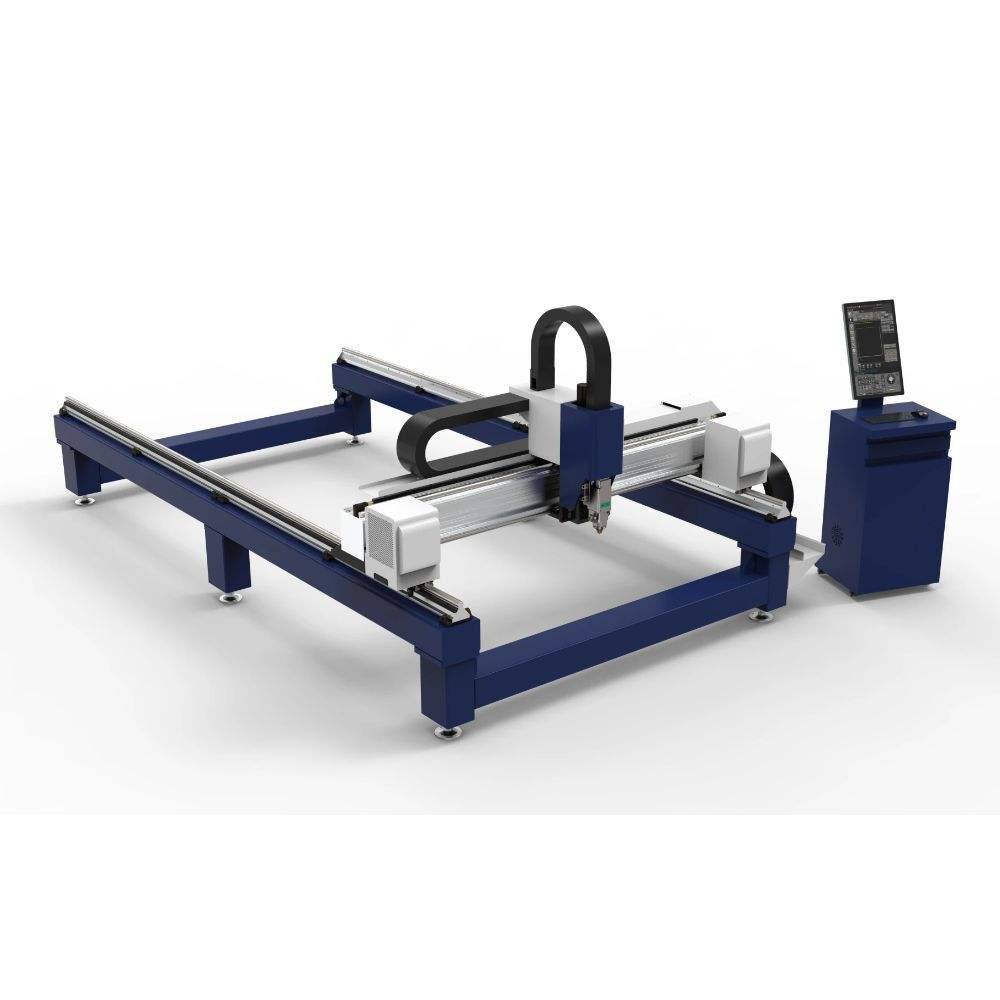
The plate-welded heavy-duty bed is engineered to counter these forces. Unlike lighter tube-welded frames or brittle cast iron alternatives, the heavy-duty plate structure is fabricated from high-tensile carbon steel plates, often ranging from 16mm to 25mm in thickness.
Structural Integrity and Stress Relief
The manufacturing process of the plate-welded bed involves several critical engineering stages:
1. CNC Interlocking Assembly: The steel plates are cut with interlocking tabs to ensure precise alignment before welding begins.
2. Carbon Dioxide Shielded Welding: This ensures deep penetration and a high-strength bond that can withstand decades of thermal cycles.
3. Stress Relief Annealing: The entire frame is placed in a high-temperature electric furnace (reaching approximately 600°C) and cooled slowly. This process eliminates the internal residual stresses caused by welding, ensuring the bed will not warp or deform over the next 20 years of operation.
4. Precision Machining: After annealing, the bed is machined on a large-scale 5-axis milling center to ensure the parallelism and flatness of the guide rails within a tolerance of ±0.02mm.
For elevator manufacturers in Tijuana, where humidity and temperature fluctuations can occur, this structural stability is vital. A stable bed ensures that the laser head maintains a consistent focal point, which is the difference between a clean cut and a rejected brass panel.
High-Precision Cutting of Brass: Overcoming Reflectivity
Brass is a “highly reflective material” in the context of fiber laser wavelengths (typically 1064nm). In its solid state, brass can reflect over 90% of the laser energy. For an unprepared machine, this reflected light can travel back through the delivery fiber and destroy the laser source.
The 3kW Power Threshold
A 3kW fiber laser source provides the necessary power density to quickly transition brass from a solid to a molten state. Once the material is molten, its reflectivity drops significantly, allowing the laser to “couple” with the material and begin the cutting process.
For elevator factories, brass is primarily used in:
– Decorative cabin panels (1.5mm to 3mm)
– Call button plates and signage (2mm to 5mm)
– Handrail brackets and trim (up to 6mm)
A 3kW system can comfortably process brass up to 8mm with high edge quality, though its “sweet spot” for high-speed production lies in the 1mm to 4mm range.
Optical Protection Systems
Modern 3kW systems specialized for brass feature “back-reflection protection.” This involves optical isolators and sensors within the cutting head and the laser source. If the system detects a dangerous level of reflected light, it shuts down the beam in microseconds, protecting your investment. This is a critical specification for Tijuana engineers to verify when sourcing equipment.

Data-Driven Performance: Speed and Gas Dynamics
In the elevator industry, throughput is measured by the number of finished panels per shift. The 3kW system offers a significant leap over 1kW or 2kW alternatives when handling brass.
Cutting Speed Comparison (Brass C26000)
– 1mm Brass: 18 – 22 m/min (using Nitrogen at 16-18 bar)
– 2mm Brass: 8 – 10 m/min (using Nitrogen at 18-20 bar)
– 3mm Brass: 4 – 5.5 m/min (using Nitrogen at 20 bar)
– 5mm Brass: 1.2 – 1.8 m/min (using Oxygen or Nitrogen)
Auxiliary Gas Selection
Nitrogen is the preferred auxiliary gas for brass in elevator applications. Because Nitrogen is an inert gas, it prevents oxidation on the cut edge. This results in a bright, “golden” finish that requires no secondary polishing before plating or clear-coating. For thicker brass (above 5mm), some engineers opt for Oxygen to increase speed through an exothermic reaction, though this results in a darker edge that may require mechanical cleaning.
Integration into Elevator Factory Workflows
Elevator manufacturing requires a blend of large-scale panel processing and intricate detail work. The 3kW precision laser system handles both with a single setup.
Nesting and Material Efficiency
With brass prices fluctuating on the global market, material waste is a direct hit to the bottom line. Advanced nesting software integrated with the laser system allows engineers to “bridge” parts and utilize common-line cutting. This can improve material utilization by up to 15% compared to traditional punching methods.
Precision for Call Button Interfaces
Modern elevator interfaces often require “blind” mounting and perfectly flush buttons. The 3kW laser achieves a positioning accuracy of ±0.03mm and a repeatability of ±0.02mm. This ensures that every button hole in a 50-story building’s panel is identical, facilitating rapid assembly and high-quality tactile feedback for the end-user.
The Tijuana Market: Logistics and Technical Support
Operating a high-tech laser in Tijuana offers unique advantages. Proximity to the US border allows for rapid sourcing of high-purity gases (Nitrogen/Oxygen) and specialized consumables like copper nozzles and protective windows.
However, the local environment also presents challenges. The coastal air can be corrosive, and the power grid in some industrial zones can experience fluctuations. Professional-grade 3kW systems for this market should include:
– Integrated Industrial Chillers: To maintain the laser source and cutting head at a constant 22°C, regardless of the ambient Tijuana heat.
– Dust Extraction and Filtration: Brass vapor contains zinc, which is toxic. A heavy-duty filtration system is mandatory for worker safety and to prevent the buildup of metallic dust on the machine’s precision rails.
– Voltage Stabilizers: To protect the sensitive CNC electronics from power surges.
Maintenance and Long-term ROI
The return on investment (ROI) for a 3kW system in an elevator factory is typically realized within 12 to 18 months. This is calculated based on:
1. Labor Reduction: One laser operator replaces three workers in the shearing and punching department.
2. Finishing Costs: The “burr-free” cut on brass removes the need for manual deburring.
3. Design Flexibility: Engineers can update elevator cabin designs in CAD and begin production immediately, without waiting for custom dies or tooling.
For maintenance, the plate-welded bed requires minimal intervention. Lubrication of the rack and pinion system and the guide rails should be automated. The fiber laser source itself has a lifespan of approximately 100,000 hours, making it one of the most reliable components in the modern factory.
Conclusion
For the elevator industry in Tijuana, the 3kW Precision Laser System is more than a cutting tool; it is a platform for architectural innovation. By combining the rigid stability of a plate-welded heavy-duty bed with the specialized optics required for brass, manufacturers can achieve a level of precision that was previously cost-prohibitive.
As the demand for luxury residential and commercial elevators grows in both Mexico and the United States, adopting this technology ensures that local factories can meet the most stringent engineering tolerances while maintaining the aesthetic brilliance that only high-quality brass fabrication can provide. Invest in the frame, master the gas dynamics of brass, and utilize the geographic advantages of the Tijuana market to lead the next generation of industrial manufacturing.













