Engineering Overview: The 40kW Tube Laser Powerhouse in the Mexico City Industrial Sector
The industrial landscape of Mexico City (CDMX) and its surrounding metropolitan areas, such as Naucalpan and Tlalnepantla, has seen a significant shift toward high-precision stainless steel fabrication. For kitchenware factory owners and senior engineers, the transition from traditional plasma or mechanical cutting to ultra-high-power fiber laser technology is no longer an option—it is a competitive necessity. The introduction of the 40kW Tube Laser Cutter marks a milestone in processing speed and structural accuracy, specifically designed to handle the rigorous demands of food-grade stainless steel (grades 304 and 316).
In the context of professional kitchenware production—where components like industrial range frames, shelving systems, and ventilation ducting require zero-tolerance fitment—the 40kW output provides a level of thermal control and edge quality that was previously unattainable. This guide examines the engineering advantages of the tube-welded standard bed and the specific performance metrics of high-power stainless steel processing.
Structural Engineering: The Tube-Welded Standard Bed Advantage
One of the most critical components of a high-power laser system is the machine bed. At 40kW, the kinetic energy generated by the rapid acceleration and deceleration of the cutting head is immense. To maintain a precision of ±0.03mm, the machine must possess exceptional vibration dampening and thermal stability.
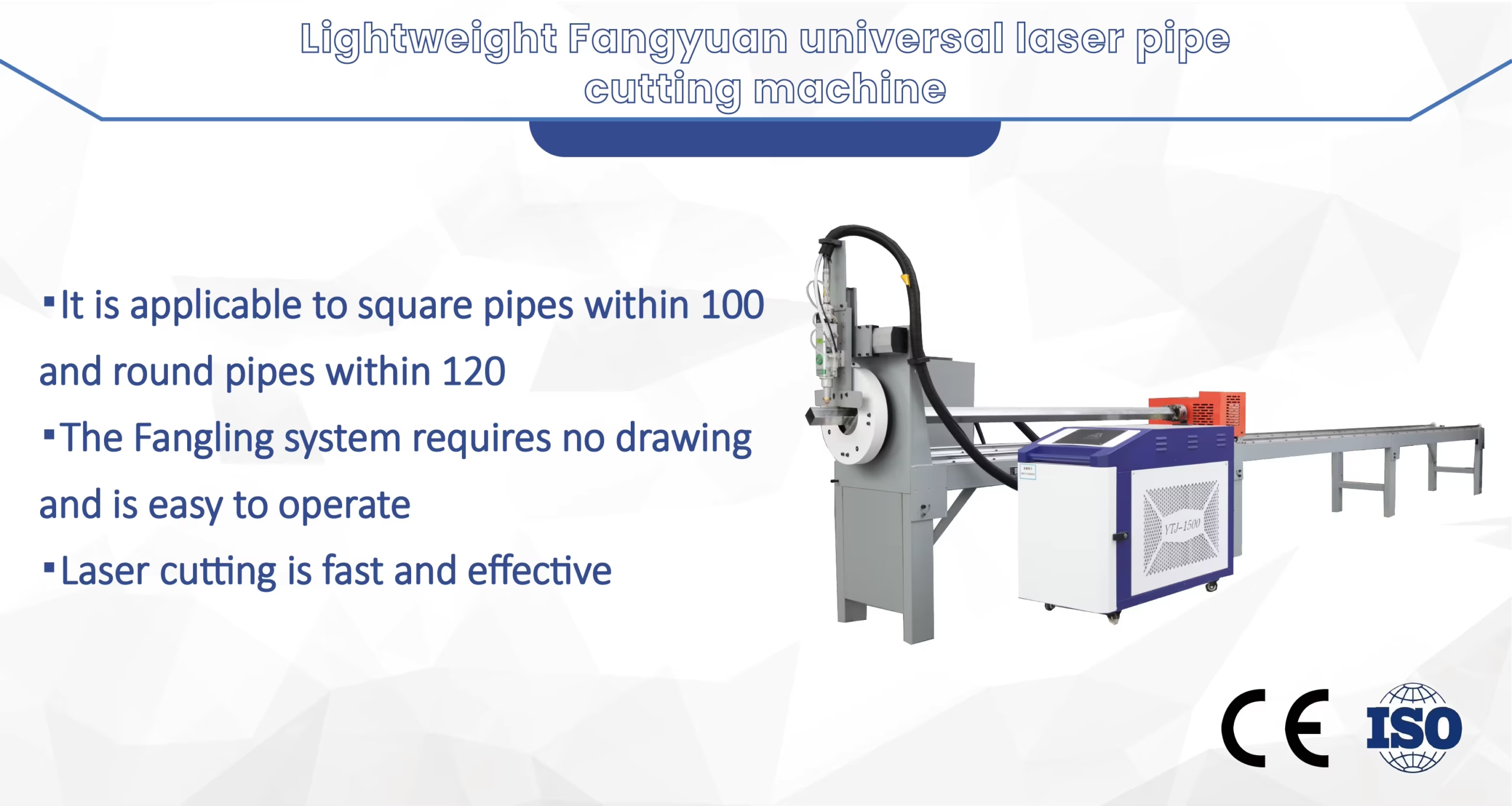
The Tube-welded Standard Bed is engineered using high-strength carbon steel rectangular tubes. Unlike cast iron beds which can be brittle, or simple plate-welded beds that may warp under high thermal loads, the tube-welded structure offers a superior strength-to-weight ratio. The internal “honeycomb” or “triangular” reinforcement patterns within the bed frame ensure that the structure remains rigid even when the gantry moves at speeds exceeding 100m/min.
From an engineering perspective, these beds undergo a rigorous stress-relief process. After welding, the bed is subjected to high-temperature annealing in a specialized furnace to eliminate internal stresses. This is followed by high-precision milling on a five-axis CNC machining center. For kitchenware manufacturers in Mexico City, this means the machine maintains its alignment despite the region’s fluctuating ambient temperatures and the heavy duty-cycles typical of high-volume production.
High-Precision Cutting Metrics for Stainless Steel
Stainless steel is the primary material for the kitchenware industry due to its corrosion resistance and hygiene properties. However, it is also notoriously difficult to cut without causing dross or heat-affected zones (HAZ). The 40kW fiber source changes the physics of the cut.
1. Cutting Speed vs. Edge Quality: At 40kW, the laser achieves “vaporization cutting” rather than simple melting. This results in a mirror-like finish on the cut edge. For a 3mm stainless steel square tube, a 40kW system can maintain speeds that are 300% faster than a standard 6kW machine, significantly reducing the cost-per-part.
2. Nitrogen-Assisted Processing: To prevent oxidation and maintain the bright silver finish required for professional kitchen surfaces, high-pressure nitrogen (N2) is used as the assist gas. The 40kW system allows for thicker wall sections to be cut with nitrogen, ensuring that the material properties of the stainless steel remain intact, preventing future rust at the weld points.
3. Kerf Consistency: High-precision cutting requires a consistent kerf width. The advanced autofocus cutting heads used in these machines adjust the focal point in real-time, compensating for any slight deviations in the tube’s surface. This is vital for kitchenware engineers who utilize “tab-and-slot” assembly methods, where components must interlock perfectly before welding.
Optimization for the Kitchenware Manufacturing Workflow
Kitchenware production often involves complex geometries, including round, square, rectangular, and oval tubes. The 40kW tube laser is equipped with intelligent chuck systems—typically pneumatic or electric—that provide 360-degree rotation with zero slippage.
In Mexico City’s competitive market, the ability to process small-diameter tubes for whisk handles or rack slats alongside large-diameter structural tubes for industrial ovens is a major advantage. The machine’s software allows for “nesting,” which minimizes material waste—a critical factor given the rising cost of stainless steel alloys.
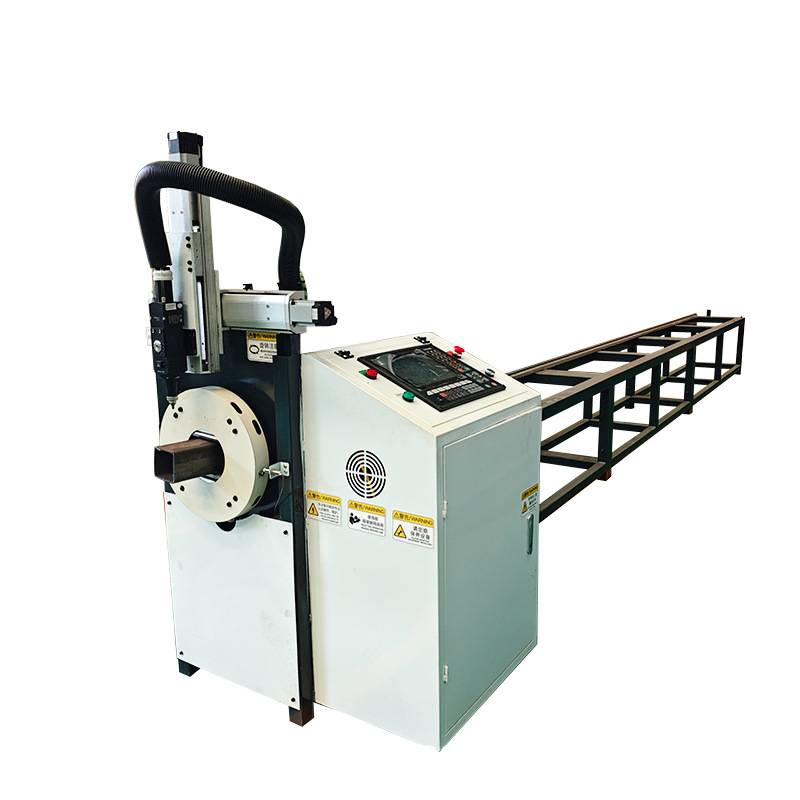
For engineers, the integration of CAD/CAM software means that complex cutouts, such as those required for hinge placements or ventilation slots, can be programmed directly from a 3D model. The 40kW power ensures that even complex patterns in thick-walled tubes are executed with sharp corners and no rounding, eliminating the need for secondary grinding or finishing.
Data-Driven Performance: 40kW vs. Traditional Power Outputs
To understand the ROI for a Mexico City-based factory, one must look at the data-driven performance metrics. In a standard 8-hour shift, a 40kW tube laser can process the equivalent volume of three 4kW machines.
– Power Consumption Efficiency: While the peak power is higher, the “time-on-task” is significantly lower. The energy consumed per meter of cut is actually reduced because the machine moves so much faster.
– Maintenance Cycles: Modern 40kW fiber lasers are designed with modular components. The fiber delivery system is entirely enclosed, preventing dust contamination—a common issue in urban industrial zones.
– Material Versatility: Beyond stainless steel, the 40kW source handles reflective materials like brass and copper (often used in high-end decorative kitchen elements) without the risk of “back-reflection” damaging the resonator.
Technical Considerations for the Mexico City Market
Operating high-power industrial equipment in Mexico City requires specific engineering considerations regarding the local infrastructure.
1. Power Stability: A 40kW laser requires a stable 380V-480V three-phase power supply. It is highly recommended to install a dedicated voltage stabilizer and transformer to protect the sensitive laser source from the voltage fluctuations occasionally found in older industrial sectors of CDMX.
2. Gas Supply Logistics: High-speed stainless steel cutting consumes significant volumes of nitrogen. Factories should consider liquid nitrogen tanks rather than individual cylinders to ensure continuous operation and reduce gas costs by up to 40%.
3. Cooling Systems: The 40kW source generates substantial heat within the resonator and the cutting head. A high-capacity industrial chiller with dual-temperature control is mandatory. Given Mexico City’s altitude (2,240m), the cooling system must be rated for thinner air, which can affect heat exchange efficiency compared to sea-level operations.
Conclusion: The Future of Stainless Fabrication
For the kitchenware factory owner, the investment in a 40kW Tube Laser Cutter with a tube-welded standard bed is an investment in scalability. The combination of structural rigidity and extreme laser power allows for a level of production throughput that can satisfy both domestic Mexican demand and export markets in North America.
By focusing on high-precision stainless steel cutting, engineers can reduce assembly times, eliminate secondary finishing processes, and deliver a product that meets the highest international standards of hygiene and durability. In the heart of Mexico’s industrial center, the 40kW tube laser is not just a tool; it is the foundation of a modern, data-driven manufacturing strategy.













